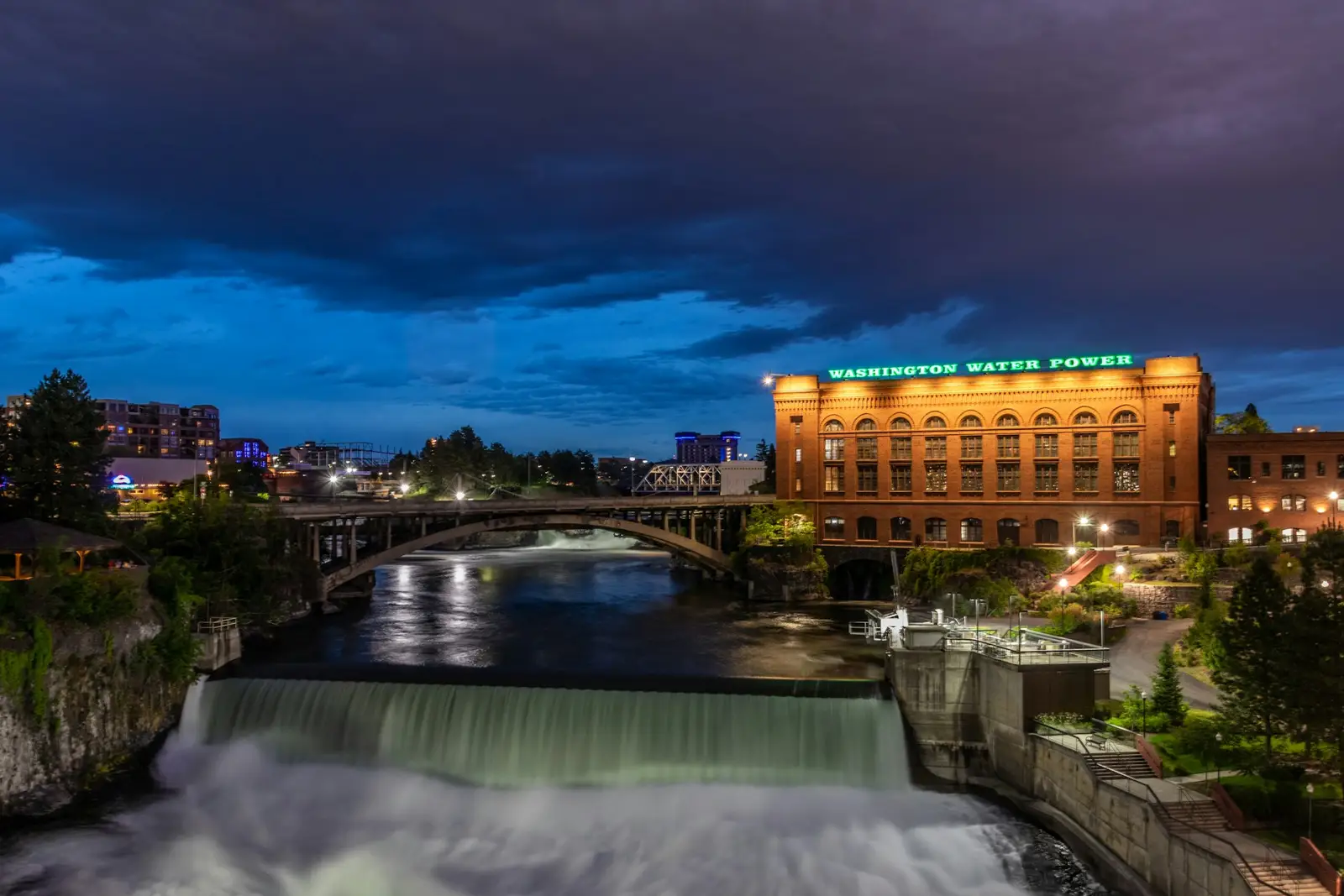
Water from the aquifer under the valley
The City of Spokane does not treat river water at all for drinking. Instead, its wells reach into the Spokane Valley-Rathdrum Prairie Aquifer, a deep bed of flood-deposited gravel and cobbles that runs from Lake Pend Oreille in Idaho west under Spokane Valley and the city. Well stations such as Well Electric near the river and Parkwater on the east side push that water into reservoirs on the South Hill and across the north side, with chlorination as the main treatment step.
As it moves slowly through the Ice Age flood gravels, the water picks up calcium and magnesium bicarbonate. Spokane residents see it as white rings on kettles and spotty dishwasher glasses. Inside a heater, the same minerals drop out when the water is heated, building a layer of sediment in tanks, crusting electric elements and narrowing the passages of tankless heat exchangers.
The aquifer has one helpful trait: its temperature barely moves. Spokane's cold-water line stays in the high 40s or low 50s even in August, which keeps winter and summer demand on a heater fairly similar compared with cities that run on snowmelt.
South Hill basements and north side bungalows
A big share of Spokane's housing predates World War II. Along the South Hill, around Manito Park and Comstock, and in Browne's Addition with its old mansions and apartment conversions, heaters usually sit in full basements. Many of those basements once held coal or oil boilers, and the water heater may still vent into a brick chimney that was built for a much hotter, larger appliance.
North of the river, the Garland District, Logan, Emerson-Garfield and Hillyard are dense with modest bungalows and early ranch homes. Their heaters tend to be in partial basements, small utility rooms or crawlspace access areas where headroom is tight. Newer subdivisions in North Indian Trail, Five Mile Prairie and the Latah Valley put tanks in attached garages or mechanical closets with direct vents.
Apartment buildings around downtown and Gonzaga often use small electric tanks in closets, and those units are where scaled elements and tripped high-limit switches show up most.
Spokane winters and storm outages
Arctic air from Canada regularly pushes Spokane below zero for days at a time, and snow can sit on the ground for weeks. Unheated garages, crawlspaces and basements with leaky rim joists are where pipes freeze, and a split line next to a heater can flood a finished basement fast. Pipe insulation, sealed rim joists and a closed garage door during cold spells prevent most of those calls.
Spokane also has a history of long outages. Ice Storm '96 left much of the area without power for days, and the November 2015 windstorm toppled trees and lines across the city. In outages like those, standard atmospheric gas tanks keep making hot water, while power-vent, direct-vent fan and tankless models stop until power returns. Homes that lose power often may want to weigh that before choosing a replacement.
The problems plumbers see most in Spokane
- Crusty lower elements on electric tanks in Gonzaga-area and downtown apartments.
- Rumbling, sediment-heavy gas tanks in South Hill basements that have never been drained.
- Backdrafting into old chimneys where a modern heater shares an unlined flue with nothing else.
- Burst lines in garages and crawlspaces after a week of below-zero nights.
- Fan-assisted heaters that quit during windstorm outages.
- Missing seismic straps on older installs that predate Washington's current requirements.
Typical water heater prices in Spokane
| Job | Typical Spokane range | Notes |
|---|---|---|
| Thermocouple, igniter or pilot repair | $150–$300 | |
| Gas control valve replacement | $275–$550 | |
| Electric element and thermostat | $150–$350 | |
| Flush and drain valve swap | $110–$250 | |
| Seismic straps and expansion tank | $175–$425 | |
| Chimney liner for a basement heater | $400–$1,200 | Depends on chimney height |
| 40–50 gallon gas tank replacement | $1,500–$3,200 | Permit usually included |
Spokane rates are well below Seattle's but have climbed with the region's growth. Basement carry-outs on steep South Hill lots, chimney liner work and calls during a cold snap all add to the bill. Tankless conversions in Spokane commonly run $3,200 to $5,800 depending on gas line and venting changes.
Permits and licensing in Spokane
Washington's Department of Labor and Industries certifies plumbers, and anyone doing plumbing for hire must hold an L&I plumber certificate or work under a certified plumber, with the business registered as an L&I contractor. Inside city limits, the City of Spokane's Development Services Center at City Hall issues permits for water heater replacement. Spokane Valley and unincorporated Spokane County have their own permit desks.
A Spokane water heater inspection usually covers seismic straps, the relief valve drain, an expansion tank where required, venting and gas connections. Use L&I's online Verify a Contractor tool to confirm both the company's registration and the individual plumber's certificate before work starts.
Avista service and choosing a new heater
Avista Utilities provides both natural gas and electricity in Spokane. Gas tanks dominate in older Spokane homes with existing gas lines, while many all-electric homes on the north side use electric tanks. Heat pump water heaters fit well in Spokane basements, where they also help dehumidify, and Avista has offered efficiency incentives at times.
Washington's energy code has been steering new construction toward heat pump water heating, so newer homes may already have one. For replacements in old basements, a direct-vent or power-vent gas heater can avoid relining an aging chimney, though it does need power to run.
Keeping a Spokane heater running
Aquifer sediment builds steadily, so drain and flush a tank each fall before heating season, when you are already thinking about the furnace. Spokane's mineral load wears the magnesium anode steadily, so budget for a new rod midway through the heater's life, earlier on softened water. Descale tankless units yearly. Each fall, also check the basement or garage for drafts near the heater and insulate any exposed water lines.
Repair or replace in Spokane
A thermocouple, igniter, valve or element on a heater under eight to ten years old is usually worth fixing. Spokane basement tanks often last 10 to 13 years with flushing. Water seeping from the shell, brown water from the hot tap or a tank that still crackles after a flush means replacement is the better call, especially before winter, when a failure is most disruptive.
Around Spokane
Spokane Valley issues its own permits and is served by several water districts, including Vera Water and Power, Modern Electric Water Company and East Spokane Water District. Liberty Lake, Cheney, Airway Heights, Mead and Deer Park handle permits separately. Across the state line, Coeur d'Alene and Post Falls draw from the same aquifer but follow Idaho licensing.
Water heater questions from Spokane
Where does Spokane's tap water come from?
All of it comes from city wells tapping the Spokane Valley-Rathdrum Prairie Aquifer, a gravel aquifer stretching from north Idaho under the valley.
Why does my Spokane water heater rumble?
Mineral sediment from the aquifer settles on the tank bottom, and water trapped under it boils against the burner. A flush often helps, but persistent rumbling on an older tank signals wear.
Who issues water heater permits in Spokane?
The City of Spokane Development Services Center at City Hall. Spokane Valley and Spokane County issue their own.
Does a Spokane windstorm outage knock out my water heater?
A standard atmospheric gas tank usually keeps working. Power-vent, fan-assisted and tankless units need electricity and stop during outages.
Does Avista offer rebates for heat pump water heaters?
Avista has offered efficiency incentives at times. Check current programs before buying.
How do I keep pipes near my heater from freezing in a Spokane cold snap?
Close the garage door, insulate exposed lines, seal drafty rim joists and, in extreme cold, let a faucet drip.