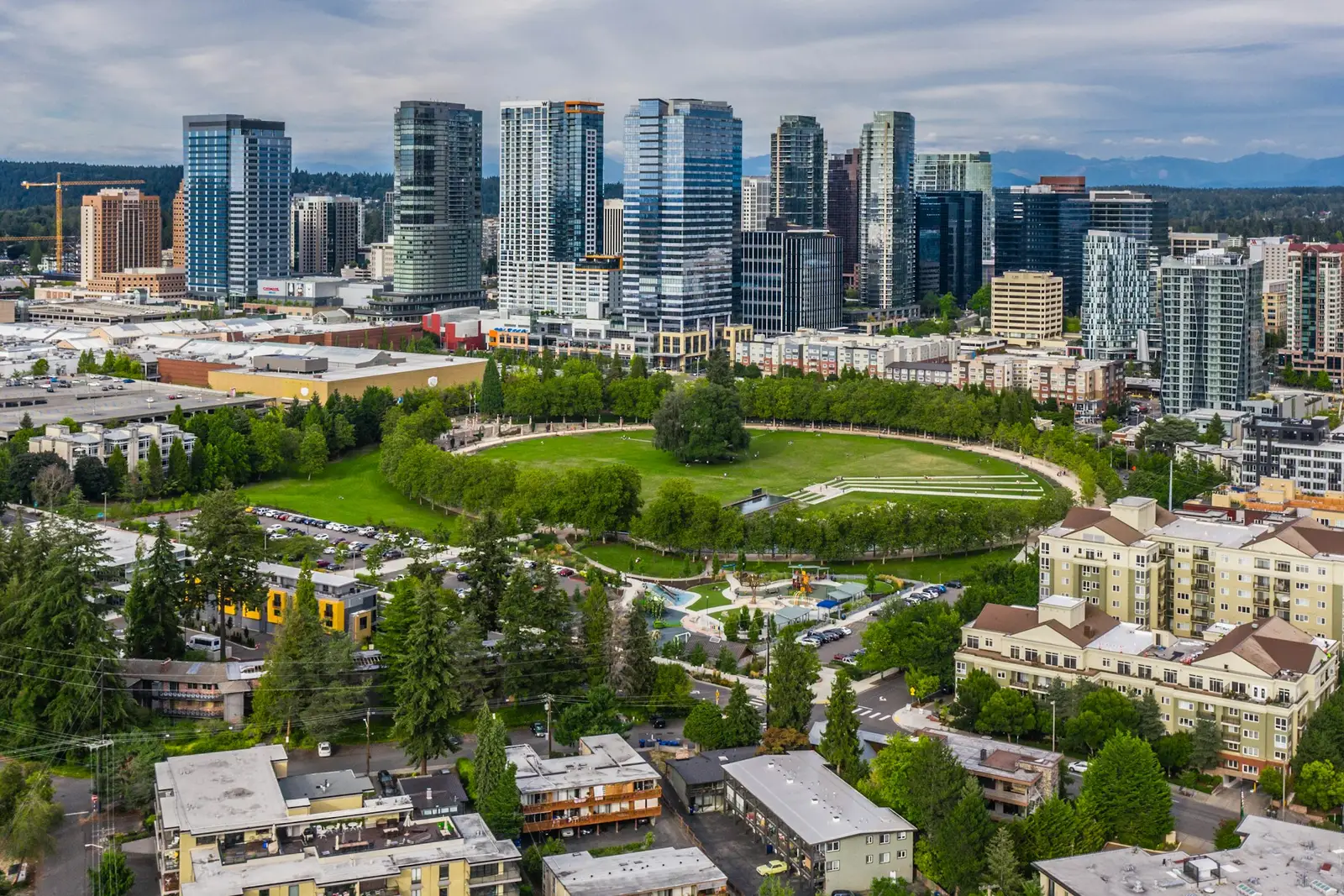
Cascade mountain water by way of Seattle
Bellevue runs its own water utility but does not own a source. It is a member of the Cascade Water Alliance, a group of Eastside cities and districts that buys wholesale water from Seattle Public Utilities. That supply comes from two protected watersheds in the Cascade foothills. Cedar River water is treated with ozone and ultraviolet light at the Cedar facility near Lake Youngs, and South Fork Tolt water is filtered at the Tolt treatment plant northeast of Duvall. Both get chlorine and fluoride before heading west through large transmission mains.
Rain and snowmelt off those slopes pick up almost no calcium or magnesium, so Bellevue's water measures only a grain or two per gallon. Sediment buildup is rarely a reason for a tank to fail here, and an Eastside tankless unit may need descaling only every few years. Very soft water does have a mild corrosive streak, though, and Bellevue plumbers regularly replace spent anode rods and greenish, crusted copper fittings at the top of older tanks.
Cold is the bigger factor. Water arrives in the low to mid 40s during winter, which means a heater has to lift it nearly 80 degrees for a comfortable shower. Households that are fine in August can run short in January, especially with a large soaking tub or several people showering back to back.
Bellevue homes and heater locations
Much of Bellevue's single-family housing dates from the 1950s through the 1970s, when the city grew from a small town across Lake Washington into a commuter suburb. Lake Hills, Crossroads, Sherwood Forest, Robinswood and Eastgate have ramblers and split-levels with heaters commonly found in the garage or beside the washer in a utility room. Some split-levels tuck it in a lower-level closet under the stairs, where access and venting are tight.
Somerset, Newport Hills, Lakemont and Cougar Mountain have larger homes from the 1970s through the 2000s, often with two water heaters or a big 75-gallon tank feeding multiple bathrooms. West Bellevue, Enatai and Clyde Hill-adjacent streets have older homes that have been remodeled or torn down for new houses with tankless systems. Downtown Bellevue and the Spring District are dominated by high-rise and mid-rise condos and apartments, where each unit may have a small electric tank in a closet or the building runs a central water heating plant.
Windstorms, power outages and quakes
The Eastside's tall firs make for spectacular scenery and frequent power outages. Big windstorms, including the 2006 Hanukkah Eve storm and the November 2024 bomb cyclone, have left large parts of Bellevue dark for days. Electric tanks go cold in that situation, and most modern gas tanks with electronic ignition or powered venting also stop. Older standing-pilot gas tanks and some battery-backed designs keep working, which is worth weighing if outages are a regular nuisance on your street.
Bellevue also sits in serious earthquake country. The Seattle Fault runs east-west across the region close to I-90 and south Bellevue, and the Cascadia subduction zone lies offshore. Washington's plumbing code requires seismic restraint on water heaters, typically two straps tied into structural framing. Plumbers in Lake Hills and Newport Hills frequently find single straps, rusty tape or no bracing at all on heaters installed decades ago.
The problems plumbers see most in Bellevue
- Winter shortfalls when 42°F inlet water outpaces a 40-gallon tank in Crossroads and Eastgate family homes.
- Corroded fittings and depleted anodes on soft Cascade water, often the first step toward a leaking tank.
- Power-vent and igniter failures after storm outages and surges.
- Electric element and thermostat failures in condo closet heaters, covered in our element guide.
- Missing seismic straps on older installations, flagged during home sales.
- Two-heater systems in Somerset and Lakemont homes where one unit fails and the other cannot keep up.
Typical water heater prices in Bellevue
| Job | Typical Bellevue range | Notes |
|---|---|---|
| Thermocouple, igniter or flame sensor | $190–$375 | |
| Gas control valve | $450–$700 | |
| Electric element or thermostat | $200–$400 | Common in condos |
| Anode rod and fitting replacement | $225–$425 | |
| Power-vent blower repair | $350–$650 | |
| 50 gallon gas tank replacement | $2,000–$3,900 | Permit, straps and haul-away |
| Heat pump water heater installation | $4,500–$8,500 | Electrical work may be extra |
Eastside labor rates run among the highest in Washington, roughly in line with Seattle. Condo jobs that require building management coordination, freight elevator time or after-hours work, and large hillside homes in Somerset or Cougar Mountain, often cost more than these ranges suggest.
Washington plumber certification and Bellevue permits
Washington handles plumbing differently from most states. The Department of Labor and Industries certifies individual plumbers, and anyone doing plumbing work for hire must carry an L&I plumber certificate or a trainee card working under a certified plumber's supervision. Separately, the business itself needs an L&I contractor registration, backed by a bond and insurance. The L&I website lets you look up both the business registration and the individual's plumbing certificate, and it is reasonable to ask the person in your garage to show their card.
Bellevue Development Services issues mechanical and plumbing permits for water heater replacement, and applications run through MyBuildingPermit.com, the shared portal several Eastside cities use. Inspectors check the seismic restraint, gas piping and venting, where the relief line ends, and whether expansion control is present where the system has a pressure-reducing valve or check valve. Condo owners should also check with their HOA, since many buildings have their own rules on who may work on unit heaters.
Puget Sound Energy and the heat pump shift
Bellevue homes get their gas and their power from Puget Sound Energy, making PSE the single utility for nearly every water heater in the city. At times PSE has put money toward heat pump heaters, and state and federal programs have added more in some years. Washington's energy code has moved new construction strongly toward heat pump water heating, and many new Bellevue houses and townhomes now come with them as standard.
Heat pump water heaters work well in Bellevue garages because temperatures there rarely fall far below freezing for long. In a small utility closet, they can struggle to find enough air, and they cool the space they sit in. When replacing a gas tank in a Lake Hills rambler, the questions are usually whether the electrical panel has room for a 240-volt circuit and whether the garage has the clearance for a taller unit.
Repair or replace in Bellevue
Because soft water spares Bellevue tanks from heavy sediment damage, many fail from corrosion at fittings or from the steel finally rusting through, often at 12 to 15 years. A failed igniter, thermocouple or element on a Bellevue tank younger than ten is usually an easy fix. Water weeping from the tank body is a clear signal for replacement. If you are in a two-heater home and one unit fails, consider replacing both on the same visit; the second is probably the same age.
Families that run short every winter should look at the tank's first-hour rating, or look at a hybrid heat pump unit sized up a step, rather than simply turning up the thermostat. Raising the set point above 130°F increases scald risk, especially with young children, and speeds corrosion.
Around Bellevue
Redmond, Kirkland and Issaquah are Cascade Water Alliance members as well, so their water is similar, but each issues its own permits, most through the same MyBuildingPermit portal. Mercer Island buys directly from Seattle Public Utilities and has its own building department. Newcastle is served by Coal Creek Utility District, and Sammamish mostly by the Sammamish Plateau Water and Sewer District, which mixes in local groundwater with somewhat more minerals.
Water heater questions from Bellevue
Is Bellevue tap water hard on water heaters?
No. Cascade mountain water is very soft, so scale is minimal. Watch for corroded fittings and worn anode rods instead.
How do I verify a plumber's credentials in Washington?
Search the L&I website for the company's contractor registration and the individual's plumber certificate. Both should be current.
Will my gas water heater work during a Bellevue power outage?
Older standing-pilot tanks usually will. Power-vent, electronic ignition and tankless models need electricity and stop when PSE service is out.
Who issues water heater permits in Bellevue?
Bellevue Development Services, with applications filed through MyBuildingPermit.com.
Why does my Bellevue home run out of hot water mainly in winter?
Inlet water drops into the 40s, so the same tank delivers far less usable hot water. A larger tank or a higher first-hour rating is the usual answer.
Does PSE offer rebates for heat pump water heaters?
At times, yes. Program amounts change, so check PSE's current offers before purchasing.
Can I replace the water heater in my downtown Bellevue condo?
Usually, but check HOA rules first. Many buildings require approved contractors and scheduling through building management.