From Lake Whatcom to the tap
Nearly every Bellingham household gets its water from Lake Whatcom. The city pulls raw water from the lake and sends it to its treatment plant in Whatcom Falls Park, which opened in 1968 and was upgraded in 2018 and can handle up to about 24 million gallons a day. The plant uses a filtration process that adds a coagulant to clump fine particles, filters them out and then disinfects the water. In dry summers, the city can divert water from the Middle Fork of the Nooksack River into the lake to keep levels up.
Lake Whatcom is fed by rain and creeks running off forested hills, so the water carries very little dissolved calcium or magnesium. A Bellingham tank can go ten years with barely a cupful of sediment in the bottom, and tankless units here rarely need descaling. The trade-off is that soft water slowly works on metal. Anode rods wear out, the dielectric nipples at the top of the tank corrode, and old galvanized supply lines in pre-war houses shed rust.
The lake itself has faced algae and phosphorus problems from development around its shores, and the city treats the water carefully during warm months. Taste and odor complaints in late summer are a lake issue, not a heater issue, though a sulfur smell only in the hot water usually points at the anode.
Bellingham's housing, from Fairhaven to Cordata
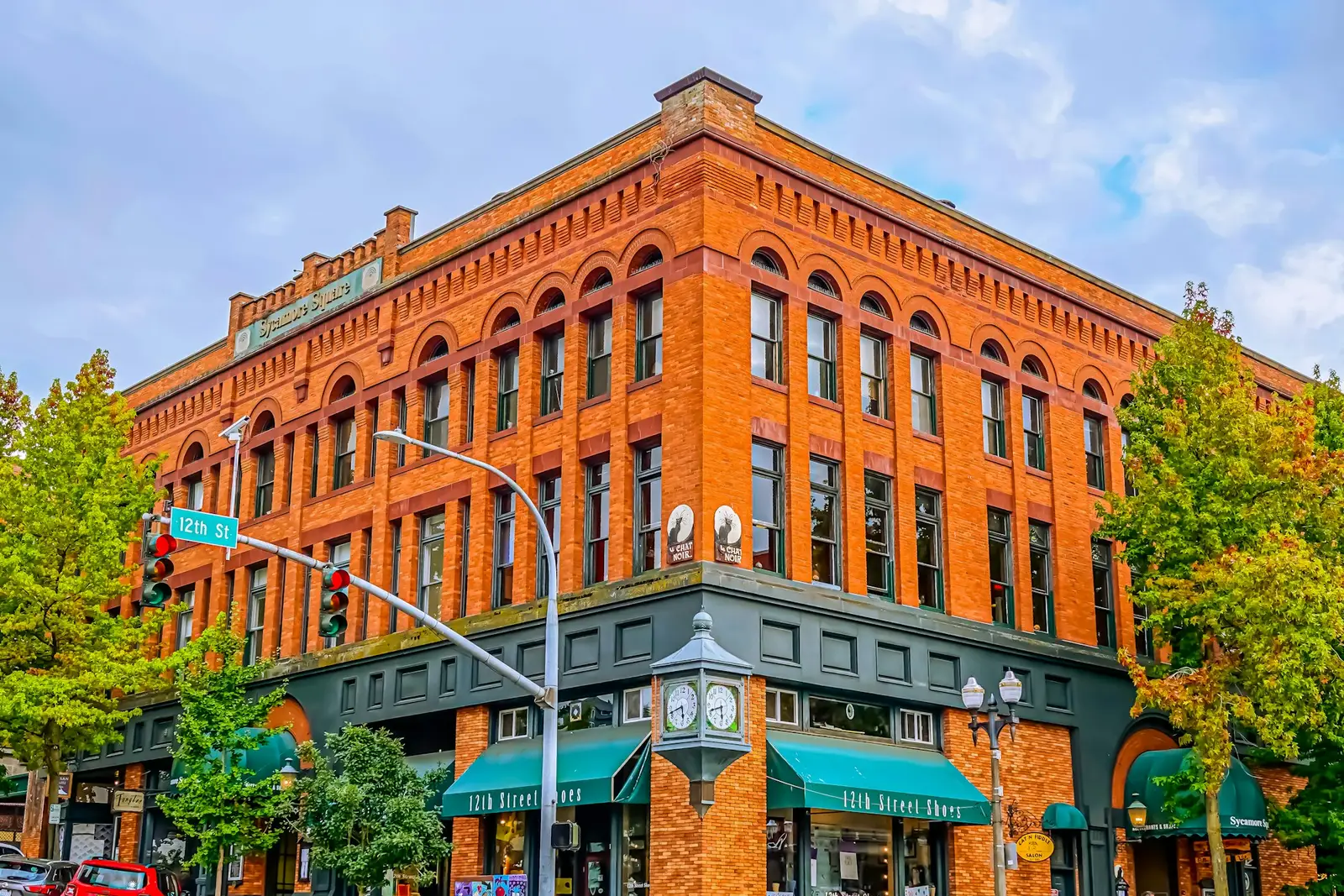
Fairhaven, the South Hill and the Lettered Streets near downtown hold Bellingham's oldest homes, many from the 1890s boom when the railroad was expected to make Bellingham Bay a major port. In these houses the heater usually sits in a basement or a cramped corner of an old porch that was closed in long ago. Venting runs into old brick chimneys that may be unlined or crumbling.
The Sehome, York and Happy Valley neighborhoods around Western Washington University are full of older houses converted into student rentals. Landlords there often run one tank for four or five tenants, and emergency calls spike in the fall when every bedroom showers at the same hour. Columbia, Roosevelt and Birchwood have mid-century ramblers whose heaters usually stand in the garage or beside the laundry. Edgemoor and Silver Beach have larger homes, and newer development in Cordata, King Mountain and Barkley tends toward townhouses and apartments with small electric tanks or tankless gas units.
Fraser outflow winds, cold snaps and quakes
Bellingham's winters are usually mild and wet, but several times a season, cold arctic air pours out of the Fraser River Valley in British Columbia and roars across Whatcom County. These northeast gales can push wind chills below zero, knock out power and freeze pipes in uninsulated crawlspaces and garages. A water heater in a drafty garage on the north side of town works far harder during an outflow event, and cold water lines feeding it can freeze outright.
Power outages during those storms take out electric tanks and most gas heaters with electronic ignition. Plumbers fielding calls during a cold snap also see blown-out relief valves and cracked fittings where water froze and expanded.
Whatcom County also sits in earthquake country, close to the Cascadia subduction zone and crustal faults under the Puget lowland. State code calls for seismic restraint on every Washington water heater, yet older Fairhaven and South Hill basements often have heaters standing loose.
The problems plumbers see most in Bellingham
- Rental tanks overwhelmed in multi-tenant houses near WWU, where a 40-gallon heater cannot keep up with five showers.
- Corroded dielectric fittings and spent anodes on soft Lake Whatcom water, leading to slow tank leaks.
- Venting problems in old chimneys in Fairhaven and South Hill homes, where unlined brick deteriorates.
- Frozen supply lines and cracked valves after Fraser outflow cold snaps.
- Rotten-egg smell in hot water from anode reactions in tanks left at low temperatures.
- Failed elements in apartment electric tanks in Cordata and Barkley; our element and thermostat page explains the fix.
Water heater prices in Bellingham
| Job | Typical Bellingham range | Notes |
|---|---|---|
| Thermocouple, pilot or igniter repair | $175–$325 | |
| Gas control valve | $400–$675 | |
| Electric element or thermostat | $175–$375 | |
| Anode rod replacement | $175–$375 | Flexible rods for low basements |
| Chimney liner or new venting | $500–$1,800 | Older brick chimneys |
| 40–50 gallon gas tank replacement | $1,900–$3,700 | Permit and strapping included |
| Tankless or heat pump install | $4,000–$7,200 | Venting or electrical vary |
Bellingham rates fall between Seattle's and rural Whatcom County's. Basement jobs in old Fairhaven houses with narrow stairs, or a heater replacement that triggers a new chimney liner, can add a lot to the bill. Weekend calls in the middle of an outflow event also cost more.
Licensing and Bellingham permits
In Washington, plumber certification and contractor registration both run through Labor and Industries, known as L&I. A water heater job should be done by a certified plumber working for a registered contractor, and L&I's online lookup shows both, along with bond and insurance status.
Bellingham's Planning and Community Development Department runs the permit center that issues plumbing and mechanical permits for water heaters inside city limits. Inspectors check strapping, the relief valve line, combustion air and venting. Ferndale, Lynden, Blaine and unincorporated Whatcom County use their own permit offices.
Cascade Natural Gas, PSE and electrification
Cascade Natural Gas, not Puget Sound Energy, supplies natural gas in Bellingham. If you smell gas, leave the building and call Cascade. Puget Sound Energy provides electricity across the city, and its outage map is the place to check during a windstorm.
Bellingham has moved to limit gas water heating in some new buildings, and the state's energy code favors heat pump water heaters. That makes heat pumps the common pick in new construction. In an older home, a heat pump needs a 240-volt circuit and a space that stays reasonably warm; a cold north-side garage during an outflow event is a poor spot. PSE and state programs have offered heat pump rebates at times.
Sizing for cold Lake Whatcom water
With winter water arriving in the low 40s, a heater in Bellingham has to raise it roughly 75 to 80 degrees. Tankless units lose flow rate as the temperature rise climbs, so a model that handles two showers in July may manage only one in February. For larger families or student rentals, moving to 75 gallons of storage, or a condensing tankless model sized for the winter rise, avoids the morning scramble.
Keep the thermostat at 120°F or slightly above; much lower can encourage odor-causing bacteria in a tank fed by soft water. Check the anode every few years, and when a tank past twelve starts leaking, read our notes on new heaters before calling.
Around Bellingham
Ferndale, just up I-5, treats its own city water and issues its own permits. Lynden runs a city water system drawing from the Nooksack River area. Sudden Valley and much of the Lake Whatcom shoreline are served by the Lake Whatcom Water and Sewer District. Blaine near the border has its own city utility, and many rural homes in the county draw from private wells, where mineral content varies far more than on the Lake Whatcom supply.
Water heater questions from Bellingham
Where does Bellingham's drinking water come from?
Lake Whatcom, treated at the city's plant in Whatcom Falls Park. Water from the Middle Fork Nooksack can be diverted into the lake when needed.
Who provides natural gas in Bellingham?
Cascade Natural Gas. Puget Sound Energy provides electricity.
Why does my student rental run out of hot water every morning?
One tank is serving too many people showering in a short window. A bigger tank or a second heater fixes it.
Do I need a water softener in Bellingham?
Generally no. Lake Whatcom water is soft. Rural wells in the county can be a different story.
Can a Fraser outflow cold snap damage my water heater?
It can freeze supply lines and valves in cold garages and crawlspaces. Insulating pipes and keeping the garage door closed helps.
Who issues water heater permits in Bellingham?
The city's Planning and Community Development Department permit center.
How do I check a plumber in Washington?
Use the Department of Labor and Industries lookup to confirm plumber certification and contractor registration.