Tolt River water through the Cascade Water Alliance
Kirkland runs its own water distribution system but buys its supply. As a member of the Cascade Water Alliance, the city receives water that Seattle Public Utilities collects in its protected mountain watersheds. For most of Kirkland, that means the South Fork Tolt River, filtered at Seattle's Tolt treatment facility near Duvall and piped west across the Snoqualmie Valley. When the Tolt plant is down for maintenance, Cedar River water from the watershed southeast of Renton fills in.
Not every Kirkland address is on the city system. Finn Hill, the northern part of Juanita and Kingsgate joined the city in the 2011 annexation, and parts of those neighborhoods still receive water from Northshore Utility District or Woodinville Water District. Your bill shows which provider serves you, and both districts post annual water quality reports of their own.
Tolt water ranks among the softest municipal supplies in the country. A Kirkland tank flush typically brings out a little sand and a few anode flakes rather than the thick mineral crust seen in hard-water regions. What this supply does instead is slowly eat metal. Magnesium or aluminum anodes can be mostly gone within six or seven years, and brass and copper fittings on the tank top develop green crust that eventually weeps.
Lakefront homes, ramblers and Totem Lake condos
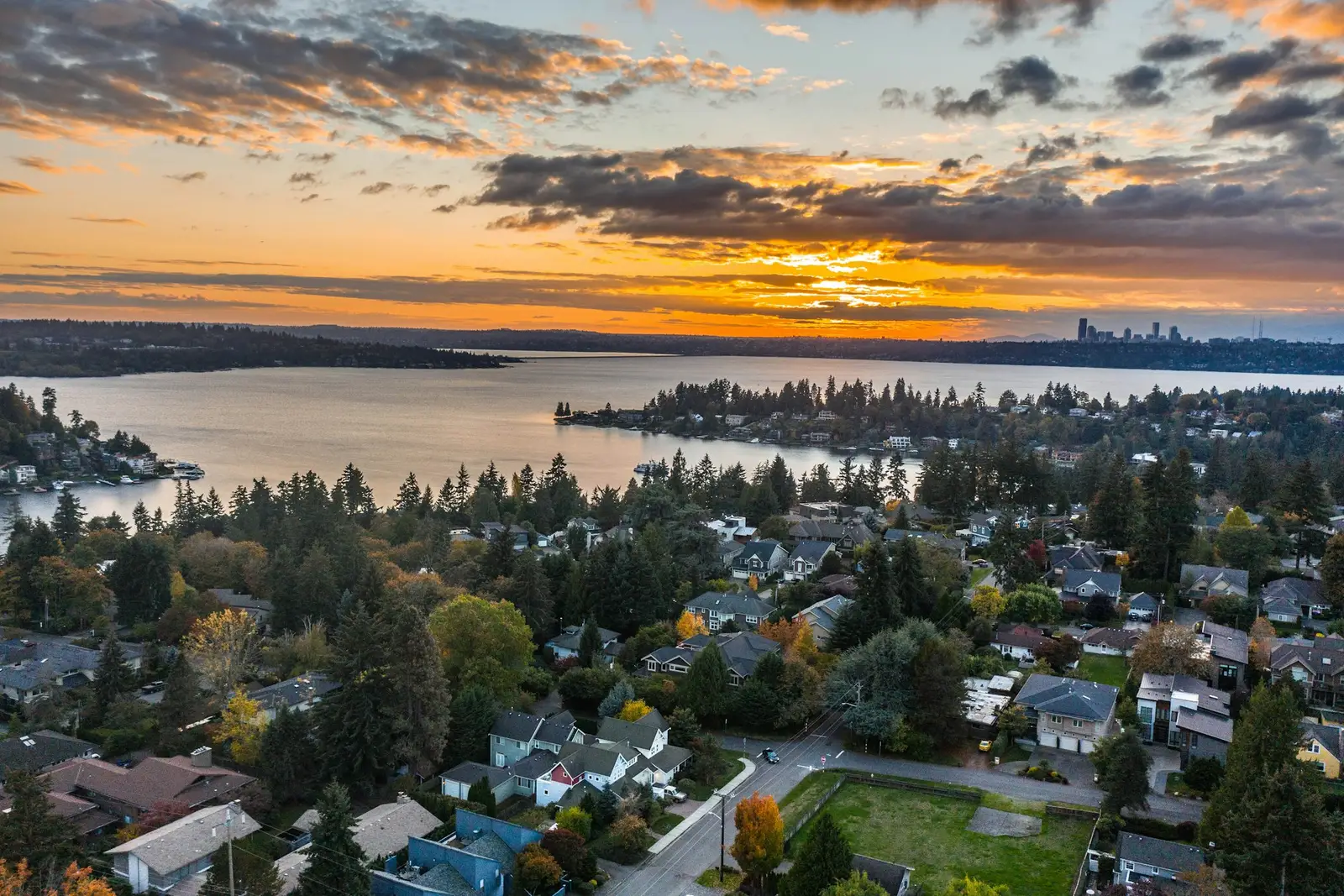
Kirkland's housing ranges widely. Along Lake Washington Boulevard and in the Houghton, Lakeview and Moss Bay neighborhoods, waterfront and view homes are often large, recently built or heavily remodeled, with tankless gas units or twin tanks in a garage or mechanical room. Some lakefront houses sit on steep lots with the mechanical space in a lower level near the water, which can make swapping a tank a carry-it-down-the-stairs job.
Rose Hill, Norkirk, Highlands and Juanita have a lot of 1950s through 1970s ramblers and split-levels, where heaters sit in the garage or a laundry closet near the kitchen. Finn Hill and Kingsgate, developed mostly in the 1960s through the 1980s under King County, have split-entry houses with heaters in lower-level utility rooms. Totem Lake has grown rapidly with mid-rise apartments and condos around the redeveloped Village at Totem Lake, many with compact electric tanks or central building systems. Downtown Kirkland along Lake Street and Central Way has the same condo mix on a smaller scale.
Storms, cold snaps and the Seattle Fault
Eastside windstorms bring down tall Douglas firs onto power lines, and Kirkland neighborhoods under heavy tree cover, such as Bridle Trails, Finn Hill and the slopes above Juanita, can lose power for a day or longer. Electric heaters and most newer gas models with electronic controls go cold until PSE restores service. A few times each winter, cold snaps send overnight lows into the teens, and garage heaters on uninsulated walls feel it.
Kirkland lies just north of the Seattle Fault zone and within reach of a Cascadia subduction quake. Washington's plumbing code requires seismic restraint for water heaters, and King County area inspectors expect proper straps fastened to framing. Older split-level installs often fall short, with a single strap or none.
The problems plumbers see most in Kirkland
- Running short of hot water in winter when 43°F Tolt water meets a modest tank in a busy Rose Hill or Juanita household.
- Dissolved anodes and green tank-top fittings from soft-water corrosion, sometimes ending in a leaking tank.
- Tankless error codes and flow complaints in lakefront remodels with long pipe runs to distant bathrooms; our tankless page explains common codes.
- Power-vent and igniter failures after windstorm outages and surges.
- Lower-level installs with poor access in Finn Hill and Kingsgate split-entries.
- Small electric condo tanks in Totem Lake units that fail on elements or thermostats.
Water heater prices in Kirkland
| Job | Typical Kirkland range | Notes |
|---|---|---|
| Pilot, igniter or flame sensor repair | $185–$350 | |
| Gas control valve | $425–$725 | |
| Electric element or thermostat | $185–$400 | Condo access can add time |
| Anode rod replacement | $185–$400 | Worth doing early on soft water |
| Tankless service and repair | $250–$800 | Depends on the part |
| 50-gallon gas tank replacement | $2,100–$4,000 | Permit, straps and haul-away |
| Tankless or heat pump installation | $4,500–$8,000 | Venting and electrical vary |
Kirkland prices track the rest of the Eastside, which is among the most expensive labor markets in the state. Lakefront homes with stairs-only access, condo buildings with parking and elevator rules, and installs that need a new vent route all push the total up.
Washington licensing and Kirkland permits
Washington's L&I keeps searchable records of both plumber certifications and contractor registrations. For Kirkland work, look for a registered plumbing contractor whose crew holds L&I journey-level plumber certification.
Kirkland's Planning and Building Department issues the plumbing and mechanical permits for water heater replacements and conversions, and its inspectors look at seismic straps, where the relief line discharges, vent clearances and the gas hookup. Most permits are applied for online. Condo buildings may also have their own association rules on who can work in a unit and when.
Puget Sound Energy for gas and electricity
PSE is Kirkland's utility for both natural gas and electricity. If you smell gas, leave right away and call PSE from outside or from a neighbor's house. PSE has run incentive programs at times for heat pump units and for high-efficiency gas heaters, and Washington's energy code now steers new homes toward heat pump water heating.
Heat pump water heaters work in Kirkland garages and basements. Because they draw their energy from room air, a cold garage in January slows them down. An interior utility room or a ducted install often performs better. They also need a 240-volt circuit and adequate air volume, which can be tight in older split-levels.
Sizing and upkeep on soft, cold water
Because Kirkland's water starts so cold in winter, size a heater for January rather than July. A family of four that uses a soaking tub usually needs a 50-gallon tank at minimum, or a 75-gallon or high-capacity tankless unit in a larger home. Tankless units should be sized for the full temperature rise, near 80 degrees in midwinter.
On Tolt water, the most useful maintenance is replacing the anode before it disappears and checking the top fittings for weeping. Annual flushing mostly clears sand and anode debris. When an older tank starts leaking from the base, it has reached the end; read up on replacing an Eastside tank before getting quotes.
Around Kirkland
Bellevue to the south and Redmond to the east are also Cascade Water Alliance members with their own permit offices. Bothell and Woodinville to the north have separate city building departments and are served by a mix of city and district water systems. Kenmore across the north end of the lake works with Northshore Utility District for water and has its own permit counter.
Water heater questions from Kirkland
Where does Kirkland's water come from?
Mostly from the South Fork Tolt River, bought from Seattle Public Utilities through the Cascade Water Alliance. Cedar River water fills in during Tolt maintenance.
Who serves water in Finn Hill and Kingsgate?
Parts of those neighborhoods are served by Northshore Utility District or Woodinville Water District rather than the city. Check your water bill.
Is Kirkland water hard?
No. It is very soft, so scale is rarely a problem, but anodes and fittings corrode faster.
Why does my Kirkland shower go lukewarm in January but not in summer?
In January the Tolt supply arrives in the low 40s, far colder than in August, so the same tank delivers much less. Upsizing or a high-capacity unit helps.
Who provides gas and electricity in Kirkland?
Puget Sound Energy provides both.
Who issues water heater permits in Kirkland?
Kirkland's Planning and Building Department, mostly through its online permit portal.
Can my condo in Totem Lake use a heat pump water heater?
Sometimes. It needs enough air volume and a 240-volt circuit, and the building's rules may limit options.