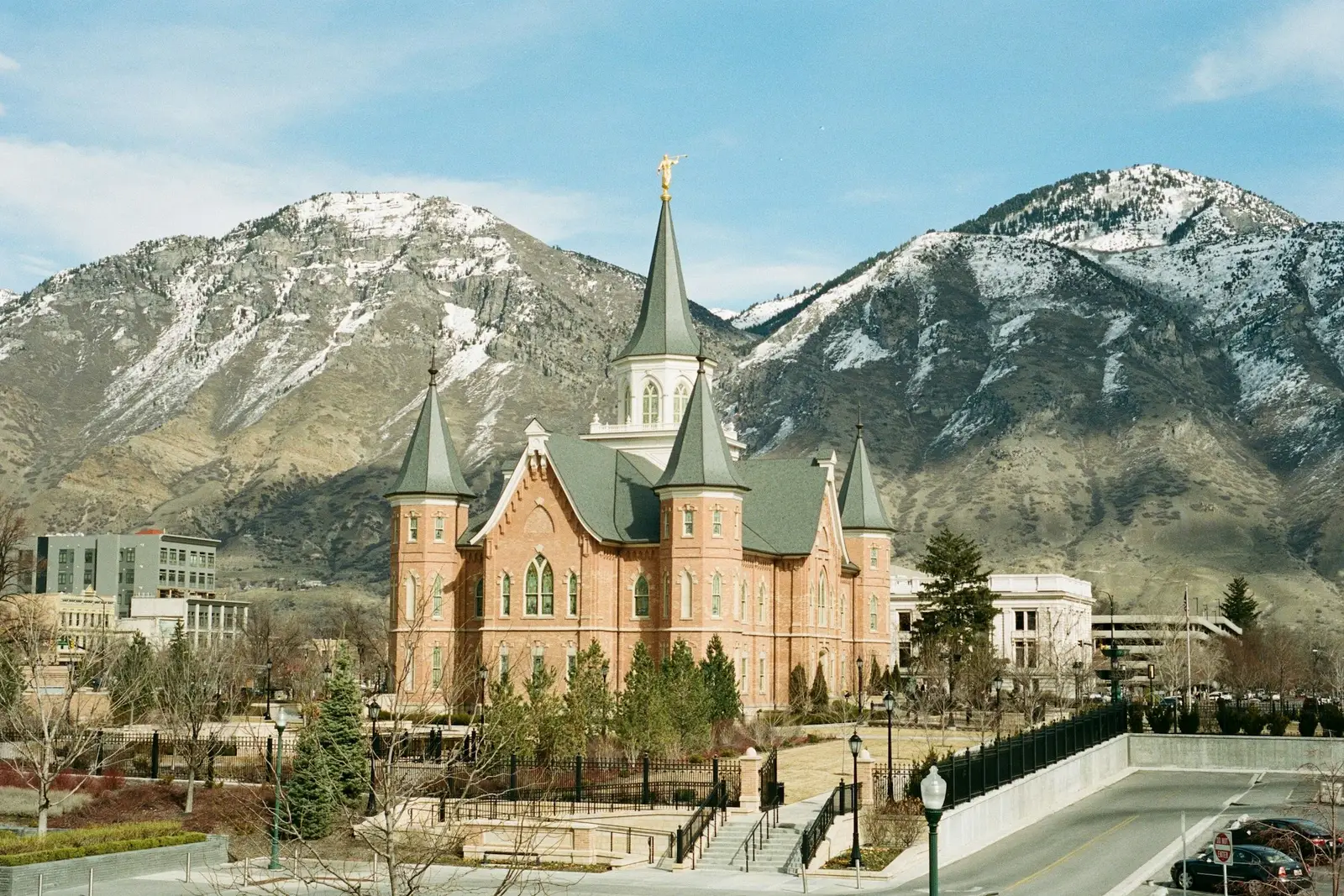
Provo's wells, springs and river water
Provo is one of the Utah cities that runs its own water department rather than relying entirely on a wholesale district. Most of its supply comes from municipal wells tapping the aquifer beneath Utah Valley and from springs in and near the canyons above the city, with Provo River water added to the mix. Because groundwater dominates, the water coming into homes stays within a fairly narrow temperature band, rarely dropping as cold as surface water does elsewhere along the Wasatch Front.
That groundwater has picked up calcium and magnesium from the valley's limestone-rich sediments, so Provo taps deliver anywhere from moderately hard to hard water, with the exact figure set by which well fields are pumping that week. Tanks in Provo develop scale steadily, and the white flakes that collect on faucet aerators are the same material piling up on the floor of a gas tank or encrusting electric elements.
Rentals, basement apartments and family homes
No other part of Utah has a rental market quite like the blocks around Brigham Young University. Neighborhoods such as Joaquin, south of campus, and the streets near the Provo Tabernacle and Center Street hold older single-family homes carved into student apartments, often with two or three units sharing one heater, or with a separate small tank for a basement unit. Large purpose-built student complexes along 900 East and around the Raintree area use commercial boilers or many individual tanks.
Family neighborhoods like Edgemont, Grandview, Rock Canyon and Pleasant View are full of 1960s through 1990s split-levels and ramblers with basements. Many of those homes have added an accessory apartment in the basement, and the original water heater suddenly serves two households. That usually shows up as complaints about short showers and longer recovery times.
West Provo, the Riverbottoms and the newer subdivisions toward Lakeview and the Provo Airport hold more recent housing with garage or utility room heaters, and some newer townhomes along the University Avenue corridor and downtown use tankless units.
Winter inversions and Wasatch weather
Provo winters bring cold snaps and the infamous valley inversions, when a layer of stale, cold air sits over Utah Valley for days. During inversions, residents are asked to cut back on burning, and older gas heaters that burn poorly add to the problem. A burner that leaves soot or a yellow flame should be serviced, both for safety and because it hurts air quality.
Canyon winds out of Provo Canyon can gust strongly on the east bench, sometimes snuffing pilots on heaters with exterior vent terminations. At around 4,550 feet, gas heaters here need to be built or adjusted for altitude, and a replacement burner, orifice or gas valve has to match that rating.
The problems plumbers see most in Provo
- Overworked tanks serving both an upstairs family and a basement apartment.
- Student rental heaters that run out of hot water on weekday mornings. Our troubleshooting page for cold showers walks through the basics.
- Scale buildup in gas and electric tanks on hard well water.
- Sooty or yellow burners on old heaters, a concern during inversion season.
- Tankless units in newer townhomes that clog without regular descaling. More in tankless service.
- Pilot outages on east bench homes when canyon winds blow hard.
Typical water heater prices in Provo
| Job | Typical Provo range | Notes |
|---|---|---|
| Pilot assembly or thermocouple | $150–$300 | |
| Gas valve replacement | $275–$575 | |
| Flush and scale removal | $110–$250 | |
| Electric element and thermostat | $150–$325 | Common in basement units |
| Second heater for a basement apartment | $1,400–$2,800 | Venting can add cost |
| 40–50 gallon gas tank replacement | $1,350–$2,750 | Permit usually included |
| Tankless installation | $3,000–$5,600 |
Provo prices are moderate for the Wasatch Front. Student rentals that need emergency same-day service, basement apartment heaters in tight closets and older homes with outdated vent connectors usually cost more.
Utah licensing and Provo inspections
In Utah, plumbers and the contracting companies that employ them are licensed through the Division of Professional Licensing, usually called DOPL, within the Department of Commerce. A homeowner can confirm an apprentice, journeyman or master credential, as well as the company's contractor license, through DOPL's online verification tool.
Inside city limits, Provo's Development Services department issues building permits, and a water heater replacement falls under that process. The city inspector checks the vent, gas shutoff and piping, relief valve drain line, seismic straps, and expansion tank where required. Landlords adding a separate heater for a basement apartment should expect the city to look more closely, since the unit also needs to meet rules for accessory dwellings.
Provo City Power and Enbridge gas
Provo is one of the few Utah cities with its own electric utility. Provo City Power supplies electricity to homes and businesses in town, while natural gas comes from Enbridge Gas Utah, the former Dominion Energy Utah. Either utility may post rebates at times for heat pump or high-efficiency gas units, so a quick look at their program pages before buying is worthwhile.
For a family home with a basement apartment, two separate heaters often make more sense than one oversized tank, so each household has its own supply and controls. Heat pump models suit the roomy unfinished furnace rooms found in many Edgemont and Grandview basements, provided there is a floor drain nearby for condensate. In a student rental, durability and easy service matter most, and a standard gas tank remains the typical choice.
Taking care of a heater on Provo water
An annual drain pulls out the flaky residue Provo's well water leaves behind, and households with a basement apartment drawing on the same tank may want to do it twice. Homes with a softener can stretch the interval, but should check the softener's salt so it keeps doing its job. Landlords should put the flush on the same calendar as the summer turnover between BYU semesters, when apartments are empty and nobody minds a short shutdown. The anode rod is worth checking at the same time; replacing a worn rod costs far less than replacing a tank.
A heater that is leaking from the tank body, more than about ten to twelve years old, or failing repeatedly is usually ready for replacement. Younger heaters with a bad thermocouple, element or valve are generally worth repairing.
Around Provo
Orem, just north across University Parkway, pumps its own wells and inspects its own construction. Springville to the south has its own municipal electric and water utilities. Spanish Fork, Mapleton and Lindon each handle their own permits, and many homes in these towns get pressurized irrigation for landscaping alongside culinary water. Vineyard along Utah Lake has grown fast with new housing and issues its own permits too.
Water heater questions from Provo
Where does Provo get its drinking water?
Provo City operates its own system using municipal wells, mountain springs and Provo River water.
Does Provo have its own electric company?
Yes. Provo City Power supplies electricity in town, while Enbridge Gas Utah supplies natural gas.
Can one water heater serve a home with a basement apartment?
It can, but it is often stretched thin. Many Provo homes with accessory apartments do better with two separate heaters.
Who licenses plumbers in Provo?
Utah's Division of Professional Licensing (DOPL) licenses plumbers and plumbing contractors statewide. Check credentials online before hiring.
When should a BYU-area landlord service water heaters?
The summer break between semesters is ideal, when apartments are empty and flushing or replacement causes the least disruption.
Why is my burner flame yellow during inversion season?
A yellow or sooty flame points to poor combustion, often from a dirty burner or blocked air supply. Have it serviced promptly.