Boise's water supply
Most of Boise gets its tap water from Veolia Water Idaho, the private utility long known as United Water Idaho and later SUEZ. A large share of the supply comes from wells drilled into the aquifers beneath the Treasure Valley. The rest is Boise River water, treated at the Marden and Columbia water treatment plants and blended into the system, with more river water used during the high-demand summer months.
Because the wells vary, hardness does too. Some Southeast Boise and Bench neighborhoods see moderate mineral levels, while other areas run harder and a few wells are fairly soft. Residents commonly notice white spotting on glassware and showerheads, and tanks collect a steady layer of sediment. Flushing once a year usually keeps that in check, but homes on the harder wells benefit from more frequent attention.
Homes outside the Veolia service area, especially in the foothills and parts of Ada County, may rely on private wells. Those can carry more minerals, iron or sand than the city system, and sand in particular wears drain valves and clogs tankless filter screens.
Geothermal heat in downtown Boise
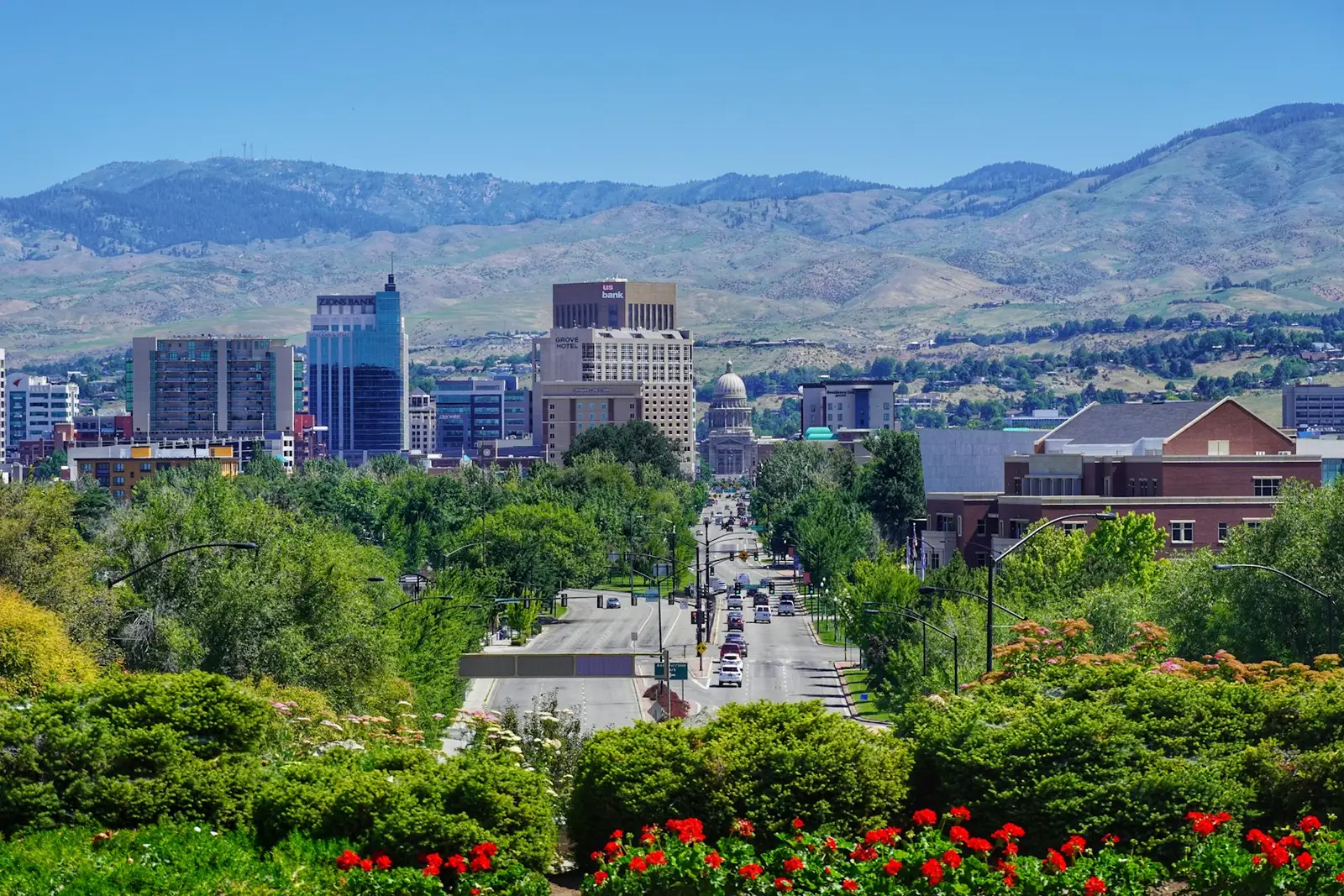
Boise is famous for geothermal heating. Since the 1890s, homes along Warm Springs Avenue have been heated with natural hot water from the Boise Warm Springs Water District, and the city runs a large municipal geothermal district heating system that warms many downtown buildings, including the Idaho State Capitol and parts of Boise State University.
Geothermal water mainly provides space heating, not drinking-quality hot water, so most homes along that system still rely on a standard gas or electric water heater for showers and sinks. In some older Warm Springs homes the plumbing has been modified over the decades, and a plumber may find heat exchangers, unusual piping or old mechanical rooms. Those layouts call for someone familiar with older Boise homes before changing anything.
Basements, crawlspaces and garages
The North End, East End and Hyde Park are packed with 1900s to 1930s Craftsman cottages and foursquares, many with basements where the water heater shares space with an old furnace. Narrow stairs and low ceilings can complicate replacement, and older chimneys may need a liner if a new heater vents into them.
Postwar homes on the Boise Bench and in the Vista area often have heaters in a utility closet or a crawlspace access room. Newer subdivisions in Harris Ranch, West Boise, the Southwest and out toward Meridian typically put the heater in an attached garage, where it may sit on a platform beside the furnace. Garages here can get cold enough in January to stress exposed water lines.
Climate: inversions, cold snaps and hot summers
Boise winters bring cold snaps, occasional heavy snow and long stretches of valley inversion, when cold air and haze settle into the Treasure Valley for days. That cold air pulls inlet water temperatures down and increases demand on every heater. Garages and crawlspaces near freezing can freeze exposed pipes, so insulation and closing garage doors matter.
Summers are hot and dry, and incoming water warms noticeably. Boise sits at about 2,700 feet, low enough that most gas heaters run normally, though foothill homes at higher elevations may need settings checked.
The problems plumbers see most in Boise
- Sediment buildup in tanks fed by Boise's harder wells.
- Cramped basement installs in North End bungalows with tight stairs and old flues.
- Frozen lines in garages and crawlspaces during deep cold snaps.
- Sand-clogged screens on tankless units in homes on private wells.
- Failed igniters and thermocouples on aging gas tanks serving Intermountain Gas customers.
- Undersized builder tanks in newer Southwest Boise and Harris Ranch homes with large families.
Typical water heater prices in Boise
| Job | Typical Boise range | Notes |
|---|---|---|
| Thermocouple, igniter or pilot repair | $150–$275 | |
| Gas control valve replacement | $250–$500 | |
| Electric element and thermostat | $150–$325 | |
| Flush and drain valve upgrade | $100–$225 | |
| Expansion tank installation | $175–$400 | |
| 40–50 gallon gas tank replacement | $1,300–$2,800 | Permit usually included |
| Tankless installation | $3,000–$5,400 |
Boise prices have risen with the region's growth but remain moderate compared with coastal cities. Basement jobs in the North End, chimney liner work and winter emergency calls fall at the higher end.
Permits and licensing in Boise
Plumbers in Idaho hold licenses from the state's Division of Occupational and Professional Licenses (DOPL), which oversees journeyman and master plumbers and plumbing contractors. Inside city limits, Boise Planning and Development Services issues permits for replacing a water heater, while DOPL handles plumbing permits in many areas that do not run their own programs.
Boise inspectors usually check gas piping, venting, where the relief line terminates and the tank's strapping. When comparing bids, check each plumber's DOPL license online and ask who pulls the city or state permit.
Utilities and replacement choices
Intermountain Gas supplies natural gas throughout Boise and the Treasure Valley, and Idaho Power provides electricity. Gas-fired tanks still dominate Boise replacements, though heat pump units do well in basements and conditioned spaces, and Idaho Power has offered efficiency incentives at times.
For homes with high demand, a tankless gas unit or a larger tank may be worthwhile. In basement installs, replacing an atmospheric heater with a power-vent or direct-vent model can eliminate an old masonry chimney from the equation.
Sizing for growing Treasure Valley households
Many homes built during the Treasure Valley boom came with a 40-gallon tank that was chosen by price, not by household size. When winter inlet water drops into the low 40s, that tank can fall short for a family taking several showers each morning. Moving up to a 50-gallon tank with a stronger burner, or a properly sized tankless unit, usually solves it.
Boise's elevation is modest enough that tankless output is close to its rated numbers on the valley floor, but foothill homes above the Bench may lose a little. Sizing should be based on the coldest winter water, not on summer performance.
Repair or replace in Boise
Repairs make sense on most heaters under eight to ten years old. Boise's moderate water lets many tanks last 10 to 14 years with maintenance, though harder well zones shorten that. A rusted tank bottom, a leak from the shell or repeated failures on an older heater are signs it is time to replace.
Around Boise
Meridian draws city water from its own wells and has its own building department. Nampa runs a city utility and permit office. Eagle is served by Veolia and other providers, with its own permits. Garden City, Kuna and Star each handle permits separately, and rural Ada and Canyon County homes often rely on private wells and DOPL permits.
Water heater questions from Boise
Who supplies tap water in Boise?
Veolia Water Idaho, the utility once called United Water Idaho and later SUEZ, serves most of the city with a blend of well water and Boise River water treated at the Marden and Columbia plants.
Is Boise water hard enough to damage a water heater?
It is moderately hard on average, and some Boise wells run harder. Over a few years a Boise tank collects a gritty layer, so draining it every year makes sense, more often if your faucets show heavy white spotting.
Can Boise's geothermal water heat my showers?
Generally no. The city's geothermal district system and the Warm Springs Avenue system mainly provide space heating, so homes on them still rely on a separate water heater for domestic hot water.
Who issues water heater permits in Boise?
Boise Planning and Development Services handles homes inside city limits. In many other parts of Idaho, the state's Division of Occupational and Professional Licenses issues plumbing permits.
Which utilities serve Boise water heaters?
Intermountain Gas supplies natural gas across the Treasure Valley, and Idaho Power provides electricity for electric and heat pump models.
How do I keep lines near a garage heater from freezing during an inversion cold spell?
Keep the garage door shut, wrap exposed water lines with insulation, seal drafts near the heater and, during a deep freeze, let a faucet on that wall drip slowly.