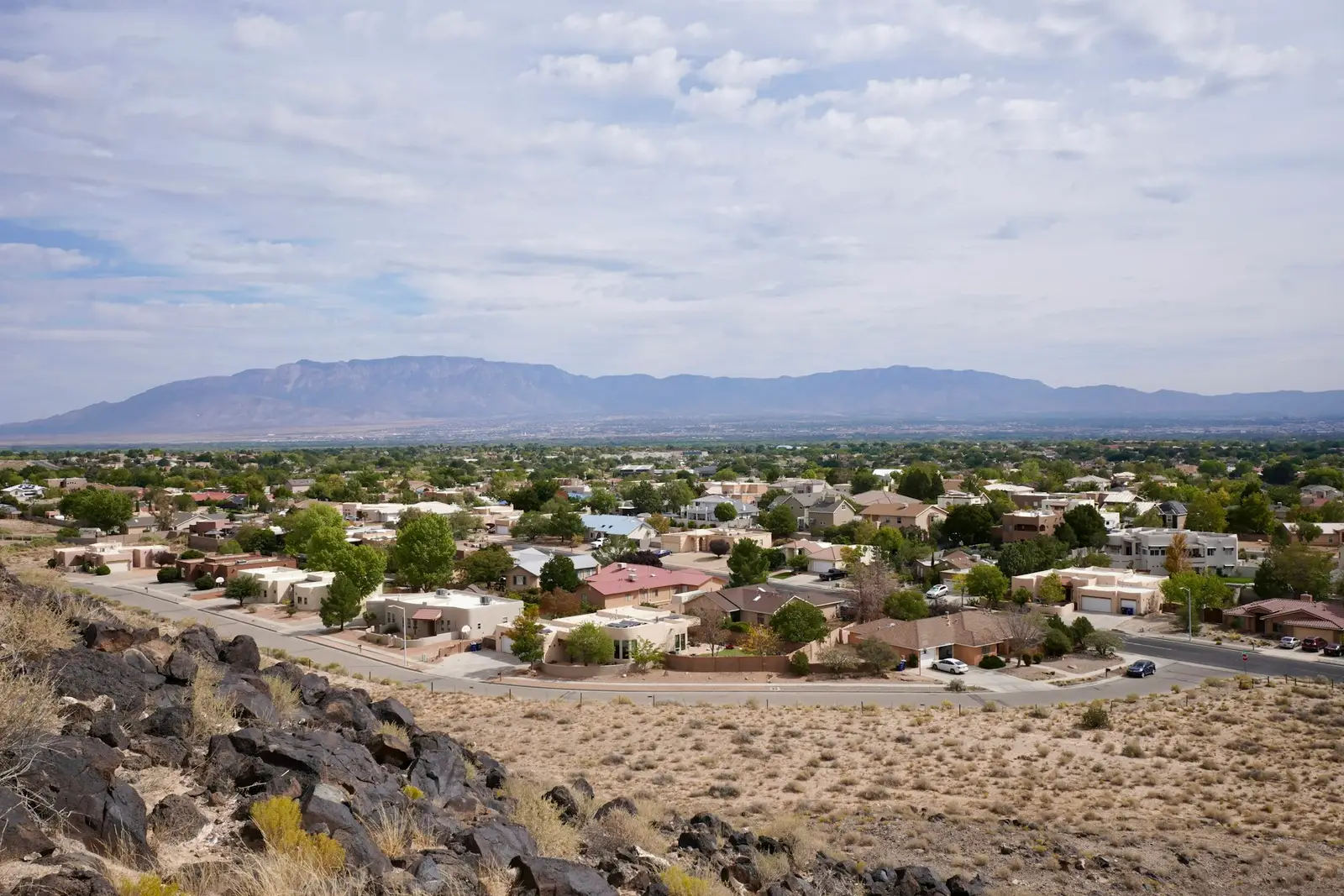
Albuquerque's water
The Albuquerque Bernalillo County Water Utility Authority blends two main sources. Surface water from the San Juan-Chama Project, Colorado River basin water carried by tunnel under the Continental Divide into the Rio Grande, is diverted and treated at the city's surface water plant. Groundwater from wells into the aquifer beneath the city fills in, especially when river flows are low. The blend changes through the year, and so does the hardness.
On average Albuquerque water is moderately hard to hard. Tanks build sediment within a few years, electric elements scale over, and tankless units need descaling about yearly or more. A yearly flush keeps most tanks in good shape.
Altitude and gas burners
At roughly 5,000 to 6,500 feet across the metro, from the valley floor to the Sandia foothills, the air carries noticeably less oxygen than at sea level. Gas water heaters must be approved for high-altitude use or adjusted so their burners get the right fuel-air mix. A heater set up for sea level can burn rich, leave soot in the combustion chamber and produce more carbon monoxide.
Most heaters sold locally are rated for the altitude, but replacement parts must match, and burners should be checked if the flame turns yellow or soot appears. Tankless units also lose some output at elevation, so sizing has to account for it, especially for homes in the higher Northeast Heights.
Stucco homes, garages and closets
Most Albuquerque homes are single-story stucco houses on slabs, from post-war neighborhoods near Nob Hill and the University area to the large subdivisions of the Northeast Heights, the Westside and Rio Rancho beyond. Water heaters typically sit in attached garages, but many older homes have them in an interior utility closet or a closet opening to the outside.
Pueblo Revival and territorial-style homes in Old Town, the North Valley and Corrales sometimes have heaters in unusual spots, such as small mechanical rooms reached from outside or closets under portals. Flat roofs are common, and venting through them needs to be kept in good shape so rain and snowmelt do not find their way to the burner.
The problems plumbers see most in Albuquerque
- Sooty burners on heaters not set correctly for altitude.
- Gritty sediment rumbling in Westside and Heights tanks nobody has drained.
- Scaled electric elements failing in hard water.
- Exterior closet heaters exposed to wind, dust and occasional hard freezes.
- Roof vent problems letting water reach the burner on flat-roofed homes.
- Tankless units that underperform because they were sized for sea level.
Typical water heater prices in Albuquerque
| Job | Typical Albuquerque range | Notes |
|---|---|---|
| Thermocouple or pilot repair | $150–$300 | |
| Burner cleaning and combustion check | $125–$275 | |
| Flush and sediment clean-out | $100–$250 | |
| Electric element replacement | $150–$350 | |
| 40–50 gallon gas tank replacement | $1,300–$2,800 | Permit usually included |
| Tankless installation | $3,000–$5,800 | Sized for altitude |
Albuquerque prices are below the national average. Exterior closets, flat-roof venting and older homes with unusual layouts sit at the higher end.
Permits and licensing in Albuquerque
New Mexico licenses plumbing contractors and journeyman plumbers through the Construction Industries Division of the Regulation and Licensing Department, which also oversees gas fitting. The City of Albuquerque's Planning Department issues permits for water heater replacement within city limits, while Bernalillo County and other jurisdictions such as Rio Rancho issue their own.
Ask for the contractor's New Mexico license number and confirm the right permit is included before agreeing to a replacement.
Winter in the high desert
Albuquerque winters are mostly sunny and mild by day, but nights regularly drop below freezing, and occasional cold snaps bring hard freezes. Heaters in exterior closets and lines in exterior walls are the most exposed. Keeping the closet door closed and sealed against wind, insulating nearby pipes and keeping a gas heater running during a freeze all help.
Spring wind and dust are another local factor. Dust drawn into the burner's air intake builds up over time, so cleaning the intake and burner is a routine part of servicing gas heaters here.
Choosing a replacement in Albuquerque
A gas tank approved for altitude remains the most common and affordable choice. Tankless units work well when sized for elevation and descaled yearly. Heat pump water heaters suit garages that stay above freezing, and PNM has offered efficiency programs at times. If your tank is in an exterior closet, replacement time is a chance to improve the closet's weather sealing or relocate the heater indoors.
Repair or replace in Albuquerque
On a gas tank under eight years old, a thermocouple, igniter, burner cleaning or relief valve is nearly always worth fixing. Tanks in Albuquerque often fail from the bottom up as sediment insulates the burner from the water and overheats the steel, so a tank that has rumbled for years and is now past ten is a better candidate for replacement than repair. Any leak from the tank body itself means it is time for a new heater.
Soot is the one finding that changes the math quickly. A sooted heater needs its burner, flue baffle and vent cleaned and its combustion corrected. If that keeps happening on an older unit set up for the wrong elevation, a new altitude-rated heater is the safer long-term fix.
Simple upkeep for a high-desert heater
Drain a few gallons from the valve at the base every few months and the full tank once a year; Albuquerque sediment is gritty and settles fast. Vacuum the burner-area screen or intake after spring wind season. Check the anode rod around year five. For heaters in an outside closet, look at the door seal and weatherstripping each fall, and make sure the louvers that supply combustion air are open but not packed with tumbleweed debris or dust.
Around Albuquerque
Rio Rancho to the northwest has its own water utility, relying largely on groundwater, and many 1980s and later homes with garage heaters. Corrales and the North Valley include older and rural properties, some on private wells with very hard water. Los Lunas and Belen to the south and the East Mountains communities each have their own water sources and permit offices.
Water heater questions from Albuquerque
Does altitude affect my water heater in Albuquerque?
Yes. Gas heaters must be approved or adjusted for high altitude so they burn cleanly. A tankless unit delivers a bit less flow up here, so buy one sized for the Sandia-foothills elevation.
Is Albuquerque water hard?
It is moderately hard to hard, depending on the blend of river and well water. Regular flushing is worthwhile.
Why is there soot around my water heater?
The burner is likely burning rich because of altitude settings, dust or poor combustion air. Turn it off and have it checked for safety.
Who issues water heater permits in Albuquerque?
The City of Albuquerque Planning Department issues permits within city limits. Bernalillo County and Rio Rancho issue their own.
How do I protect an exterior closet water heater in winter?
Keep the closet sealed against wind, insulate nearby pipes and keep a gas heater running during hard freezes.
How long do water heaters last in Albuquerque?
Gas tanks commonly last 8 to 11 years here. Gritty sediment shortens life when tanks are never drained, so yearly flushing pays off.