Two mountain sources and one treatment plant
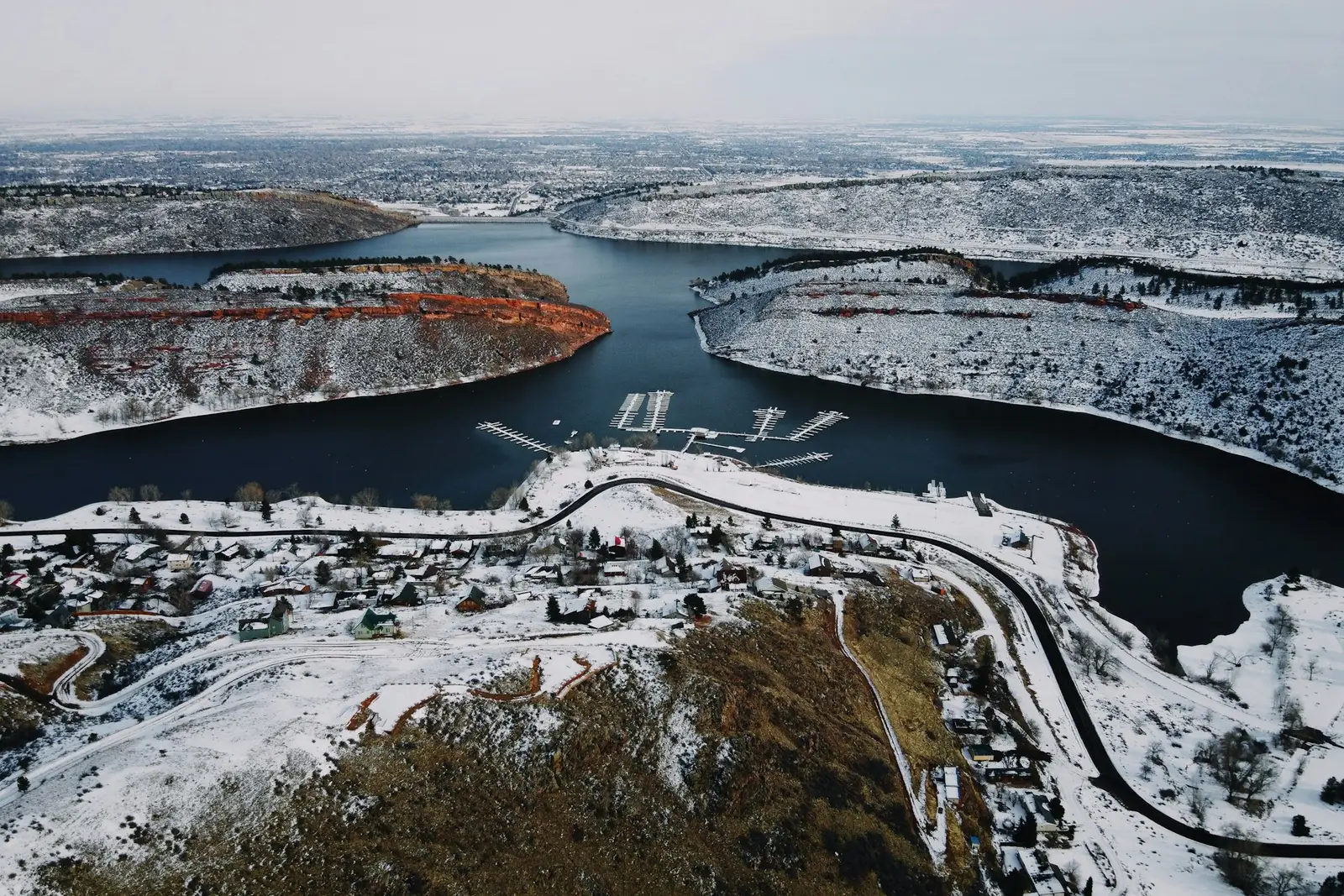
Fort Collins Utilities blends water from two places. One is Horsetooth Reservoir, the long lake west of town that stores Colorado-Big Thompson Project water carried under the Continental Divide. The other is the Cache la Poudre River, taken from an intake up the canyon. Both are treated at the city's water treatment facility in the foothills before flowing down to homes from Old Town to the Harmony corridor.
Because both sources start as snowmelt in granite country, the water is soft. Homeowners moving from the Texas Panhandle or the Midwest are often surprised at how little white crust forms on faucets. For water heaters, that means sediment builds slowly, anode rods last a while, and tankless heat exchangers seldom clog the way they do on well water out east of Interstate 25.
Not every address inside city limits is on Fort Collins Utilities. Parts of the north, east and south edges are served by the Fort Collins-Loveland Water District or East Larimer County Water District, which have their own supply arrangements. Your water bill tells you which one you have, and it is worth knowing before a plumber recommends a softener you probably do not need.
What the High Park and Cameron Peak fires did to the water
The High Park fire of June 2012 burned across a huge stretch of the Poudre watershed west of town. When summer storms hit the burn scar afterward, they washed ash, soil and debris into the river, and Fort Collins Utilities had to close its Poudre intake for long periods and rely on Horsetooth Reservoir alone. The Cameron Peak fire in 2020, the largest in Colorado's recorded history, scorched more of the same basin and brought a fresh round of runoff concerns.
Treated water leaving the plant stays safe and within standards, but post-fire seasons can bring more fine particles and organic material into the system during storm events. Homeowners sometimes notice a bit more grit in faucet aerators and the bottom of tank heaters in those years. If your heater dates from before 2012 and has never been drained, the first flush often brings out more silt than people expect from such soft water.
Fort Collins homes and where the heater sits
Old Town and the streets near Colorado State University are full of early twentieth century bungalows, foursquares and small cottages, many with partial basements or cellars reached by steep wooden stairs. Water heaters in those homes are often tucked beside an aging furnace, sometimes on a dirt or patched concrete floor. Student rentals in Campus West and around Shields Street tend to have basic 40-gallon gas tanks that get hard use from several roommates.
Neighborhoods built from the 1970s through the 2000s, such as Rossborough, Fossil Creek, Southridge and the subdivisions off Timberline and Harmony roads, usually have full basements, and the tank stands in the unfinished furnace room. Newer areas like Rigden Farm, Old Town North and the far southeast often have finished basements, which makes leaks more costly and drain pans more important. Townhomes along the Mason corridor often tuck the tank into a main-level utility closet.
Burning gas at nearly a mile high
Fort Collins sits at roughly 5,000 feet. The thinner air means a gas burner gets less oxygen with each cubic foot it draws, so heaters installed here should be listed for high-altitude use or derated per the manufacturer's instructions. A burner that runs rich leaves soot on the flue baffle, makes the pilot flicker yellow and can raise carbon monoxide levels in a basement.
This matters most when someone buys a heater online or brings one over from a lower-elevation job. Before it goes in, the rating plate and installation manual should confirm it is approved for this elevation. With tankless units, ask the installer to show you the altitude setting on the control board and to size the unit for both the elevation and the near-freezing water that arrives in January.
The problems plumbers see most in Fort Collins
- Lukewarm showers in January when Horsetooth water arrives just above freezing and a small tank cannot keep pace.
- Pilot outages and sooting on heaters that were never set up correctly for the elevation.
- Silt in drain valves on older tanks that lived through the post-fire runoff years.
- Leaks into finished basements in Rigden Farm and other newer subdivisions without a pan or alarm.
- Failed heating elements on electric heaters in condos and rentals around CSU.
- Frozen supply lines near crawlspace vents and exterior walls during subzero cold snaps.
Typical water heater prices in Fort Collins
| Job | Typical Fort Collins range | Notes |
|---|---|---|
| Pilot, thermocouple or igniter repair | $170–$340 | Altitude-matched parts |
| Electric element or thermostat | $190–$380 | Common in condos and rentals |
| Gas control valve | $420–$700 | |
| Drain, flush and silt removal | $130–$290 | |
| 40–50 gallon gas tank replacement | $1,800–$3,600 | Permit, haul-away and venting check |
| Heat pump water heater | $3,200–$5,800 | Needs room and a drain |
| Tankless installation | $3,800–$7,000 | Gas line upsizing often required |
Northern Colorado labor rates track close to Denver's. Narrow Old Town basement stairs, an undersized gas line feeding a planned tankless unit, or a vent that needs rerouting are what move a quote toward the high end. Fort Collins Utilities has offered efficiency rebates at times for heat pump models, so check its current programs before you choose a model.
Permits and Colorado plumbing licenses
Fort Collins does not license plumbers itself; in Colorado that job belongs to the state. The State Plumbing Board, housed in the Department of Regulatory Agencies, issues journeyman, master and residential licenses, and its public lookup lets you confirm a plumber's status in a minute or two. Water heater work in Fort Collins belongs with a licensee or an apprentice working under one.
The City of Fort Collins Building Services office handles water heater replacement permits, and its inspectors review the gas connection, venting, combustion air, expansion control and the relief valve discharge line. Homes in unincorporated Larimer County, such as parts of Laporte and Bellvue, go through the county's building department instead.
A city that sells its own electricity
Unlike most Front Range cities, Fort Collins owns its electric utility. Light and Power, part of Fort Collins Utilities, delivers electricity that is generated and bought wholesale through Platte River Power Authority, which the city shares with Loveland, Longmont and Estes Park. Natural gas, on the other hand, comes from Xcel Energy.
That split matters when you compare fuel costs. The city has pushed hard on electrification goals, and its rates and rebates have at times favored heat pump water heaters over new gas tanks. A heat pump unit works best in a basement that stays above about 40 degrees year round, which most Fort Collins basements do, and it dehumidifies the room as a side effect. It does need space around it and a nearby floor drain or condensate pump.
Upkeep on soft Poudre and Horsetooth water
Soft water is gentle on heat exchangers, but it can be a bit more aggressive toward the sacrificial anode inside a steel tank. Pulling the anode for a look partway through the warranty period tells you whether it is still doing its job. Replacing a worn one is inexpensive compared with a new heater.
Opening the drain cock each spring and letting a bucket or two run out clears the fine silt that storms in the Poudre basin can send through. If the water runs cloudy for more than a minute, a full flush is worthwhile. Also test the relief valve lever once a year; a valve that drips afterward should be replaced rather than ignored.
Repair or replace in Fort Collins
Tanks on Fort Collins water often last longer than the national norm because scale is so light, so a repair on a ten-year-old heater can still make sense if the tank itself is dry. Once you see rust weeping from the base or water collecting under the jacket, the tank is finished. When it is, weigh a standard gas replacement against a heat pump model with any city rebate available, and against water heater replacement options sized for January inlet water.
Around Fort Collins
Loveland runs its own water and power utility and its own building permit desk. Windsor and Timnath to the east have grown fast with newer subdivisions and basement or garage heaters, and each issues its own permits. Wellington to the north draws on a mix of reservoir and groundwater sources, while Laporte and Bellvue fall under Larimer County permitting. Greeley, half an hour southeast, has a separate mountain water system of its own.
Water heater questions from Fort Collins
Will a softener help my Fort Collins water heater last longer?
Usually not on Fort Collins Utilities water, which is naturally soft. Homes on a rural well east of town are a different story and should test first.
Did the 2012 High Park fire damage my water heater?
Not directly. Storm runoff after the fire put more fine silt into the Poudre, so older tanks that were never drained may hold extra sediment worth flushing out.
Does a gas water heater need adjusting for Fort Collins' altitude?
It needs to be listed or derated for roughly 5,000 feet. Most heaters sold in northern Colorado already are, but check the rating plate on any unit bought elsewhere.
Who issues water heater permits in Fort Collins?
City of Fort Collins Building Services. Addresses in unincorporated Larimer County use the county building department instead.
Can a Fort Collins basement host a heat pump water heater?
Often, yes. Most basements here stay warm enough, the city sells the electricity, and rebates have been offered at times. You need space around the unit and a drain.
Why does my shower run cold sooner in winter?
Supply water drops into the high 30s in January, so a tank has much more work to do on every gallon. A slightly larger tank or a recirculating setup may help.
My landlord near CSU will not fix the heater. What can I do?
Put the request in writing and keep a copy. Colorado's warranty of habitability covers hot water, and the city's neighborhood services staff can explain your options.