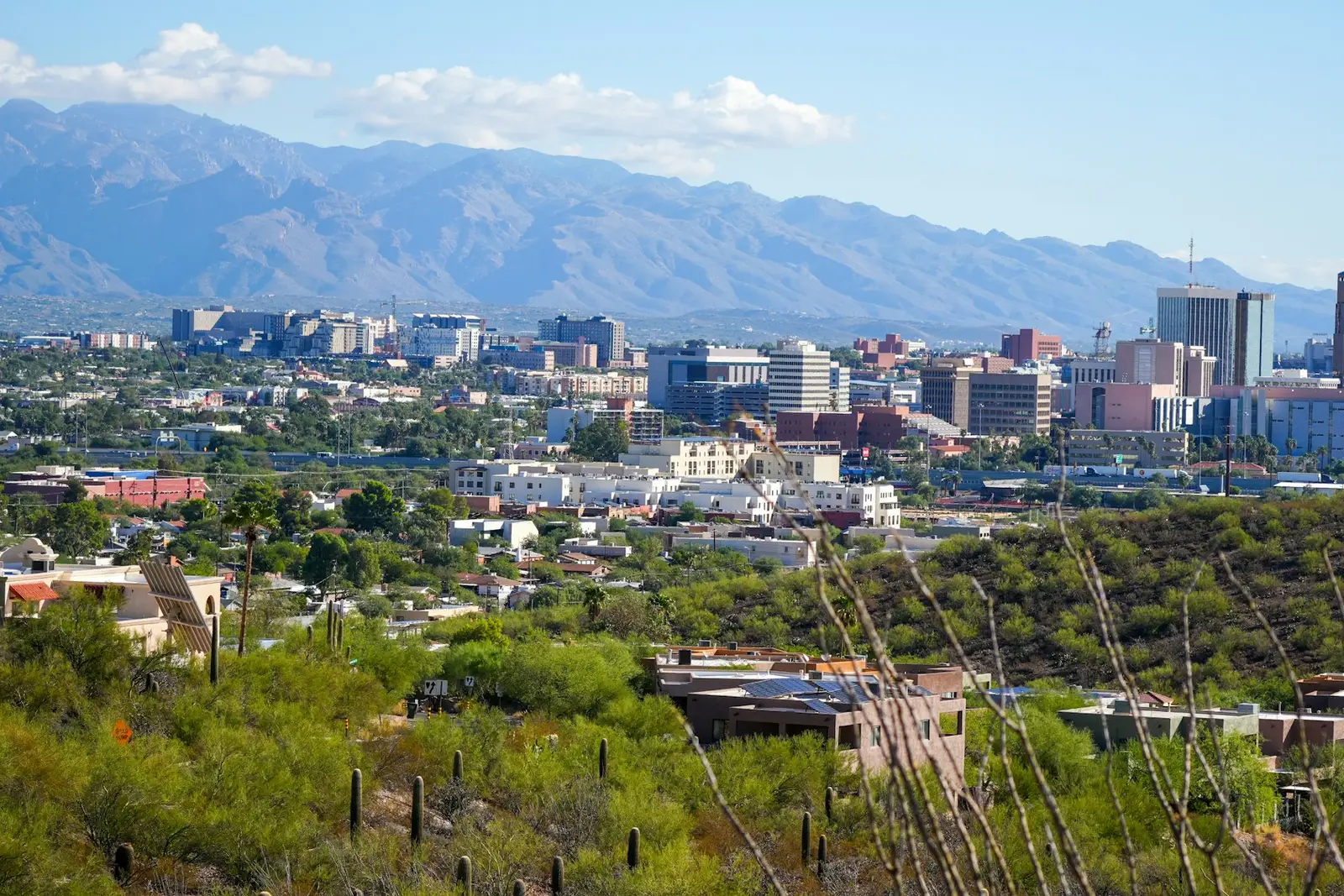
Where Tucson's tap water comes from
For most of the twentieth century Tucson pumped nearly all of its water straight out of the aquifer under the Santa Cruz valley. That changed after Central Arizona Project water reached the city. Today Tucson Water sends CAP water west to the Avra Valley, where it soaks into the ground through recharge basins at the Central Avra Valley and Southern Avra Valley storage and recovery projects. Wells then pull that recharged water back out, blend it with native groundwater, and the Clearwater Renewable Resource Facility sends the mix into the city system.
Letting river water filter through desert sand improves its taste and clarity, but it does not strip out calcium and magnesium. Colorado River water is naturally mineral heavy, so the Clearwater blend lands in the hard range across most of the service area. Homes in the older central grid, on the east side near Tanque Verde, and out toward the Tucson Mountains can see slightly different readings depending on which wells and pipelines feed them, and the utility publishes its water quality figures each year.
For a water heater, hard water means a pale, chalky sediment that collects on the tank floor, lime crust on electric elements, and gradual scaling inside tankless heat exchangers. The rate is slower than in the harshest parts of the Phoenix area but fast enough that a Tucson tank left alone for six or seven years usually carries a noticeable layer of it.
Exterior closets, carports and desert garages
A large share of Tucson houses put the water heater somewhere other than inside the living space. Mid-century slump block and burnt adobe ranches in neighborhoods like Midtown, Palo Verde, Doolen-Fruitvale and Miramonte often have a narrow closet built into the carport wall or the back patio, with a louvered door that opens to the yard. Territorial row houses in Barrio Viejo, Armory Park and El Presidio sometimes tuck the tank into a small outbuilding or a lean-to off the kitchen.
Newer subdivisions on the far east side, in Rita Ranch, Civano and the developments along Houghton Road, usually set the heater in an attached two-car garage, as do most homes in Marana, Oro Valley and Sahuarita. Those garages bake in June, when outside highs regularly pass 105°F, and the heat ages plastic drain valves, wiring and the electronics on newer gas controls.
Outside closets have their own pattern of wear. Wind-driven dust sifts through the louvers, packrats and other critters like the warm corner, and the closet door is often the first thing to warp or rust. Plumbers here routinely find burners caked with fine desert dust and closet floors rotted by years of slow drips from a relief valve line.
Monsoon season and your water heater
From roughly mid-June through September, the North American monsoon brings humid air, dust storms, lightning and short, violent downpours to Tucson. Each of those affects water heaters in a specific way, and July and August are when plumbers field the most monsoon-related calls.
Lightning and power surges knock out the control boards on electric heaters, on power-vent gas units and on tankless models, all of which rely on electronics. A surge protector on the circuit or outlet feeding the heater is inexpensive insurance. Microbursts drive rain sideways into exterior closets, soaking burner compartments and tripping flame sensors, and gusts can blow out a standing pilot through the louvers. When washes run and streets flood, low garages and closets at grade can take in water; any gas heater whose burner or controls have been underwater needs to be inspected before it is relit.
Dust is the quieter monsoon problem. A haboob rolling up from the south can coat everything in a closet with grit, and that grit clogs the flame arrestor screen on modern gas tanks. A heater that keeps shutting off on its own after a dusty summer often just needs that screen and the burner cleaned.
Elevation in Tucson and the foothills
Downtown Tucson sits at roughly 2,400 feet, and the valley floor ranges a few hundred feet either way. That is modest compared with Flagstaff or the Colorado Front Range, and standard gas heaters generally operate fine at this level. Homes climbing into the Catalina Foothills, Tanque Verde and the Tucson Mountains sit higher, and cabins up the Catalina Highway in Summerhaven are thousands of feet above that, where burners do need equipment rated or adjusted for the thinner air.
If you are buying a gas heater or tankless unit for a property well above the valley floor, tell the plumber the elevation so they confirm the manufacturer's altitude limits before installing it.
The problems plumbers see most in Tucson
- Fried control boards on electric, power-vent and tankless heaters after monsoon lightning.
- Dust-clogged flame arrestors on gas tanks in louvered patio and carport closets.
- Lime-crusted lower elements in electric tanks fed by the Clearwater blend.
- Rusted closet floors and doors from relief valve drips nobody noticed.
- Blown-out pilots when monsoon gusts hit an outside closet.
- Tankless scale alarms in east side and Oro Valley homes with no softener.
Typical water heater prices in Tucson
| Job | Typical Tucson range | Notes |
|---|---|---|
| Pilot assembly or thermocouple | $150–$300 | |
| Flame arrestor and burner cleaning | $125–$275 | Common after dusty summers |
| Electric element and thermostat | $175–$375 | Often both elements together |
| Tankless control board or descale | $175–$550 | Board cost varies by brand |
| Gas valve replacement | $350–$600 | |
| 40–50 gallon gas tank replacement | $1,300–$2,800 | More if the closet needs rebuilding |
| Tankless installation | $3,000–$5,800 |
Tucson labor generally runs a little under Phoenix rates. Swapping a tank inside a cramped exterior closet, rebuilding a rotted closet floor or running a new gas line for tankless will push a quote toward the top of these ranges.
Permits and licensing in Tucson
The Arizona Registrar of Contractors licenses plumbing contractors statewide, and its online search shows whether a company's license is active and whether it carries any complaints. Inside city limits, the City of Tucson Planning and Development Services Department handles permits for replacing a water heater. In unincorporated areas such as Catalina Foothills, Casas Adobes and Tanque Verde, Pima County Development Services is the permit office instead. Oro Valley, Marana and Sahuarita each run their own building departments.
An inspector will look at the gas connection and shutoff, the vent, seismic strapping, the relief valve discharge line and, in a closet, whether there is enough combustion air through the louvers. Before work begins, confirm that your contractor's ROC license matches the name on the estimate and that pulling the city or county permit is part of the quote.
Utilities and efficiency options
Tucson Electric Power supplies electricity across most of the metro, and Southwest Gas provides natural gas. Gas tank heaters remain the norm in older central neighborhoods, while all-electric homes are common in some newer east side and Green Valley developments. Ask TEP what incentives it is running; the utility has at times paid toward heat pump models and similar upgrades.
A heat pump water heater pulls its energy from the surrounding air, and a Tucson garage supplies warm air from March into November while getting a slight cooling effect in return. They are a poorer fit in a tight exterior closet with little airflow. Solar water heating also has a long history in Tucson; if your home has an old rooftop solar tank system, a plumber familiar with those setups can tell you whether repairing it makes sense.
Repair or replace in Tucson
A burned-out board, a dirty flame arrestor or a failed element is usually worth repairing on a Tucson heater younger than about eight years. Once a tank has spent a decade sitting in a hot closet with hard water inside it, leaks from the tank seams become likely, and money spent on a new gas valve is often wasted. Water pooling under the heater, rust streaks down the jacket or a soggy closet floor all point toward replacement.
When an outside closet heater does need replacing, look at the closet at the same time. A new door with proper louvers, a drain pan piped to daylight and a sealed floor will protect the next tank far better than the old setup did.
Keeping a Tucson heater healthy
Flush the tank once a year, ideally in spring before the monsoon, and clean the flame arrestor screen after a summer of dust storms. Once a year, lift the relief valve lever for a second and make sure it snaps shut without a lingering drip. If the heater lives outdoors in a closet, sweep out debris and check for signs of rodents each fall. Tankless owners should plan on descaling at least yearly with the Clearwater blend, more often without a softener.
Around Tucson
Oro Valley runs its own water utility and permit office, and its 1990s and 2000s homes mostly keep heaters in garages. Marana serves part of its area through Marana Water, while other neighborhoods there and in the northwest get water from Tucson Water or the Metropolitan Domestic Water Improvement District. Sahuarita and Green Valley to the south rely on local well providers and include many retirement communities with electric heaters. Vail and Corona de Tucson to the southeast have their own small water systems and fall under Pima County permits.
Water heater questions from Tucson
Is Tucson water hard enough to hurt my water heater?
Yes. The Clearwater blend of recharged CAP and groundwater is hard, so sediment and scale build up steadily. A yearly flush keeps most tanks in decent shape.
My water heater stopped working after a monsoon storm. What happened?
Lightning surges often damage control boards on electric, power-vent and tankless units, and wind or rain can put out a pilot in an outside closet. A plumber can test the board and relight the burner safely.
Why does my gas water heater keep shutting off in summer?
In Tucson the usual cause is a flame arrestor screen clogged with dust from dust storms or a hot, dirty closet. Cleaning the screen and burner often solves it.
Who issues water heater permits in Tucson?
The City of Tucson Planning and Development Services Department inside city limits, and Pima County Development Services in unincorporated areas. Oro Valley, Marana and Sahuarita issue their own.
Can I keep my water heater in the exterior closet when I replace it?
Usually, as long as the closet meets code for combustion air, venting and clearances. Replacement is a good time to fix a rotted floor or warped door.
Does Tucson's elevation affect gas water heaters?
Not much on the valley floor at around 2,400 feet. Homes high in the foothills or on Mount Lemmon need equipment rated for their elevation.
Is a heat pump water heater worth it in Tucson?
In a warm garage it can be, and TEP has offered rebates at times. It is not a good match for a cramped outdoor closet with little airflow.