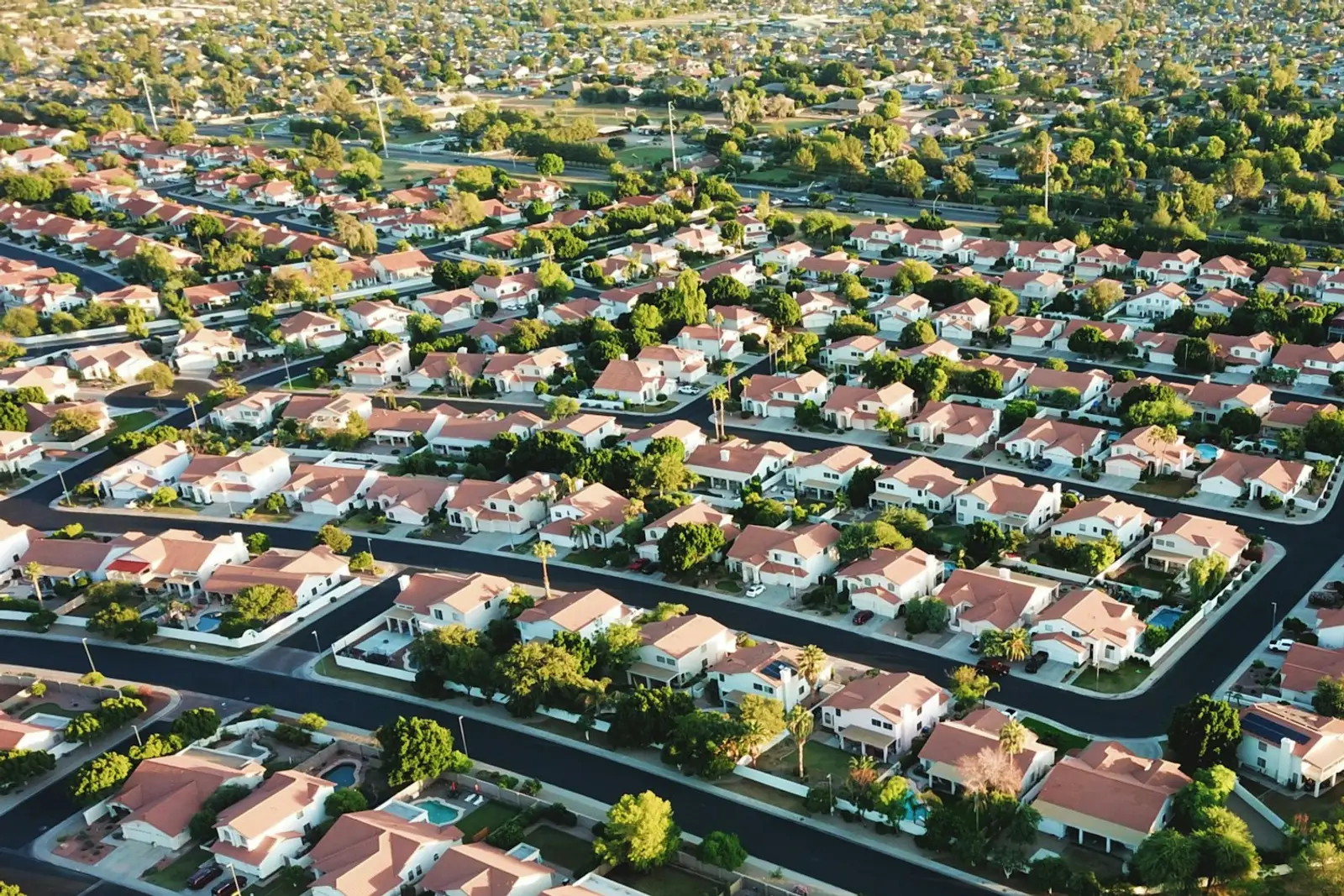
Where Glendale's water comes from
The City of Glendale Water Services department runs two surface water treatment plants. The Cholla Water Treatment Plant takes Salt and Verde river water delivered through the Salt River Project canals, which mostly serves the older southern half of the city. The Pyramid Peak Water Treatment Plant, up near the northern edge of the metro, treats Colorado River water carried across the desert in the Central Arizona Project aqueduct and supplies much of north Glendale, including Arrowhead Ranch. City wells fill gaps during canal dry-ups and peak summer demand.
Both rivers pick up calcium, magnesium and some sodium on their way to the Valley, and the CAP supply in particular arrives loaded with dissolved solids from its long trip down the Colorado. The practical upshot for a homeowner is simple: every gallon you heat leaves a little white grit behind. In a 50-gallon gas tank, that grit becomes a crust that can reach several inches deep over a decade if nobody ever opens the drain valve.
When SRP drains its canals for annual maintenance in winter, Glendale leans harder on CAP water and wells, and some residents notice a change in taste or a burst of extra sediment. That shift is a good reminder to flush the tank.
Garages, attics and the west Valley house
Most Glendale homes are single-story block or frame-and-stucco houses on slabs. In the 1960s and 1970s tracts around Maryvale's western edge, Bellair and the neighborhoods off 59th Avenue, heaters usually stand in the garage or in a small closet off the carport. The big 1990s and 2000s subdivisions of Arrowhead Ranch, Sierra Verde and the streets north of the Loop 101 almost always put a 50-gallon gas tank in the garage corner.
Some newer two-story homes near Westgate and the Sports and Entertainment District have tankless units hung on an exterior wall, which saves garage space but exposes the unit to direct afternoon sun. A few older bungalows in the Catlin Court historic district downtown still have small heaters tucked in a laundry porch or an outside closet that was added decades after the house was built.
A garage in Glendale can hold 115°F or more on a July afternoon. That heat dries out rubber seals, ages gas control valves faster, and makes the plastic parts on power-vent blowers brittle. It also means a heater is working in a hot, dusty space, so the combustion air screen at the base clogs faster than it would almost anywhere else.
Monsoon season and other local stresses
Late summer brings monsoon storms with dust walls, gusty winds and short power outages. A haboob can push fine dust under the garage door and straight into the flame arrestor screen on a gas heater, which starves the burner of air and can trip the thermal cutoff. Lightning-related outages are hard on the circuit boards of tankless and power-vent units, so a surge protector on those circuits is cheap insurance.
Water pressure is another quiet factor. Parts of the city, especially near the north-side reservoirs, see static pressure above 80 psi. High pressure makes relief valves drip and adds stress to every fitting on the heater. Adding a pressure-reducing valve at the meter side and an expansion tank near the heater solves most of those weeping relief valve complaints.
The problems plumbers see most in Glendale
- Popping and crackling from gas tanks in Arrowhead Ranch garages packed with CAP-water scale.
- Buried lower elements on electric heaters in condos and apartments off Bell Road.
- Clogged flame arrestor screens after a monsoon dust storm sweeps through the garage.
- Dripping relief valves where high street pressure meets a missing expansion tank.
- Tankless error codes on exterior-mounted units whose heat exchangers are lined with mineral deposits.
- Rusted tank bottoms on original builder heaters in 2000s subdivisions that were never drained.
Typical water heater prices in Glendale
| Job | Typical Glendale range | Notes |
|---|---|---|
| Thermocouple, igniter or pilot assembly | $150–$300 | |
| Gas control valve replacement | $275–$550 | Heat-damaged valves are common |
| Tank flush with heavy scale removal | $125–$275 | More if the drain valve is clogged |
| Electric element and thermostat | $175–$375 | |
| Expansion tank or pressure-reducing valve | $200–$550 | |
| 40–50 gallon gas tank replacement | $1,350–$2,900 | Permit and haul-away usually included |
| Tankless installation or swap | $3,000–$5,600 | Higher if a new gas line is needed |
Glendale pricing tracks the rest of the west Valley. Expect a premium for summer emergency calls on weekends, for heaters in attics or tight closets, and for jobs that need a new venting run or gas line upsizing for a tankless conversion.
Permits and licensing in Glendale
Arizona contractors are licensed by the Arizona Registrar of Contractors, and its online lookup shows a company's license class, bond and any complaint history. Within city limits, Glendale's Building Safety division handles water heater permits, and its inspector looks over the gas hookup, flue, relief valve outlet and the pan or drain where one is required.
Before a Glendale crew hauls out your old heater, confirm which company name is on the Registrar of Contractors record and get the Building Safety permit listed as a line item on the quote.
Homes in Maricopa County islands that are not inside Glendale limits go through the county instead, and Peoria, Phoenix and other neighbors run their own permit counters.
Utilities, softeners and efficiency
Southwest Gas supplies natural gas across Glendale, and most homes here get electric service from APS, with a slice of the city served by SRP. Both electric utilities have offered rebates or programs for efficient water heaters at times, so check current offers before buying a heat pump model.
Heat pump water heaters actually suit Glendale garages better than they would in cold climates, because the hot garage air gives the compressor plenty of heat to move. They do need a 240-volt circuit and room for airflow. A whole-house water softener or a scale-reduction system will extend any heater's life here, though softened water calls for closer attention to the anode rod, since it is consumed faster.
Keeping a Glendale heater healthy
Because Cholla and Pyramid Peak water both leave so much mineral behind, a flush every 6 to 12 months is worth putting on the calendar. Attach a hose, shut off the gas or power, open the drain and let it run until it clears, stirring the sediment with short bursts of cold water. If the plastic drain valve clogs with chunks, a plumber can swap it for a full-port brass valve that passes scale much more easily.
After each monsoon season, vacuum the screen at the base of a gas heater and look for rust streaks or white crust around the fittings on top. Pull and inspect the anode by about year four in this water, since a spent rod lets the steel start to corrode. Tankless owners should descale the heat exchanger with a vinegar or descaler pump kit at least once a year.
Repair or replace in Glendale
A failed thermocouple, igniter, element or gas valve on a Glendale heater under roughly eight years old is normally worth repairing. Once a Glendale tank has spent ten summers in a hot garage on hard water, the odds change: the tank bottom is often thin under the scale, and replacing a gas valve on that heater can cost a third of a new one. Water pooling under the tank, brown hot water or a tank still banging after a fresh flush all point toward replacement.
When you replace, consider whether the new heater should go back in the same spot. Moving a heater from an outside closet into the garage, or setting it in a pan plumbed to drain outdoors, can prevent the kind of slab and drywall damage that a burst tank causes.
Around Glendale
Peoria to the north and west runs its own water system, including the Greenway and Quintero plants, and has its own building permits. Sun City and Sun City West get water from EPCOR and fall under Maricopa County permitting, with many retirees in older single-story homes. Surprise, El Mirage, Avondale and Tolleson each have separate utilities and permit desks, while west Phoenix neighborhoods across 43rd Avenue are on Phoenix Water and Phoenix permits.
Water heater questions from Glendale
Which treatment plant supplies my Glendale water?
Southern Glendale is mostly served by the Cholla plant on Salt River Project water, and north Glendale largely by the Pyramid Peak plant on CAP water, with city wells mixed in. Both supplies are very hard.
Why does my Glendale water heater pop and crackle?
Scale and sediment on the tank bottom trap pockets of water that boil against the burner. A thorough flush often quiets it, but very loud tanks may already have heavy buildup.
Is a city permit needed to swap a Glendale water heater?
Yes. Inside Glendale, Building Safety writes that permit and sends someone out to look at the gas, venting and relief valve work.
My heater stopped after a dust storm. What happened?
Monsoon dust can clog the combustion air screen and trip the thermal safety switch. Have the screen cleaned and the burner inspected before relighting it.
Do heat pump water heaters suit hot Glendale garages?
Often, yes. Hot garage air helps it run efficiently, and APS and SRP have offered efficiency programs at times. It needs a 240-volt circuit and space around it.
How long do water heaters last in Glendale?
Plan on roughly 8 to 10 years for a gas tank in a hot garage on unsoftened water. Regular flushing and a fresh anode can push that toward twelve.