CAP, SRP and Peoria's own wells
Peoria's Water Services department relies first on Colorado River water brought in by the Central Arizona Project. The same canal fills Lake Pleasant, the big reservoir at the city's northern tip, which CAP uses to store water through the winter for release in summer. Much of Peoria's CAP allocation is treated at the Greenway Water Treatment Plant, and the city has also bought treatment capacity at plants it shares with neighboring West Valley cities.
The older southern part of Peoria lies inside Salt River Project territory, so it can also be served with Salt and Verde river water. City wells pump groundwater to cover summer peaks and the weeks when canals are drained for maintenance. Peoria also recharges some of its unused CAP water underground for later use.
Whichever source reaches your faucet, it is hard. Many Peoria households run a softener, which protects fixtures and the heater, but the sodium exchange makes the magnesium anode inside the tank wear away faster, so a softened home in Fletcher Heights or Vistancia should have that rod looked at sooner than the tank warranty implies.
Old Town bungalows to Vistancia garages
Old Town Peoria, around Washington Street, Grand Avenue and the historic downtown blocks near the railroad, has small mid-century houses, and their heaters tend to hide in a carport closet or an enclosed laundry area. Replacements there can mean squeezing a modern, thicker-walled 40-gallon tank into a space built for a 30-gallon unit.
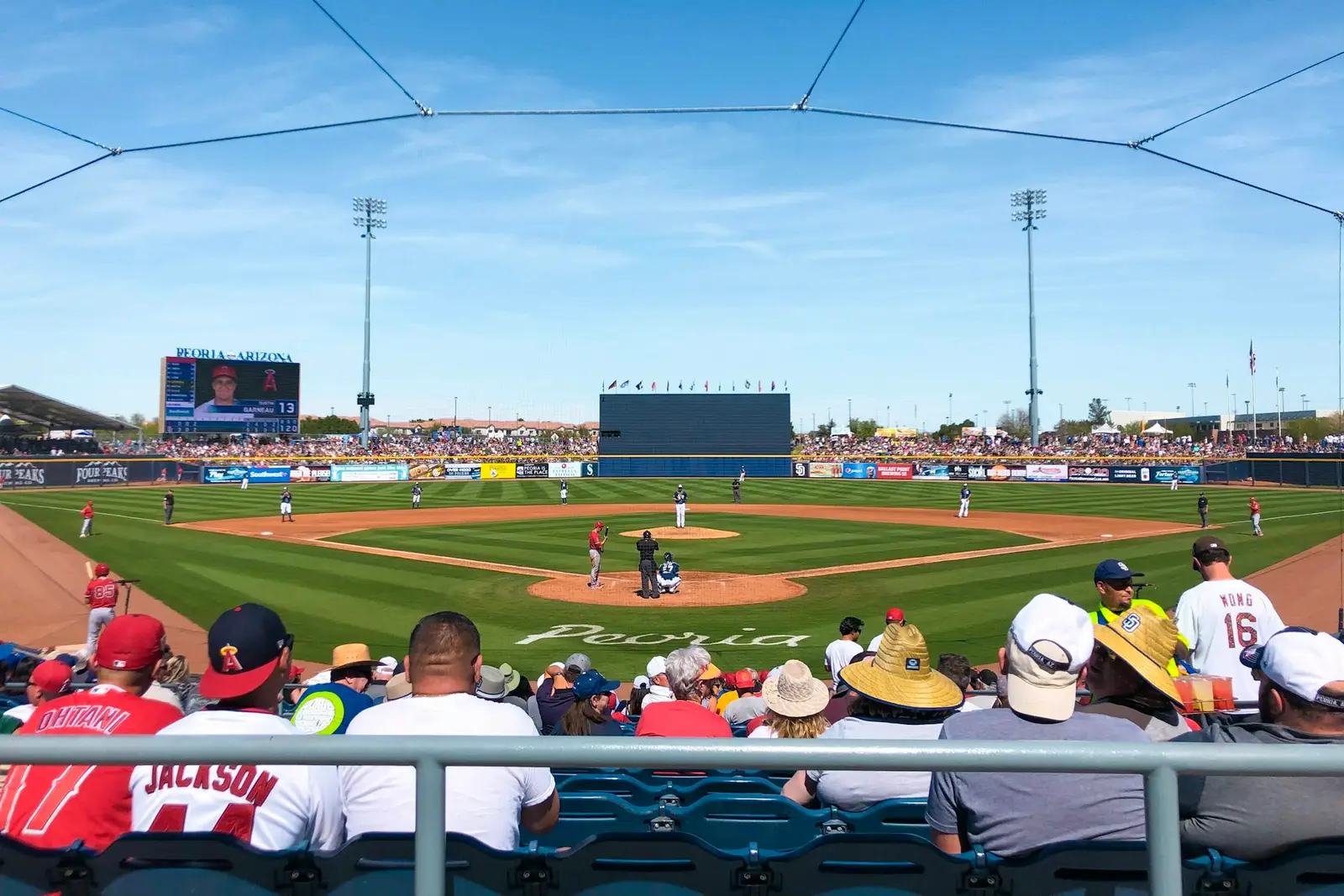
South and central Peoria filled in during the 1980s and 1990s. Ventana Lakes, the neighborhoods near the Peoria Sports Complex where the Padres and Mariners hold spring training, and the tracts along 75th and 83rd avenues mostly have a 50-gallon gas or electric tank in the attached garage. Westbrook Village, an active adult community, has many homes with tanks tucked into a garage cabinet.
North of the Loop 101, growth after 2000 produced Fletcher Heights, Westwing Mountain, Terramar and the master-planned Vistancia, which includes the Trilogy at Vistancia retirement community. These homes are newer and better insulated, and some larger plans have two heaters, a recirculation pump or a tankless unit outside on the side yard. Hillside lots near Westwing and Vistancia often have high incoming water pressure.
Heat, haboobs and pressure
A west-facing Peoria garage can stay above 110°F well past sunset during a July heat wave. That is hard on everything with a seal, gasket or circuit board. Gas control valves, electric thermostats and the plastic blower housings on power-vent models give out years earlier here than in milder climates.
Monsoon season, roughly mid-June through September, brings haboobs, wind gusts and lightning. Fine desert dust finds its way under garage doors and onto the flame arrestor grille under a gas tank, and once that grille packs up the burner can starve for air and lock out. Lightning-driven surges and short outages are hard on tankless and power-vent electronics, so a whole-house surge device or a dedicated protector on that circuit is worth a modest cost.
Static pressure in hillside parts of north Peoria can run well above 80 psi. That pushes on the tank walls and makes the relief valve weep. A regulator on the main line near the hose bib, paired with a properly charged thermal expansion tank, usually cures a valve that drips every afternoon.
The problems plumbers see most in Peoria
- Popping and crackling from inches of CAP scale on the bottom of gas tanks.
- Tankless units losing flow or flashing scale codes within a year of a descale lapse.
- Electric elements encased in minerals that burn out on all-electric homes in south Peoria.
- Relief valves weeping on hillside lots with high street pressure and no expansion tank.
- Burners locking out after a haboob packs dust into the flame arrestor screen.
- Worn gas valves and thermostats in garages that have baked through a dozen summers.
Typical water heater prices in Peoria
| Job | Typical Peoria range | Notes |
|---|---|---|
| Thermocouple or igniter repair | $150–$300 | |
| Gas control valve | $400–$650 | |
| Electric element and thermostat | $175–$375 | |
| Flush and sediment removal | $125–$275 | Thick scale adds time |
| Tankless descale | $175–$350 | At least yearly on CAP water |
| Pressure-reducing valve and expansion tank | $350–$800 | Common in hillside homes |
| 40–50 gallon gas tank replacement | $1,500–$3,200 | Permit and haul-away |
| Tankless installation | $3,500–$6,500 | Gas line and venting vary |
Peoria quotes generally match what homeowners pay elsewhere in the West Valley. Scale so thick the drain valve clogs, a pressure regulator added to the job, or a tank buried in a Westbrook Village garage cabinet are the usual reasons a bill lands near the top.
Permits and ROC licensing in Peoria
Peoria's Building Development division, within the city's development and engineering services, issues permits for water heater replacement. The inspection looks at the gas connection and shutoff, the flue, the relief valve drain line and, where required, the expansion tank. Sun City, Sun City West and other unincorporated pockets nearby go through Maricopa County instead.
Plumbing contractors in Peoria answer to the state's ROC licensing agency. Before you hire, type the license number into the ROC search page to confirm it is active and carries a plumbing classification. Peoria homeowners can also see any open complaints there, which is a quick way to separate an established West Valley shop from a handyman working outside his license.
APS, SRP and Southwest Gas
Peoria is split between two electric providers. Arizona Public Service covers much of the city, while Salt River Project serves other areas, generally including parts of the older south side. Southwest Gas supplies natural gas where it is available, though some north Peoria homes were built all-electric.
That mix means the cheapest heater to run depends on your address. A heat pump water heater can perform well in a Peoria garage, since warm air is plentiful for most of the year, but it also pulls heat out of the garage, which owners tend to welcome in summer. APS and SRP have each offered water heater rebates at times; check the current program before buying.
A maintenance routine for CAP water
On Peoria water, an unsoftened tank wants draining roughly twice a year, while homes with a softener can usually get by on an annual drain. If the drain valve clogs with white chips, a plumber can use a flushing wand or replace the valve with a full-port one. Tankless owners should run a descale cycle with a pump kit each year, more often if hot water starts going lukewarm in the shower.
Before the monsoon arrives, brush the dust off the louvered intake down by the burner and clear anything stored within a couple of feet of it. If you hear loud cracking during a heating cycle, see our page on crackling tanks full of scale before the noise turns into a leak.
Repair or replace in Peoria
When a West Valley tank is still in its first seven or eight summers, swapping a failed igniter, thermocouple or thermostat is money well spent. Once a Peoria tank reaches ten or twelve years, especially one that was never flushed, the scale inside has often thinned the lining and a leak is near. Rust at the base, rusty hot water or a tank that rumbles even after flushing usually means replacement is the better value.
Around Peoria
Glendale on Peoria's southern and eastern edge treats its own canal water and has a separate building department. Sun City and Sun City West are unincorporated, get their water from a private utility and fall under Maricopa County permits. Surprise to the west has its own permit office and a mix of water providers, and the small town of Youngtown handles its own building approvals.
Water heater questions from Peoria
How hard is the water in Peoria?
Very hard. CAP, SRP and well water are all mineral-heavy, which is why so many Peoria homes have softeners.
How often should a Peoria tankless be descaled?
Every twelve months on raw CAP water; a softened Vistancia home can sometimes stretch that, but lukewarm showers mean it is due.
Will Peoria inspect my replacement heater?
Yes. The city's Building Development division issues it and inspects the gas, venting and relief valve work.
Is my Peoria home on APS or SRP?
Both serve parts of the city. Your electric bill shows which, and that affects rebates and running costs.
Why does my relief valve drip on summer afternoons?
High street pressure in hillside neighborhoods plus heat expansion are the usual causes. A pressure regulator and expansion tank typically fix it.
Where do I verify an Arizona plumber's license?
On the Arizona Registrar of Contractors website, using the ROC number the contractor gives you.
Does Lake Pleasant supply my tap water?
Indirectly. Lake Pleasant stores CAP water, and Peoria treats CAP water at the Greenway plant and through shared capacity before it reaches homes.