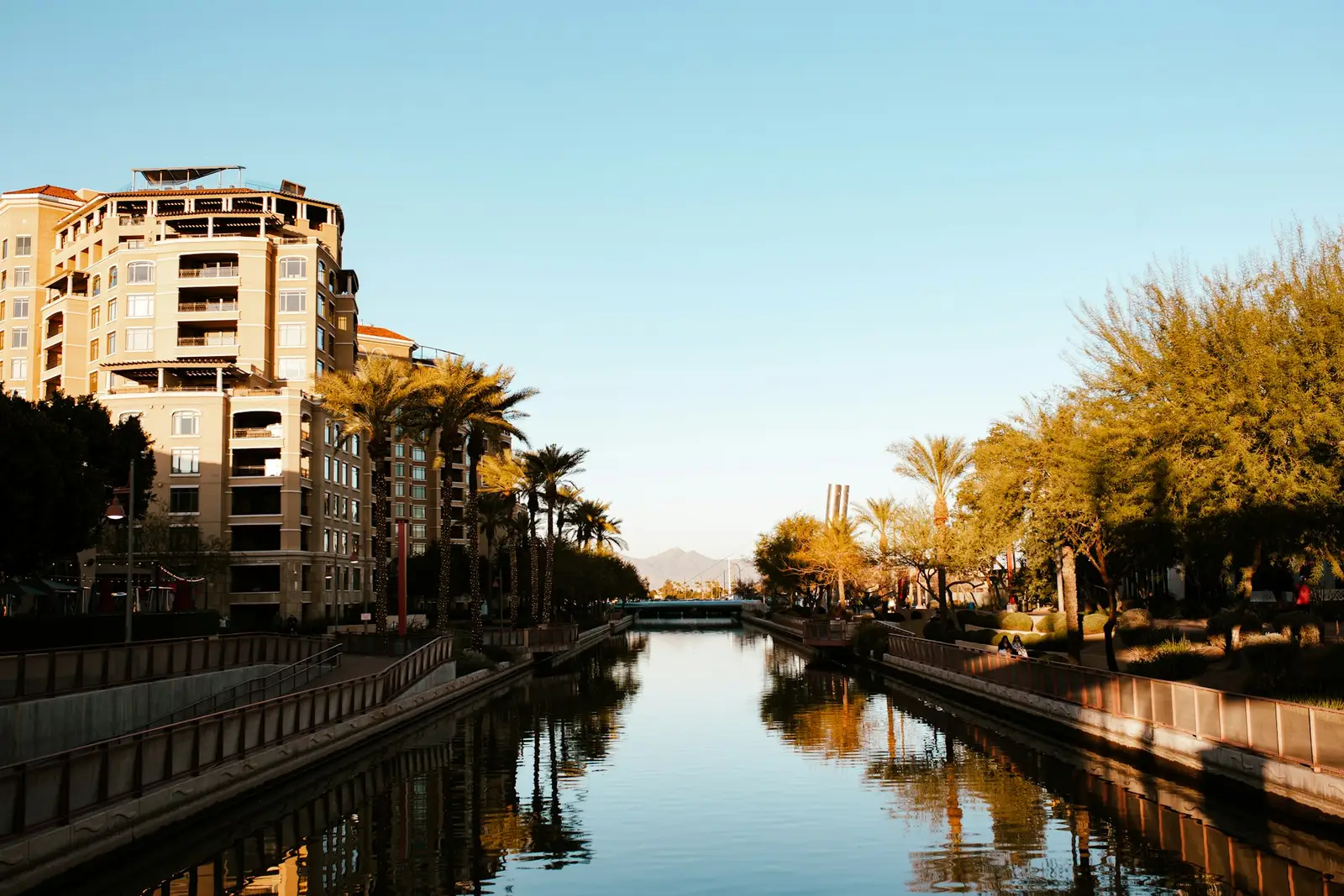
Scottsdale Water and its plants
Scottsdale Water, the city-owned utility, gets most of its supply from the Colorado River via the CAP aqueduct, which crosses the north half of the city. That water is treated at the city's CAP Water Treatment Plant. Southern Scottsdale also receives Salt River Project surface water treated at the Chaparral plant near Indian Bend, and Scottsdale's own wells round out the supply.
At the Scottsdale Water Campus, the Advanced Water Treatment plant purifies reclaimed wastewater through microfiltration, reverse osmosis and ultraviolet treatment. Much of that water irrigates golf courses or is recharged into the aquifer, and the city has drawn national attention for its work on advanced water reuse. For a homeowner, though, what matters is the drinking water at the tap, and that blend remains hard.
Hardness varies by neighborhood and season, depending on how much CAP, SRP and well water is in the mix. Foothill homes fed mainly by CAP water and older south Scottsdale homes on the SRP blend both show white crust on faucets and shower glass, which is the same mineral that settles inside a water heater.
From Old Town ranch houses to foothills estates
South Scottsdale's postwar neighborhoods, such as the streets around Los Arcos, Papago Park and the Indian Bend Wash greenbelt, are filled with modest block ranch homes where the heater often sits in a garage, a carport closet or a hall utility closet. Replacing a tank in one of those interior closets can mean working around tight doorways, old flexible gas connectors and vents that pass through a low attic.
McCormick Ranch, Gainey Ranch and Scottsdale Ranch, built mostly in the 1970s through 1990s, typically have garage installations, sometimes paired with a recirculation pump. North of the Loop 101, in DC Ranch, Grayhawk, Troon, Pinnacle Peak and Desert Mountain, homes get much larger. Many have two or three heaters, banks of tankless units in a mechanical room, or a heater in the garage serving a guest casita across a courtyard.
Desert foothills homes often have long plumbing runs, so hot water can take a minute or more to reach a far bathroom without a recirculation loop. Those loops keep water moving through the heater constantly, which adds scale and wears pumps and check valves. Some homes beyond the natural gas mains rely on propane, which changes the burner orifice and gas valve parts a technician must carry.
The problems plumbers see most in Scottsdale
- Scaled tankless heat exchangers in north Scottsdale mechanical rooms that have missed their annual descaling.
- Recirculation pumps that hum but no longer move water, leaving distant bathrooms waiting.
- Sediment-choked tanks in McCormick Ranch garages that were installed and then forgotten.
- Corroded fittings and failed check valves on recirculating systems running around the clock.
- Propane burner and regulator issues on foothill homes beyond the gas mains.
- Interior closet leaks in south Scottsdale ranch homes, where a failed tank soaks carpet and drywall.
Typical water heater prices in Scottsdale
| Job | Typical Scottsdale range | Notes |
|---|---|---|
| Igniter, thermocouple or flame sensor | $175–$325 | |
| Gas valve or control board | $300–$650 | |
| Tank flush and scale removal | $140–$300 | |
| Tankless descaling service | $175–$350 | Per unit; multi-unit racks cost more |
| Recirculation pump replacement | $350–$800 | |
| 50 gallon gas tank replacement | $1,500–$3,200 | Permit typically included |
| Tankless install or replacement | $3,400–$6,500 | Large homes may need two units |
Scottsdale prices run above much of the Valley, mainly because the homes are larger, the systems more complex and the access harder. Gated communities, long driveways in the foothills and mechanical rooms with several heaters all add time to a visit.
Permits and licensing in Scottsdale
Every plumbing contractor working in Scottsdale should hold an active license with the Arizona Registrar of Contractors, which publishes license status and complaints online. The City of Scottsdale's Planning and Development Services, including its One Stop Shop counter, handles heater replacement permits, with inspectors reviewing gas pipe sizing, flue clearances, where the relief line ends and combustion air.
Some homeowner associations in north Scottsdale also have rules about exterior-mounted tankless units or new wall penetrations, so it is worth checking HOA guidelines before relocating a heater or adding a vent through a stucco wall.
A reputable Scottsdale contractor will put the city permit and the Registrar of Contractors license on the written estimate without being asked.
Sizing hot water for big desert homes
A 5,000-square-foot foothills home with a soaking tub, multiple showers and a casita can outrun a single 50-gallon tank easily. Common solutions include a 75- or 100-gallon high-efficiency tank, a pair of tankless units plumbed in parallel, or separate heaters for the main house and guest quarters. With Scottsdale's cold tap running warm from spring into fall, tankless units here deliver strong flow in summer and only lose some capacity on the coldest winter mornings.
Recirculation is the other half of the design. A dedicated return line with a timer or on-demand button saves water and energy compared with a loop that runs all day. If your system has a pump running 24 hours, a plumber can often add a timer or smart control and reduce both scale and wear on the heater.
Hard water care in Scottsdale
Many Scottsdale homes already have a water softener, and that makes a real difference to heater life. Softened water is gentler on heat exchangers and elements, but it eats through the sacrificial anode rod faster, so the rod should be checked every two or three years and replaced with a type suited to softened water. Without a softener, plan on a yearly tank flush and a tankless descaling at least once a year, twice in heavy-use homes.
Scottsdale summers also heat garages past 110°F. Store pool chemicals, mowers and gas cans well away from a Scottsdale garage heater; chlorine corrodes parts and fuel vapor near an open burner is a fire hazard. In homes with a pool equipment room near the heater, chlorine fumes are a frequent cause of corroded gas valves and venting.
Repair or replace in Scottsdale
For a standard tank under eight years old, repairing an igniter, valve or element is usually worth it. A tankless unit is designed to last 15 to 20 years, so replacing a fan, flow sensor or board on a seven-year-old unit generally makes sense, especially after a thorough descaling. When a tank leaks from the body, has rusty water or is past ten years in this water, a new heater is the better investment.
Larger homes sometimes benefit from replacing two aging tanks with a single properly sized system. That decision depends on gas line size, venting routes and how the hot water lines are laid out, so a site visit beats a phone quote.
Around Scottsdale
Paradise Valley is largely served by EPCOR and private water companies and handles permits through its own town hall. Fountain Hills gets water from EPCOR and has its own building department. Cave Creek runs a town water utility, while Carefree relies on a private water company and town permits. The Salt River Pima-Maricopa Indian Community to the east and Tempe to the south have separate utilities and permit processes.
Water heater questions from Scottsdale
Does Scottsdale's advanced water treatment soften my water?
No. The Advanced Water Treatment plant purifies reclaimed water mostly for irrigation and aquifer recharge. Tap water from the CAP and SRP supplies is still hard, so heaters still collect scale.
How often should a Scottsdale tankless heater be descaled?
Every 6 to 12 months without a softener, and roughly every one to two years with one. Large homes running several units should service them all at the same visit.
Why does hot water take so long to reach my far bathroom?
Long runs in foothills homes need a working recirculation pump or on-demand loop. A stuck pump or failed check valve is the usual culprit.
Who issues water heater permits in Scottsdale?
The City of Scottsdale's Planning and Development Services issues permits for homes inside city limits. Paradise Valley, Fountain Hills and Cave Creek handle their own.
Can a water softener shorten my heater's life?
It usually lengthens it by preventing scale, but it uses up the anode rod faster. Have the rod checked every two or three years on softened water.
Do propane water heaters in north Scottsdale need special parts?
Yes. Propane heaters use different orifices and gas valves than natural gas models, so the technician needs propane-rated parts and a check of the regulator.