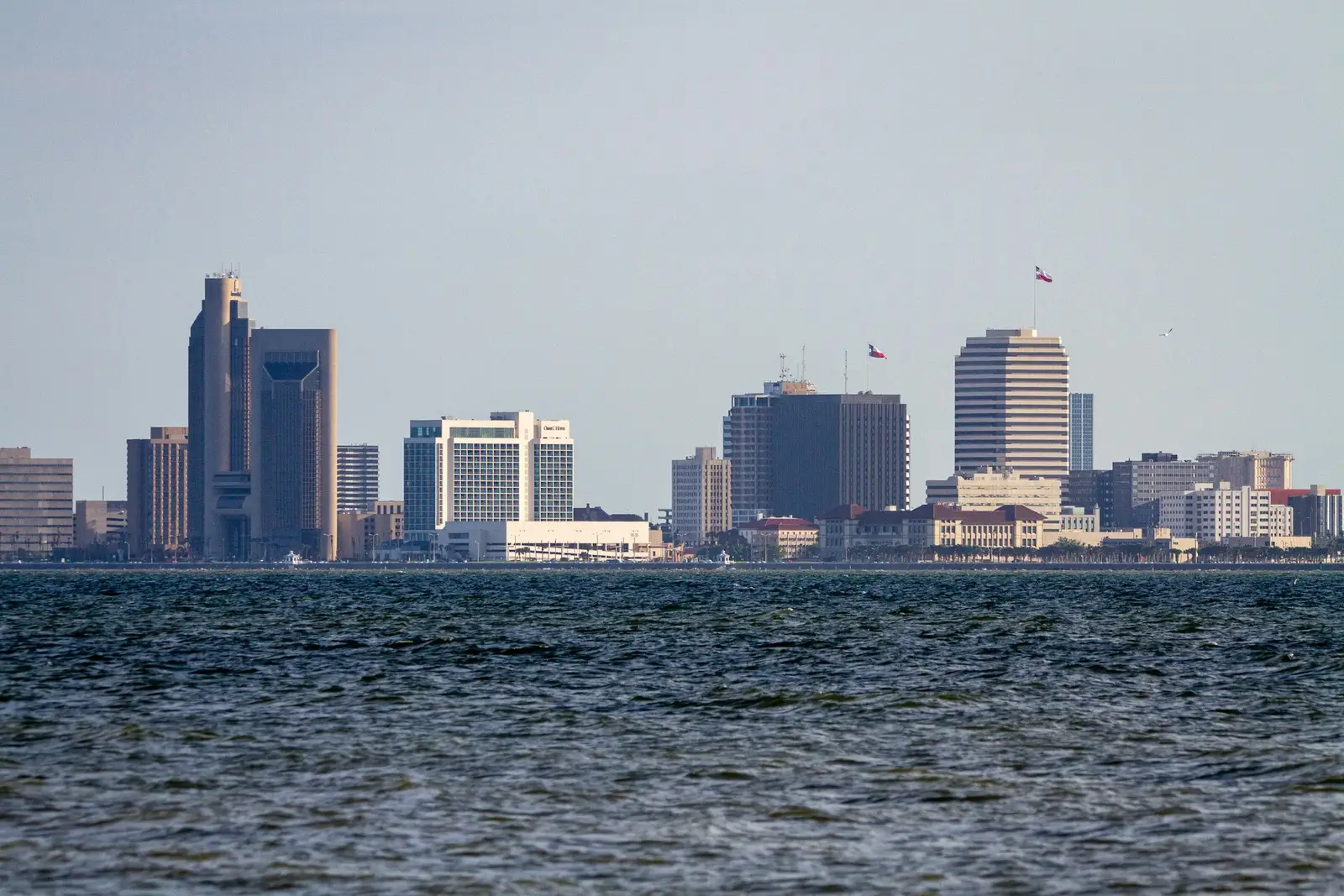
Where Corpus Christi's tap water comes from
The City of Corpus Christi runs a regional water system that serves the city and sells water to neighbors across the Coastal Bend. Its oldest supply is the Nueces River, stored upstream in Choke Canyon Reservoir on the Frio River and in Lake Corpus Christi near Mathis, then released downriver to the intake at Calallen. The second leg is the Mary Rhodes Pipeline, which carries water roughly a hundred miles from Lake Texana in Jackson County and, through a later phase, from the Colorado River near Bay City.
Nearly all of that raw water is treated at the O.N. Stevens Water Treatment Plant on the city's northwest edge. Because the plant blends river reservoir water with pipeline water, what reaches a kitchen in Kings Crossing or a laundry room on the Island changes over the year. During long South Texas droughts, when the Nueces reservoirs fall, the water tends to carry more hardness, more chloride and more total dissolved solids.
For a water heater, that mix matters twice. The calcium and magnesium drop out as scale when the water is heated, and the chloride makes the water more aggressive toward any bare steel it can reach. A tank with a spent anode on Corpus Christi water corrodes faster than the same model would in a city with softer, lower-salt supply.
Slab homes, garages and Island condos
Most Corpus Christi houses are single-story brick or siding homes on a concrete slab. In the Southside subdivisions around Saratoga Boulevard, Airline Road and Kings Crossing, the heater is usually a gas tank of 40 or 50 gallons standing near the washer hookups in the garage. Older neighborhoods closer to the bay, such as Lindale, Hillcrest, the Del Mar area and the streets off Ocean Drive, often hide the heater in an interior utility closet or a small laundry room, where a replacement means working in a tight doorway.
Out on North Padre Island and Mustang Island, many homes and condominiums sit raised above grade, and electric heaters in closets are common because natural gas does not reach every street. Flour Bluff, Annaville and Calallen mix older ranch houses with newer tract homes. Some 1980s and 1990s two-story homes in the area put the tank in the attic, though that is less widespread here than in Dallas or Houston.
Salt air, humidity and hurricane season
Living within a few miles of Corpus Christi Bay and the Laguna Madre means the air carries salt nearly every day. In an open garage, that salty humidity settles on the steel jacket, the gas connector, the flue pipe and the burner door. Plumbers in Flour Bluff and on the Island routinely find rusted draft hoods and flaking vent connectors on heaters that are otherwise only eight or nine years old.
Hurricanes are the bigger threat. Celia in 1970 reshaped the city, and Harvey's 2017 landfall near Rockport flooded and battered communities just across the bay. A storm surge or a rain flood that reaches a gas burner or an electric element's wiring compartment usually means the heater should be replaced rather than dried out. When a storm knocks out AEP Texas lines for days, tankless and power-vent models sit dead, since both need electricity to fire.
Winter is mild most years, but the February 2021 freeze reached the Coastal Bend too, splitting exposed pipes on raised Island homes and on lines that run along exterior walls. Corpus Christi homeowners rarely insulate those runs, so a hard freeze catches many of them off guard.
The problems plumbers see most in Corpus Christi
- Scale-choked tanks where years of hard Nueces and Texana water have buried the burner under mineral grit.
- Anode rods eaten to bare wire by chloride-heavy water, followed by pinhole leaks at the bottom seam.
- Rusted vent connectors and draft hoods on garage heaters exposed to salt air.
- Storm-flooded heaters after surge or heavy rain reaches the burner or element wiring.
- Failed electric elements in Island condos where scale coats the element until it overheats.
- Tankless units throwing scale codes because no one installed isolation valves for descaling.
Typical water heater prices in Corpus Christi
| Job | Typical Corpus Christi range | Notes |
|---|---|---|
| Thermocouple, igniter or pilot assembly | $150–$300 | |
| Electric element and thermostat | $175–$375 | Common in Island condos |
| Anode rod replacement | $175–$350 | Worth doing early here |
| Flush and scale removal | $125–$300 | More if the drain valve is clogged |
| Vent connector or draft hood replacement | $175–$450 | Salt-air corrosion |
| 40–50 gallon gas tank replacement | $1,400–$2,900 | Permit and haul-away |
| Tankless installation | $3,000–$5,800 | Gas line and vent changes extra |
Corpus Christi quotes tend to run a little under the big Texas metros. Island addresses with stairs and long drives, closet installs in older Lindale or Hillcrest homes, and the rush of replacements after a hurricane all push prices toward the high end.
Permits and licensing in Corpus Christi
Every plumber touching a Corpus Christi heater needs a license from Texas's State Board of Plumbing Examiners, and its website lets a homeowner confirm that license before work begins. Water heater replacement inside Corpus Christi city limits needs a permit from the city's Development Services department, and the city inspector looks over the relief valve discharge, gas connection, venting and, for elevated Island homes, the platform and access.
Nearby towns such as Portland, Robstown and Port Aransas handle their own permits, and unincorporated parts of Nueces and San Patricio counties follow county rules. A Corpus Christi bid that leaves the permit off entirely deserves a follow-up question.
Fighting scale and corrosion on Coastal Bend water
Because the city's water is both hard and relatively salty, a heater here needs attention at both ends. Draining a few gallons from the bottom valve every few months keeps loose scale from packing into a crust over the burner. A full flush each year is a reasonable rhythm for most Southside households, and homes on the Island that run electric tanks often benefit from pulling the lower element to check for buildup at the same time.
The anode deserves an earlier look than many owners expect. In Corpus Christi, a magnesium or aluminum rod can be mostly consumed within three to four years, and once it is gone the chloride in the water goes to work on the tank lining. Replacing it costs far less than a new heater. A water softener reduces scale, but softened water can also eat anodes faster, so homes with softeners should have the rod checked on a regular schedule.
Tankless owners should ask the installer for service valves on the hot and cold lines so the heat exchanger can be descaled with a pump and a bucket of vinegar or descaling solution. Without those valves, routine maintenance turns into a plumbing job.
Getting a heater ready for hurricane season
Before June, Corpus Christi homeowners in low-lying areas like North Beach, the bayfront and parts of Flour Bluff should know how to shut off the gas and water to the heater and where the breaker is for an electric unit. If an evacuation order comes, turning the gas supply off at the heater and the breaker off for electric tanks prevents damage if floodwater or power surges arrive while the house is empty.
When you return, do not relight a gas heater that sat in standing water. Mud and salt get into the gas control and burner, and a unit that seems to run can fail in unsafe ways later. A plumber can tell you whether the heater survived, and homeowners insurance or windstorm coverage may help with replacement depending on the cause of the damage.
Raising a garage heater onto a sturdy stand, where local code and the door layout allow it, keeps the burner and controls above the water from a minor flood. On the Island, many homes already have heaters on upper floors for this reason.
Around Corpus Christi
Portland, across the Harbor Bridge in San Patricio County, gets treated water through the San Patricio Municipal Water District, which buys from the same regional supply. Robstown to the west runs its own utility, and Calallen homes inside the city sit right beside the O.N. Stevens plant. Port Aransas, Aransas Pass and Rockport face the same salt air and storm risks with their own permit offices, and Kingsville to the south draws on a mix of city wells and purchased water.
Water heater questions from Corpus Christi
Why does my Corpus Christi water heater rust out so quickly?
The city's water carries a lot of chloride, and salt air works on the outside of the tank and vent. When the anode is used up, corrosion speeds up inside as well.
Is Corpus Christi water hard?
Yes. It is hard, and its mineral and salt content rises during droughts when the Nueces reservoirs run low.
Can I keep using a water heater after a hurricane flood?
Not until a plumber inspects it. A gas control or burner that sat in salt water or mud is usually replaced along with the tank.
Do I need a permit for a new water heater in Corpus Christi?
Yes. Development Services issues the permit inside city limits, and an inspection follows the installation.
How do I check a Texas plumber's license?
Open the license search on the Texas State Board of Plumbing Examiners website, enter the plumber's name, then match the number to the company on your bid.
Are electric water heaters common on Padre Island?
Yes. Many Island homes and condos have no natural gas service, so electric tanks in closets or upper-floor utility rooms are typical.
How cold does tap water get in Corpus Christi?
Rarely below the upper 50s °F, so winter capacity complaints are less common here than in North Texas. Summer water in the 80s makes tanks feel larger.