Spring, creek and river water
Allentown's water system is unusual. The city still owns it, but since 2013 the Lehigh County Authority has operated it under a long-term lease, billing customers and running the filtration plant. The supply blends three sources: Crystal Spring, a large limestone spring in the Little Lehigh Parkway area that has fed the city for generations, the Little Lehigh Creek itself, and the Lehigh River when demand calls for it.
Spring water rising through limestone picks up a lot of calcium and magnesium, so Allentown's water is hard. Tanks fill with a gritty, chalky layer, electric elements grow crusts that make them burn out sooner, and tankless heaters can throw scale errors within a year. One upside of spring water is temperature: it comes out of the ground in the low 50s, so winter inlet water is not as frigid as in cities that draw from open reservoirs.
Rowhouses, twins and the West End
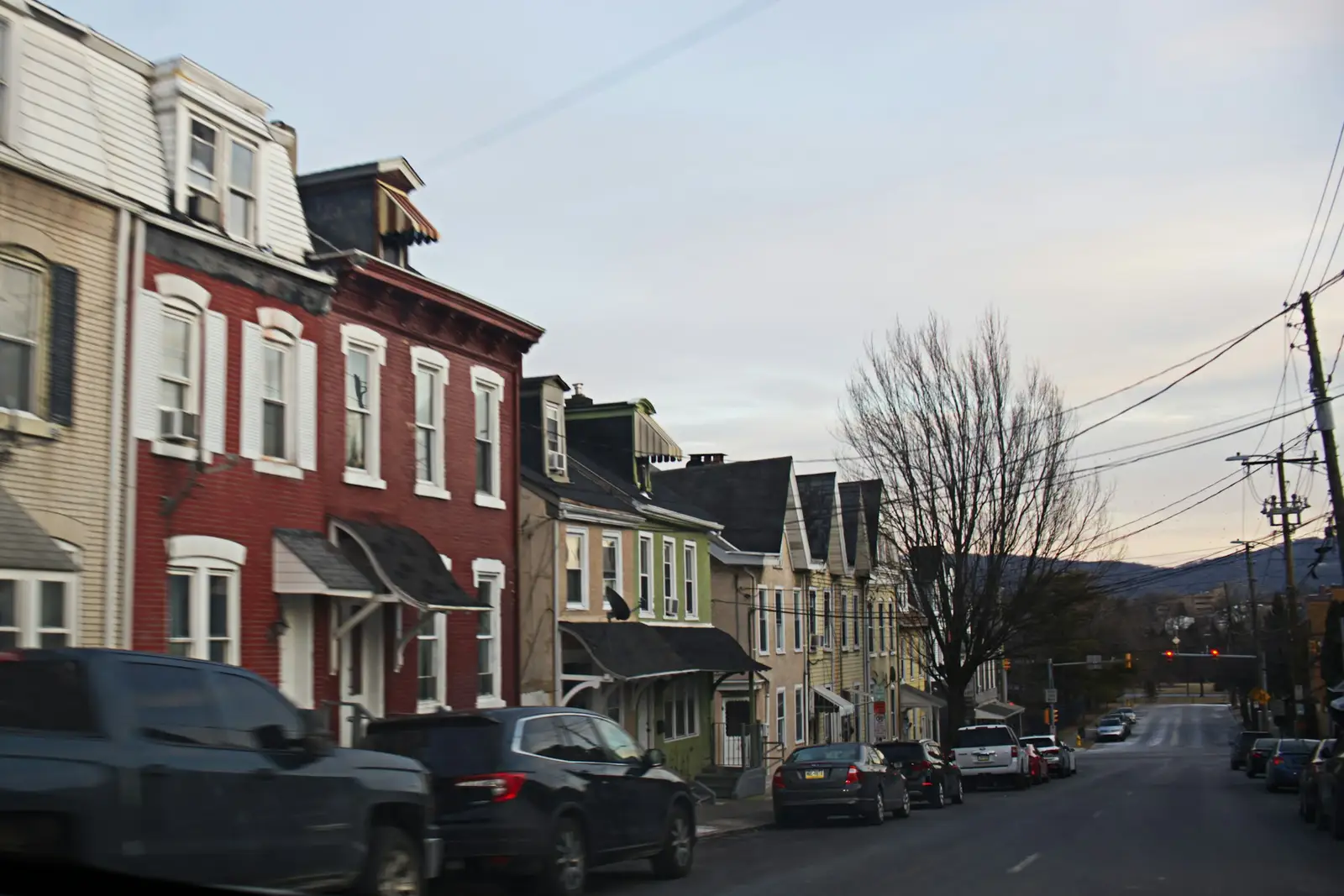
Center City, Old Allentown, the Old Fairgrounds and the First and Sixth Wards are rowhouse country, with brick homes raised between the 1870s and World War I for silk mill and cement workers. The water heater usually sits in a narrow basement reached by steep wooden stairs, often next to an old chimney shared with the furnace. Many of these homes are now rentals or have been split into apartments, which means more than one heater in a basement.
The West End has larger twins and single homes from the 1920s to the 1950s, with fuller basements and easier access. The East Side and South Side mix twins, rows and postwar single-family houses, and newer homes in the far West End and near the Parkway may have utility rooms with gas or electric tanks. Across the city, the home's age often tells a plumber whether to expect a corroded vent connector or old galvanized supply lines.
Lehigh Valley weather
Allentown sees real winters, with cold snaps that can drop well below zero and snowstorms that pile up along the Lehigh Valley. Basements in older rowhouses can get cold enough near the front wall to freeze pipes, which also means a heater working against cold air around it. In summer, thunderstorms and remnants of tropical storms can raise the Lehigh River and the Little Lehigh; Ida in 2021 brought heavy flooding to parts of the valley.
Tanks in damp basements rust from the outside, especially where water pools near floor drains. If a heater has ever stood in water, have it inspected; standing water on gas controls is usually a sign the heater should be replaced.
Problems Allentown plumbers see most
- Heavy limestone sediment that buries the burner and makes old tanks pop and crack when heating.
- Scaled electric elements that burn out quickly on hard water.
- Tankless scale errors on units that skipped their annual vinegar flush.
- Drafting problems in rowhouse chimneys after the furnace was converted to wall venting.
- Corroded fittings on old galvanized pipe in Center City basements.
- Undersized tanks in rowhouses converted to two or three apartments.
Crusted elements in Old Fairgrounds rentals are covered in replacing a scaled electric element on hard-water tanks, and blinking scale codes on a West End wall unit are explained in when a tankless heater flags limestone buildup on Lehigh Valley water.
Allentown repair and replacement prices
| Job | Typical Allentown range | Notes |
|---|---|---|
| Thermocouple or pilot repair | $150–$300 | |
| Electric element and thermostat | $175–$375 | Scaled elements common |
| Gas control valve | $375–$625 | |
| Flush and sediment removal | $125–$275 | Heavy buildup takes longer |
| Tankless descale | $175–$325 | |
| 40–50 gallon gas tank replacement | $1,400–$3,200 | Permit and haul-away |
| Tankless installation | $3,300–$6,000 | Water treatment often advised |
Lehigh Valley rates are moderate compared with Philadelphia and North Jersey. Steep, narrow rowhouse stairs, a chimney liner or a full scale clean-out on a neglected tank are what push an Allentown job higher.
Permits and plumber licensing in Allentown
There is no state plumbing license in Pennsylvania, so the rules depend on where you live. Allentown fills that gap with its own plumber licensing, and a heater swap inside Allentown requires a permit issued by the Bureau of Building Standards and Safety, followed by an inspection of the gas piping, flue connection and relief valve discharge. Hiring a plumber registered with the city keeps the permit simple.
Separately, contractors doing home improvement work in Pennsylvania must register with the state Attorney General's office under the Home Improvement Consumer Protection Act, and their registration number should appear on the contract. Neighboring townships such as South Whitehall, Salisbury and Whitehall handle permits under the Uniform Construction Code through their own offices or third-party inspection agencies.
Living with hard water
On Allentown water, a yearly flush is real maintenance, not a suggestion. Drain the tank until the water runs clear, or have a plumber do it if the drain valve is old or the sediment layer is thick enough to clog it. Electric tanks benefit from element checks, and tankless units should be descaled roughly every year, more often in busy households.
A water softener protects the heater and the rest of the plumbing, and many Allentown owners who install tankless units add one at the same time. If you add a softener, keep an eye on the anode rod, since softened water can eat through it faster. A plumber can pull it during a flush, and what a limestone-heavy flush involves walks through that visit for Allentown owners.
Venting in old rowhouses
Allentown rowhouses typically vent the water heater through a brick chimney, often shared with a furnace. Swap that furnace for a high-efficiency model piped out in PVC, and the heater is stranded in a chimney too roomy to pull its exhaust on a January morning in Center City. Exhaust spilling into the basement is dangerous, so plumbers test draft on every gas heater in an older home.
Allentown plumbers usually cure it with a stainless liner matched to the burner input, or a power-vent tank exhausting out the rear of the row. Row homes share side walls, so sidewall vents usually go out the back, and clearance rules limit where they can terminate near windows and doors.
Should you repair or replace?
In Allentown, a heater's age matters, but so does how much scale it has. A five-year-old tank that has been flushed every year is in better shape than a five-year-old tank that never has been. Thermocouples, elements, thermostats and gas valves on tanks under about eight years are usually worth repairing. Past ten years, a leaking tank, heavy sediment or a failed gas valve usually points toward replacement. PPL Electric Utilities and UGI, the gas company, have offered rebates on efficient heaters at times.
Around Allentown
Bethlehem has its own water system, fed from reservoirs in the Poconos, with water much softer than Allentown's, and its own permit office. Whitehall, South Whitehall and Salisbury Township surround the city and mix LCA water with other suppliers. Emmaus runs a borough water system and permits. Catasauqua and Fountain Hill are older boroughs with rowhouses and twins similar to Allentown's.
Water heater questions from Allentown
Why is Allentown water so hard?
Crystal Spring and the Little Lehigh run through limestone, which dissolves calcium and magnesium into the water. That is why tanks here fill with sediment.
Who runs Allentown's water system?
The city owns it, and the Lehigh County Authority operates it under a lease that began in 2013.
Will Allentown want a permit for my new heater?
Yes. The city's Bureau of Building Standards and Safety issues the permit and inspects the installation.
Does Pennsylvania license plumbers?
Not statewide. Allentown licenses plumbers locally, and contractors must also register with the state Attorney General as home improvement contractors.
How often does a tankless unit on Allentown water need descaling?
About once a year on city water, and sooner if the unit shows scale codes or loses flow.
Is a water softener worth it with a new tankless unit?
On Allentown water, often yes. It reduces descaling and helps the heat exchanger last longer.