Passaic Valley water
Paterson, Passaic and Clifton jointly own the Passaic Valley Water Commission, a regional supplier that also sells water to many surrounding towns. PVWC draws from the Passaic River, the Pompton River and its own Point View Reservoir in Wayne, and treats the water at a large plant in Little Falls before sending it into Paterson's mains. Some of the pipes running under the city's streets are more than a century old.
The water is moderately hard, with mineral levels that rise and fall with rainfall and river flows. Tanks in Paterson build up a modest amount of sediment over the years, and older mains can send rusty or cloudy water into homes after main breaks or hydrant flushing, which can collect at the bottom of a heater. In winter the river water arrives cold, which shrinks the effective capacity of every tank in the city.
Multifamily homes and crowded basements
Paterson's housing is dominated by wood-frame two-families, three-families and brick walk-ups dating from roughly 1880 to 1925, when mill workers needed housing near the silk and locomotive factories. In neighborhoods like the Eastside, Riverside, Peoples Park, Sandy Hill and the Totowa section, a single basement may hold two or three water heaters, one per apartment, all venting into a shared brick chimney. Some buildings use one large heater for every unit, which tends to run out when everyone gets ready for work at the same hour.
South Paterson and the Hillcrest area have more single-family homes and some mid-century construction, with heaters in basements or utility rooms. Many older buildings have been converted or subdivided over the decades, and it is common to find heaters added in closets or crawl spaces that were never designed for them.
The Great Falls, river floods and storms
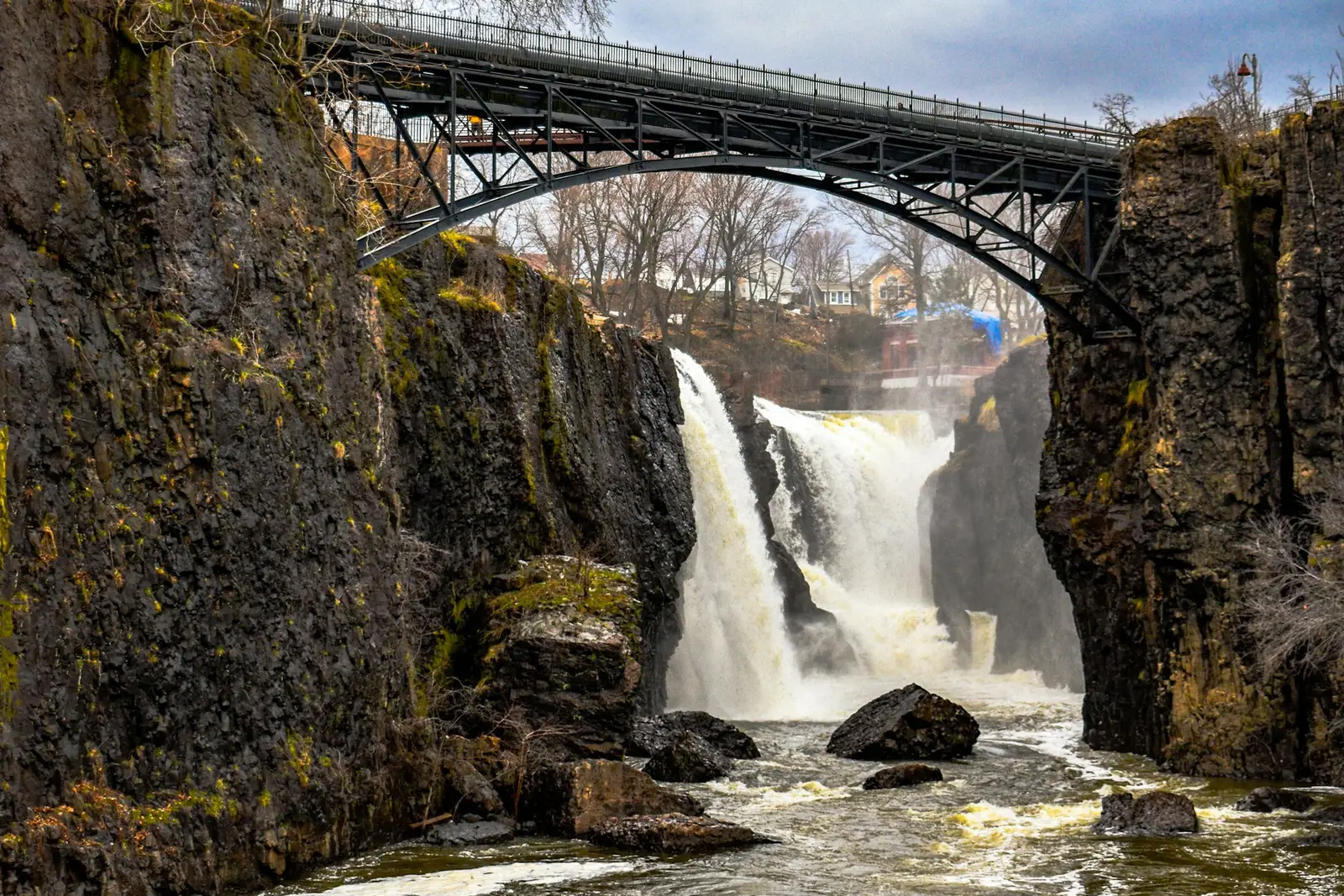
The Passaic River drops nearly eighty feet at the Great Falls, the waterfall that powered Alexander Hamilton's planned industrial city and is now a national historical park. The same river makes Paterson vulnerable to flooding. Heavy rains from tropical storms and nor'easters have repeatedly pushed the Passaic into riverside neighborhoods, flooding basements in the Riverside section and the low streets along the banks. Hurricane Irene in 2011 and the remnants of Ida in 2021 are well-remembered examples.
When floodwater reaches a gas water heater, the burner, gas valve and insulation are compromised. Replacement is the safe choice, and in a multifamily building every flooded heater has to be dealt with before tenants can get hot water back. Raising heaters on platforms where codes allow, or relocating them above flood height, can reduce the damage next time.
The problems plumbers see most in Paterson
- Several heaters venting into one old chimney in multifamily basements, leading to poor draft and spillage.
- Shared heaters overwhelmed by two or three households drawing hot water at once.
- Flood-damaged controls and burners after the Passaic River spills over in storms.
- Rusty or cloudy water collecting in tanks after main work on the city's older pipes.
- Corroded gas connectors and galvanized fittings in damp basements.
- Heaters squeezed into closets and crawl spaces during apartment conversions, with poor combustion air.
Typical water heater prices in Paterson
| Job | Typical Paterson range | Notes |
|---|---|---|
| Thermocouple or pilot assembly | $175–$325 | |
| Gas control valve | $400–$650 | |
| Flush and drain valve replacement | $125–$300 | |
| Chimney liner for one or more heaters | $500–$1,600 | Multifamily flues cost more |
| 40–50 gallon gas tank replacement | $1,700–$3,400 | Permit and haul-away |
| Commercial-size tank for a building | $3,500–$7,500 | Multi-unit service |
| Tankless installation | $3,800–$7,000 | Venting limits in tight lots |
Passaic County trade rates are steep by national standards, and Paterson jobs often involve narrow basement stairs, limited street parking and older venting. Those factors push many jobs toward the top of each range, especially in multifamily buildings.
Licensing and permits in Paterson
Every water heater replacement in New Jersey falls under the state's Uniform Construction Code, which means a plumbing permit and an inspection. In Paterson, permits come from the city's Division of Construction Code, and the inspector checks the gas line, the venting, the relief valve piping and the general installation. Paid plumbing must be done under a New Jersey master plumber license, which a state examining board inside Consumer Affairs grants, and that number goes on the Paterson permit application and your invoice.
Paterson landlords should expect the inspector to scrutinize common flues and air supply, especially if more than one heater vents into the same flue. Clifton, Haledon, Prospect Park and Totowa each run their own construction offices.
Hot water for several apartments
If a single heater serves several apartments, complaints usually peak on winter mornings. Upgrading to a larger commercial-grade tank, adding a second heater, or giving each unit its own heater are common fixes. Separate heaters also simplify billing, because each tenant pays for their own gas through PSEG. The right choice depends on the chimney, the gas meter arrangement and how much space is left in the basement.
Repair or replace in Paterson
In a Paterson basement, a heater younger than eight with a bad thermocouple, gas valve or relief valve is normally worth repairing. Once a tank is past ten years, has rust at the bottom or has been in a flood, replacement is the better investment, particularly in a rental where a failure leaves tenants without hot water. PSEG has run efficiency programs at times that can trim the cost of a better heater for a two- or three-family house.
Around Paterson
Clifton and Passaic share ownership of the Passaic Valley Water Commission with Paterson and run their own construction offices. Haledon, Prospect Park and Totowa border the city and issue their own permits. Wayne, Hawthorne and Little Falls have a mix of water suppliers and separate building departments.
Water heater questions from Paterson
Who provides water in Paterson?
The Passaic Valley Water Commission, which Paterson co-owns with Passaic and Clifton. It treats river water at its Little Falls plant.
Does Paterson inspect water heater swaps?
Yes. New Jersey's Uniform Construction Code requires a permit and inspection, issued through Paterson's Division of Construction Code.
Three heaters in my Eastside basement share one flue. Should I worry?
Only if that flue was lined and sized for the combined load, which old Paterson chimneys rarely are. A draft test answers it.
The Passaic came into my basement. What happens to the heater?
River water ruins burners and gas valves, so leave it off. In practice, flooded heaters in Riverside and along the banks get replaced.
Why does the hot water run out in my apartment building?
A single heater serving several units can be overwhelmed at peak times. A larger tank or separate heaters per unit usually solve it.
Is Paterson water hard?
It is moderately hard and can vary with river conditions. Tanks build sediment slowly, but rusty water from old mains can settle in them.
Does the plumber need a New Jersey license?
Yes. Paid work has to run under a New Jersey master plumber license, and you can ask to see that number before anyone starts.