Boonton water and who runs it
Jersey City's water starts about 25 miles west, in the Boonton Reservoir, an impoundment on the Rockaway River that the city built in the early 1900s. Water from Boonton and the upstream Split Rock Reservoir is treated at the plant beside the Boonton dam and sent east through large transmission mains to Hudson County. The Jersey City Municipal Utilities Authority owns the system, and Veolia operates it under a long-term contract, handling treatment, distribution and customer service.
Rockaway River water is soft to moderately hard, so tanks in Jersey City do not choke on scale the way they do in many Midwestern cities. The bigger issues are the age of the pipes between the reservoir and the faucet, which can send rust and sand into a tank after main breaks, and the cold winter inlet water that lengthens recovery time in January and February.
Brownstones, row houses and walk-ups
Downtown neighborhoods such as Paulus Hook, Van Vorst Park, Hamilton Park and Harsimus Cove are lined with nineteenth-century brownstones and brick row houses. Many have been divided into two to four condos or rentals, and the cellar under the stoop typically holds one water heater per unit, squeezed in among gas meters, a boiler and storage. Ceilings are low, the cellar stair is narrow and often turns, and the only other way in is through a front areaway hatch.
The Heights, Journal Square, Bergen-Lafayette, Greenville and the West Side have more frame two- and three-family houses and brick walk-ups, many with the same arrangement of several tanks in a shared basement. In some walk-ups a single larger heater or boiler with an indirect tank serves every apartment, and a failure leaves the whole building without hot water.
High-rises along the Hudson
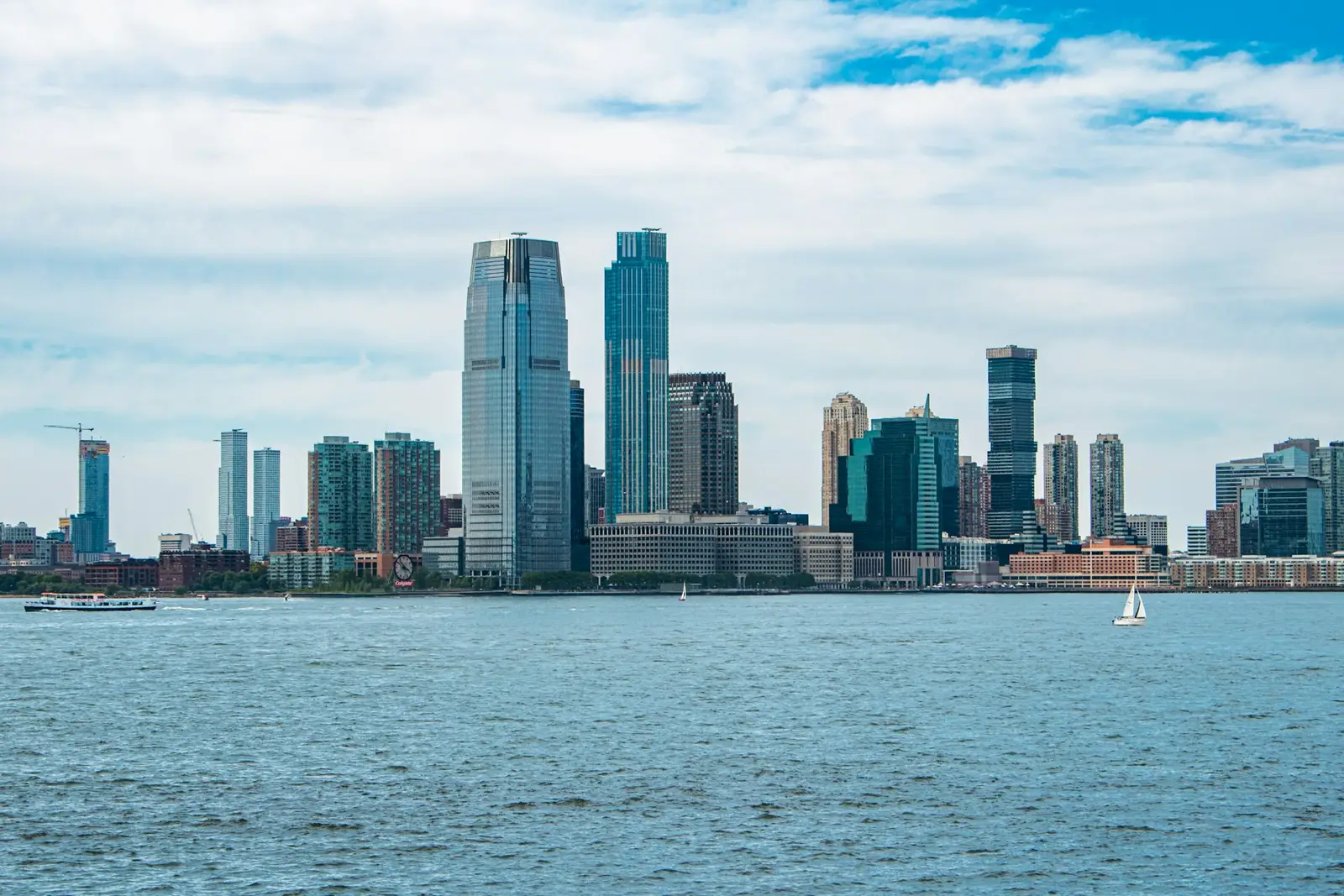
Since the 1990s, Newport, Exchange Place, Liberty Harbor and the Journal Square area have filled with residential towers. These buildings usually make hot water centrally, with commercial boilers or banks of large heaters in a mechanical room, and recirculation loops that keep hot water close to each apartment. Some newer mid-rise condos instead put a small electric tank or a heat pump unit in each apartment's utility closet.
If you live in a tower and have no hot water, the building's management or engineer is the first call, since central plant repairs are handled by their contractors. An in-unit electric tank is a different story; it belongs to the condo owner, and a plumber can replace an element, a thermostat or the whole tank, working within the building's rules for elevator bookings and work hours.
Hurricane Sandy and low-lying basements
When Hurricane Sandy pushed the Hudson into downtown Jersey City in 2012, storm surge filled basements across Paulus Hook, Harsimus Cove and the waterfront, and countless water heaters, boilers and meters were destroyed. Some buildings rebuilt with equipment raised on platforms or moved to upper floors, and flood rules for new and substantially improved buildings in the flood zone now push in that direction.
Heavy rain still overwhelms the combined sewers in low parts of downtown and along the Hackensack side. A gas heater that has stood in water needs its controls and burner assessed by a professional before it runs again; in practice, most are replaced.
The problems plumbers see most in Jersey City
- Brownstone cellar swaps where the new tank must turn a corner on a narrow stair or come in through the sidewalk hatch.
- Shared heaters in walk-ups that leave upstairs tenants with lukewarm water during the morning rush.
- Burned-out elements in small electric tanks inside downtown condo closets.
- Rusty hot water after Veolia or contractors work on old mains in the Heights or Greenville.
- Flood-damaged controls in low-lying basements after storms.
- Poor draft in old brownstone chimneys once the boiler moves to a sidewall vent.
Typical water heater prices in Jersey City
| Job | Typical Jersey City range | Notes |
|---|---|---|
| Pilot or thermocouple repair | $200–$350 | |
| Gas control valve | $425–$750 | |
| Electric element or thermostat in a condo | $225–$450 | Building access rules may apply |
| Drain and flush | $140–$290 | |
| 40–50 gallon gas tank replacement | $1,700–$3,600 | UCC permit usually included |
| Brownstone cellar or hatch install | $2,100–$3,900 | Extra handling and time |
| Tankless installation | $3,800–$6,800 | Venting through masonry adds cost |
Hudson County rates are among the higher ones in the state, and Jersey City jobs carry extra time for parking, narrow cellar access and building rules. Our guide to replacing a heater describes what a complete quote should list.
Licenses and permits in Hudson County
A plumber replacing a water heater in Jersey City must work under a master plumber license from New Jersey's State Board of Examiners of Master Plumbers. That license number should appear on the contract and the permit application.
Under the state Uniform Construction Code, Jersey City's construction code office issues the plumbing permit, and a subcode inspector signs off on the gas connection, venting and relief valve piping. Hoboken, Bayonne and Union City each have their own construction officials. In condo buildings, the association may also require a certificate of insurance and advance notice before any work in a unit.
Choosing a heater for a brownstone or condo
PSEG provides gas and electricity throughout Jersey City. In a brownstone with gas service and a usable chimney, a standard atmospheric gas tank is still the simplest replacement. If the chimney has been abandoned for a high-efficiency boiler, a power-vented tank or a tankless unit vented through the rear wall avoids the expense of lining a tall flue.
Condo owners with electric tanks in a closet are usually limited by space and by building rules. A heat pump water heater needs room and air, and in a small closet it often cannot breathe. PSEG has offered efficiency incentives at times, so check current programs before buying a high-efficiency model.
Keeping hot water steady
Soft Boonton water means less sediment, but a yearly partial drain still pays off in buildings where the street mains are old. If a tank rumbles or the water runs brown, a flush is a quick fix. In multifamily brownstones, label which tank serves which unit so the right one gets attention when a tenant calls.
A tank in a downtown cellar that is past ten years old and showing rust at the fittings is a good candidate for planned replacement, before it leaks into a basement shared by several owners. Our leak help page explains what to do in the first few minutes.
Around Jersey City
Hoboken buys its water from the Jersey City MUA system, also operated by Veolia. Bayonne has its own municipal utilities authority. Union City, West New York and North Bergen are served by Veolia's Hackensack-based system. Kearny and Secaucus have separate arrangements. Each of these towns issues permits through its own construction office, so a plumber working in Hoboken files with Hoboken, not Jersey City.
Water heater questions from Jersey City
Who supplies Jersey City's water?
The Jersey City MUA owns the Boonton Reservoir system, and Veolia operates it under contract.
Is Jersey City water hard?
It is soft to moderately hard, so tanks build less scale than in many cities. Old mains can still send rust into a tank.
My high-rise has no hot water. Should I call a plumber?
Call building management first. Central hot water in towers is handled by the building's own contractors.
Can a water heater be installed through a brownstone sidewalk hatch?
Yes, and it is often easier than the cellar stair. It may add some cost for handling.
Does a condo heater swap need city approval?
Yes. Jersey City's construction code office issues plumbing permits, and your condo association may have extra rules.
Was my basement heater ruined by flooding?
If water reached the burner or gas control, have it inspected before use. Most flooded gas heaters are replaced.
Who provides gas in Jersey City?
PSEG supplies natural gas and electricity across the city.