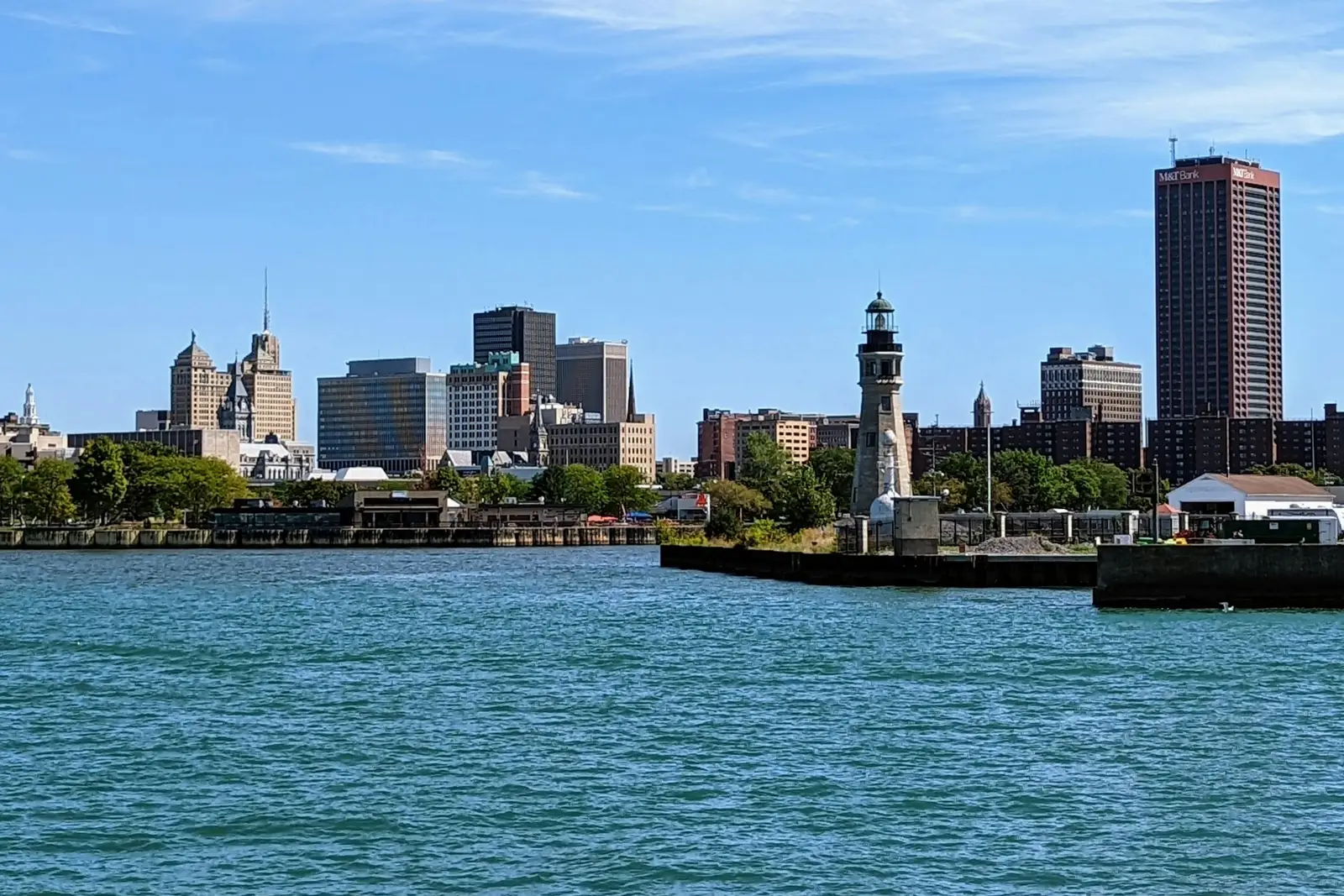
Lake Erie water through the Ward plant
Buffalo Water, the city's water utility overseen by the Buffalo Water Board, draws raw water from Lake Erie where it narrows into the Niagara River. An intake near the outer harbor feeds the Colonel Francis G. Ward Pumping Station and treatment plant on the West Side, a massive brick complex beside LaSalle Park that has been pumping water to the city since the early twentieth century. From there, mains carry treated water to every neighborhood from Black Rock to South Buffalo.
Lake Erie water is moderately hard, which in Buffalo homes means a slow gathering of grit on the bottom of a gas tank and a thin film on a tankless heat exchanger. It is not aggressive enough to cause rapid scale, and the composition barely changes through the year. Temperature is the variable that matters: by late winter the water coming into a basement in Kensington or Riverside may be barely above freezing.
Most suburbs, including Cheektowaga, Amherst, West Seneca and Orchard Park, get their water from the Erie County Water Authority rather than Buffalo Water. The ECWA also draws from Lake Erie and the Niagara River, so hardness is similar, but billing, service lines and some local rules differ.
Doubles, basements and where the heater lives
The Buffalo double is the signature local house: a two-family home with one flat on the first floor and another upstairs, built by the tens of thousands between the 1890s and the 1920s. Walk through the West Side, North Buffalo, Black Rock, Riverside or Kaisertown and you will see block after block of them. Most have two water heaters side by side in a shared basement, one for each unit, often next to two furnaces and two gas meters.
Single-family homes in Parkside, the Elmwood Village, Allentown and the grand streets around Delaware Park range from modest cottages to large Victorians, and nearly all keep the heater in a basement with fieldstone or brick walls. In older South Buffalo and East Side houses, basements can be low and damp, with steep wooden stairs that make carrying a new 50-gallon tank down a two-person job.
Because doubles share a basement and often a chimney, a heater problem rarely stays private. A leak upstairs is the other tenant's problem too, and a blocked flue can affect both units. Landlords who own doubles often replace both heaters at once to keep the setup matched and the vent sized correctly.
Lake-effect winters and the 2022 blizzard
Buffalo's winters are defined by lake-effect snow, when cold air crossing open Lake Erie dumps heavy bands of snow on the city and the Southtowns. The water heater feels it in two ways. Inlet water gets very cold, so a tank delivers fewer gallons of hot water before running out, and furnaces and heaters share the same basement air and flue for months on end.
The Christmas blizzard of December 2022 showed how fast a storm can turn dangerous. Many homes lost power for days, and drifted snow buried vents and gas meters. Direct-vent and power-vent heaters with sidewall terminals can shut down or spill exhaust when snow covers their pipes, and high-efficiency furnaces have the same problem. During a major storm, keep sidewall vents and the gas meter clear of snow, and never run a generator in a basement or attached garage.
Long cold snaps also freeze supply lines along exterior walls, especially in uninsulated rear additions and enclosed porches common on doubles. A heater left with no cold water supply can overheat and trip its limit switch. If water stops flowing in a cold snap, turn the gas heater to its pilot or vacation setting until the line thaws.
The problems plumbers see most in Buffalo
- Running out of hot water in February when lake water arrives in the 30s. Our no hot water page explains quick checks before you call.
- Orphaned chimney flues in doubles after high-efficiency furnaces are installed.
- Snow-blocked sidewall vents shutting down power-vent and tankless heaters.
- Corroded tank bottoms in damp fieldstone basements.
- Thermocouple and pilot failures on older atmospheric tanks. Drafty fieldstone basements make pilot problems worse.
- Basement water from spring melt and storm backups reaching burners and gas controls.
Typical water heater prices in Buffalo
| Job | Typical Buffalo range | Notes |
|---|---|---|
| Thermocouple or pilot repair | $150–$300 | |
| Gas control valve | $375–$625 | |
| Chimney liner for a water heater flue | $500–$1,600 | Common after a furnace upgrade |
| Flush and anode check | $125–$250 | |
| 40–50 gallon gas tank replacement | $1,500–$2,900 | Permit and haul-away included |
| Pair of tanks for a double | $2,900–$5,400 | Both units done together |
| Tankless installation | $3,400–$6,000 | Sidewall vent and gas line work |
Buffalo's labor rates are lower than downstate New York's but rise sharply on emergency calls during storms. Steep basement stairs, tight doorways in doubles and any chimney work raise the cost of a job.
Permits and plumber licensing in Buffalo
New York State does not issue a statewide plumbing license, so licensing is local. In Buffalo, plumbing work must be done by a master plumber licensed by the city, and the license comes through the city's Examining Board of Plumbers. Suburbs such as Amherst, Cheektowaga and Tonawanda have their own licensing and registration rules, so a plumber licensed in one town may not be cleared to work in the next.
Replacing a water heater in Buffalo requires a permit from the city's Department of Permit and Inspection Services, and a city inspector then signs off on the gas piping, flue hookup, relief outlet and shutoffs in that basement. When getting quotes, ask each company to show its Buffalo master plumber license and to state in writing that the permit fee is part of the price.
Chimneys and venting in older Buffalo homes
Most Buffalo doubles were built with a masonry chimney that once served coal and later gas furnaces. Once the furnace in a double gets swapped for a condensing model piped out through the foundation wall in PVC, the lone heater left venting into that big brick stack cannot warm it enough to draw well. The flue stays cold, condensation forms inside, mortar crumbles and the heater may backdraft.
A properly sized stainless steel liner restores safe venting. Another route is a power-vent water heater that exhausts through the wall, though its vent must stay clear of snow and away from windows and the neighbor's house, which can be tricky on narrow Buffalo lots. A carbon monoxide alarm on each floor of a double is required in New York and is the best early warning of venting trouble.
Gas, power and incentives
National Fuel Gas distributes natural gas throughout Buffalo and much of Western New York, and almost every heater in the city runs on it. National Grid delivers electricity in the city. Both utilities, along with state energy programs, have offered rebates on efficient water heaters and heat pump models at times. Check current programs before buying, since they change from year to year.
Around Buffalo
Cheektowaga, Amherst and West Seneca are on Erie County Water Authority service and handle permits through their own town building departments. Kenmore and the Town of Tonawanda share a north border with the city and have many doubles of their own. Lackawanna south of the city runs its own building office and has older homes tied to its steel plant history. Orchard Park and Hamburg in the Southtowns get some of the heaviest lake-effect snow in the region.
Water heater questions from Buffalo
Why do showers in my Buffalo house turn cold sooner in February?
Lake Erie water can enter your basement in the mid 30s. The heater has to warm it much further, so the same tank delivers less hot water per cycle.
Does New York require a state plumbing license?
No. Licensing is handled locally. In Buffalo, plumbing work requires a city master plumber license.
Who issues water heater permits in Buffalo?
The city's Department of Permit and Inspection Services.
Should both water heaters in a double be replaced together?
Not always, but many owners do it to match venting and save on labor. If they share a flue, the vent must be sized for both.
What should I do if snow buries my heater's vent?
Shut the heater down, clear the snow carefully from the vent terminal, then restart it. If it will not restart or you smell exhaust, call a plumber.
Is Buffalo water hard?
It is moderately hard. Sediment builds slowly, so an annual or every-other-year flush usually keeps a tank in good shape.
Who supplies gas in Buffalo?
National Fuel Gas. National Grid supplies electricity.