Quabbin water and your heater
Boston and most of its neighbors get water from the Massachusetts Water Resources Authority, which draws from the Quabbin and Wachusett reservoirs in central Massachusetts. The water is very soft, around one grain per gallon. MWRA adjusts its chemistry at the treatment plant to reduce corrosion of household plumbing, which also helps limit lead from older pipes.
For water heaters, soft water means little sediment and very slow scale. Tankless units can often go a couple of years between descales, and gas tanks rarely rumble. The anode rod is the part to watch, since soft water consumes it steadily. Checking it around year four or five can add years to a tank.
Winter is the bigger factor. Incoming water drops into the upper 30s and low 40s, so heaters have to raise it roughly 80 degrees. Tanks that cope in September run short in February, especially when they serve more than one unit.
Triple-deckers, rowhouses and brownstones
Boston's neighborhoods are full of housing types that put water heaters in basements. Dorchester, Roslindale, Jamaica Plain, East Boston and parts of South Boston are lined with triple-deckers, three-story wood-frame houses with one apartment per floor. Many have three water heaters in the basement, one per unit, or a single boiler with indirect tanks.
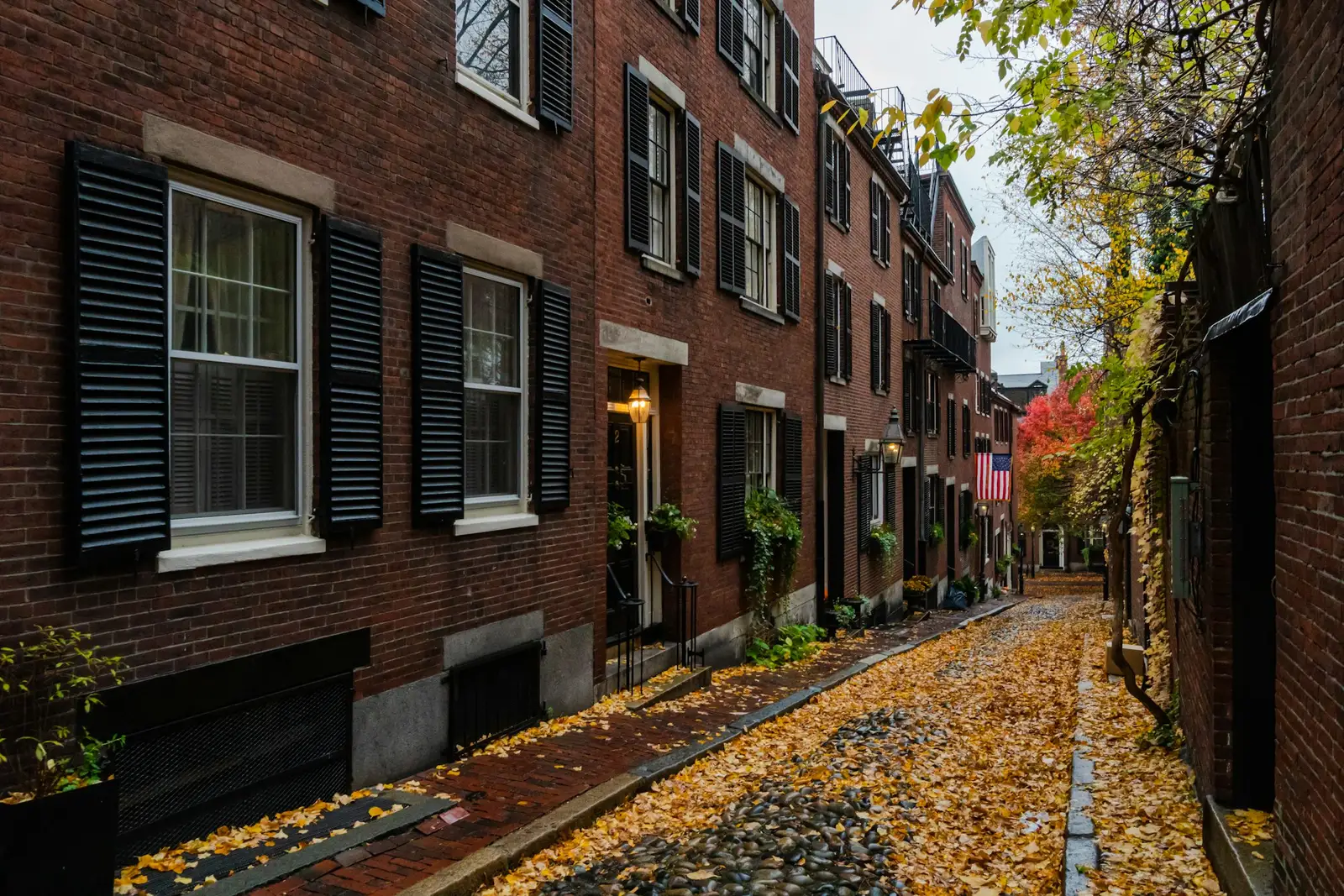
The South End, Back Bay, Beacon Hill and Charlestown have brick and brownstone rowhouses, many converted to condos with heaters in basements or utility closets. Houses in West Roxbury, Hyde Park and Brighton are often single-family homes with basement utility rooms. Basements throughout the city tend to be old, damp, low-ceilinged and reached by steep stairs.
Massachusetts gas-fitting and plumbing rules
Massachusetts is unusually strict. Plumbing work requires a license from the Board of State Examiners of Plumbers and Gas Fitters, and gas work, including connecting a gas water heater, requires a licensed gas fitter. Plumbers often hold both licenses. A permit is required for water heater replacement, and in Boston it is issued through the Inspectional Services Department, with separate plumbing and gas permits where both apply.
Massachusetts also requires carbon monoxide alarms in homes with fossil-fuel appliances, and an inspector will expect them. If you are unsure whether a contractor is properly licensed, the state's license lookup lets you check both the plumbing and gas-fitter license before work starts.
The problems plumbers see most in Boston
- Winter short supply when 40°F water meets a 40-gallon tank and a busy household.
- Chimney and venting problems in old basements after boiler upgrades.
- Tanks corroding from inside once the anode is spent on soft MWRA water.
- Three heaters, one flue in triple-deckers, where one venting fault affects every unit.
- Damp-basement corrosion on fittings and gas connectors.
- Tight access down old basement stairs and through narrow doors.
Typical water heater prices in Boston
| Job | Typical Boston range | Notes |
|---|---|---|
| Thermocouple or pilot repair | $225–$400 | |
| Anode rod replacement | $225–$450 | Key maintenance on soft water |
| Gas control valve | $450–$700 | Licensed gas fitter required |
| 40–50 gallon gas tank replacement | $2,200–$4,000 | Plumbing and gas permits |
| Heat pump water heater | $3,500–$6,500 | Before Mass Save rebates |
| Tankless installation | $4,000–$7,500 |
Boston labor and permit costs are among the highest in the country. Old basements, parking and the need for both plumbing and gas permits all add to the price.
Heat pumps and Mass Save
Massachusetts has pushed hard toward electrification, and the Mass Save program, run by the state's utilities, has offered substantial rebates on heat pump water heaters. A Boston basement that stays above about 40°F year-round gives a heat pump unit the air it needs, and the unit dehumidifies the basement as it runs, which suits damp Boston cellars well.
The practical limits are electrical capacity in older buildings, headroom in low basements, and space around the unit. Check current Mass Save offers before you buy, since amounts change and some require a participating contractor.
Repair or replace in a Boston basement
Because soft water spares Boston tanks from heavy sediment, many fail by corrosion after the anode is gone, sometimes with little warning. A tank under eight years old with a healthy anode is worth repairing for almost any single part. Past ten years, especially in a triple-decker where a failure leaves a tenant without hot water and a leak can reach other units, planned replacement is usually the better choice.
Replacement time is also when to fix undersizing. Households that run short every winter should consider a 50-gallon or high-recovery tank, a tankless unit sized for January, or a heat pump unit with enough capacity.
Triple-decker water heater setups
Triple-deckers come with a few common arrangements. In many, each apartment has its own gas tank in the basement, all three venting into one shared chimney through a common connector. In others, a single boiler heats the building and feeds an indirect tank for each unit or one large shared tank. Condo conversions often split the basement into storage areas, with each owner's heater in their own cage.
Shared venting is the weak point. If one heater's draft hood spills or the shared flue is partly blocked, exhaust from all three can back up. A plumber working on any heater in a triple-decker should look at the whole venting system, not just the unit in front of them. When owners replace heaters at different times, it is worth coordinating so the venting stays sized correctly for whatever remains connected to it.
Damp basements and winter readiness
Boston basements tend to be damp from spring through fall, which slowly corrodes gas connectors, water fittings and the steel base of tank jackets. A dehumidifier helps, and so does keeping the area around the heater clear so air can circulate and any leak is visible. Before winter, check that basement windows near the heater close fully and that the heater's relief valve pipe ends safely near the floor.
Around Boston
Cambridge and Somerville share MWRA water and the same triple-decker and two-family housing, with their own inspectional services departments. Quincy and Newton have more single-family homes with basement heaters. Communities outside the MWRA system, especially to the north and south, may rely on local wells or reservoirs with harder water.
Water heater questions from Boston
Do I need a licensed gas fitter to replace a gas water heater in Massachusetts?
Yes. Gas work requires a licensed gas fitter, and plumbing work a licensed plumber. Many professionals hold both.
Is Boston water hard?
No, it is very soft, about one grain per gallon. Sediment is rarely an issue, but anode rods wear faster.
Who issues water heater permits in Boston?
Boston's Inspectional Services Department issues the plumbing and gas permits.
Are there rebates for heat pump water heaters in Boston?
Mass Save has offered significant rebates on heat pump water heaters. Check current amounts before buying.
Why is my Boston triple-decker always short of hot water in January?
MWRA water arrives near 40°F in winter, and a 40-gallon tank serving a full apartment cannot recover fast enough. A larger or high-recovery heater usually fixes it.
Do I need carbon monoxide alarms with a gas water heater?
Yes. Massachusetts requires CO alarms in homes with fossil-fuel appliances.