Aquarion water from the Easton and Hemlocks reservoirs
Almost every tap in Bridgeport is served by Aquarion Water Company, the investor-owned utility that grew out of the old Bridgeport Hydraulic Company. Its main supply for the city comes from a chain of upland reservoirs north of town, chiefly the Easton Reservoir and the Hemlocks Reservoir on the Easton and Fairfield line, along with smaller impoundments in the same watershed. Water is treated near the reservoirs and sent south through large mains to the Park City.
Surface water collected from wooded New England hills is naturally soft, so Bridgeport heaters do not choke on mineral crust the way tanks in the Midwest do. What softness gives with one hand it takes with the other: low-mineral water is more aggressive toward the sacrificial magnesium or aluminum rod inside a tank, and in older houses it slowly works on galvanized nipples and the brass of aging gas valves. Most of the debris a plumber drains out of a Bridgeport tank is flaked anode, rust from old supply pipe and fine silt stirred up after main work, not limestone.
Because Aquarion supply comes in quite cold through a Connecticut winter, a heater that feels fine in September can lose ground by Presidents' Day. The burner or elements have to lift water by roughly eighty degrees or more to reach a normal setpoint, and that slows recovery in every tank in the city at the same time.
Three-families, capes and colonials
Bridgeport was an industrial powerhouse, and its housing reflects the workforce that filled the factories. The East Side, the East End, the West End and the Hollow are packed with wood-frame two- and three-family houses, the stacked flats New Englanders call triple-deckers, built for machinists and brass workers in the decades around 1900. Most have a fieldstone or brick basement, and that cellar is where you will find one water heater per apartment, sometimes three side by side, each on its own gas meter.
Black Rock and the streets around St. Mary's by the Sea hold Victorians, colonials and handsome single-families on narrower lots near the water. The North End, Brooklawn and the area near the Trumbull line filled in with capes, ranches and colonials after the Second World War, again mostly with basements. Newer townhouse and condo complexes, including conversions in old mill buildings, tend to put heaters in mechanical closets or shared utility rooms.
The practical result is that a typical Bridgeport replacement involves carrying a tank down a narrow cellar stair, connecting to a gas line that has been extended several times, and venting into a masonry chimney that may also serve one or more boilers.
Long Island Sound, nor'easters and cold cellars
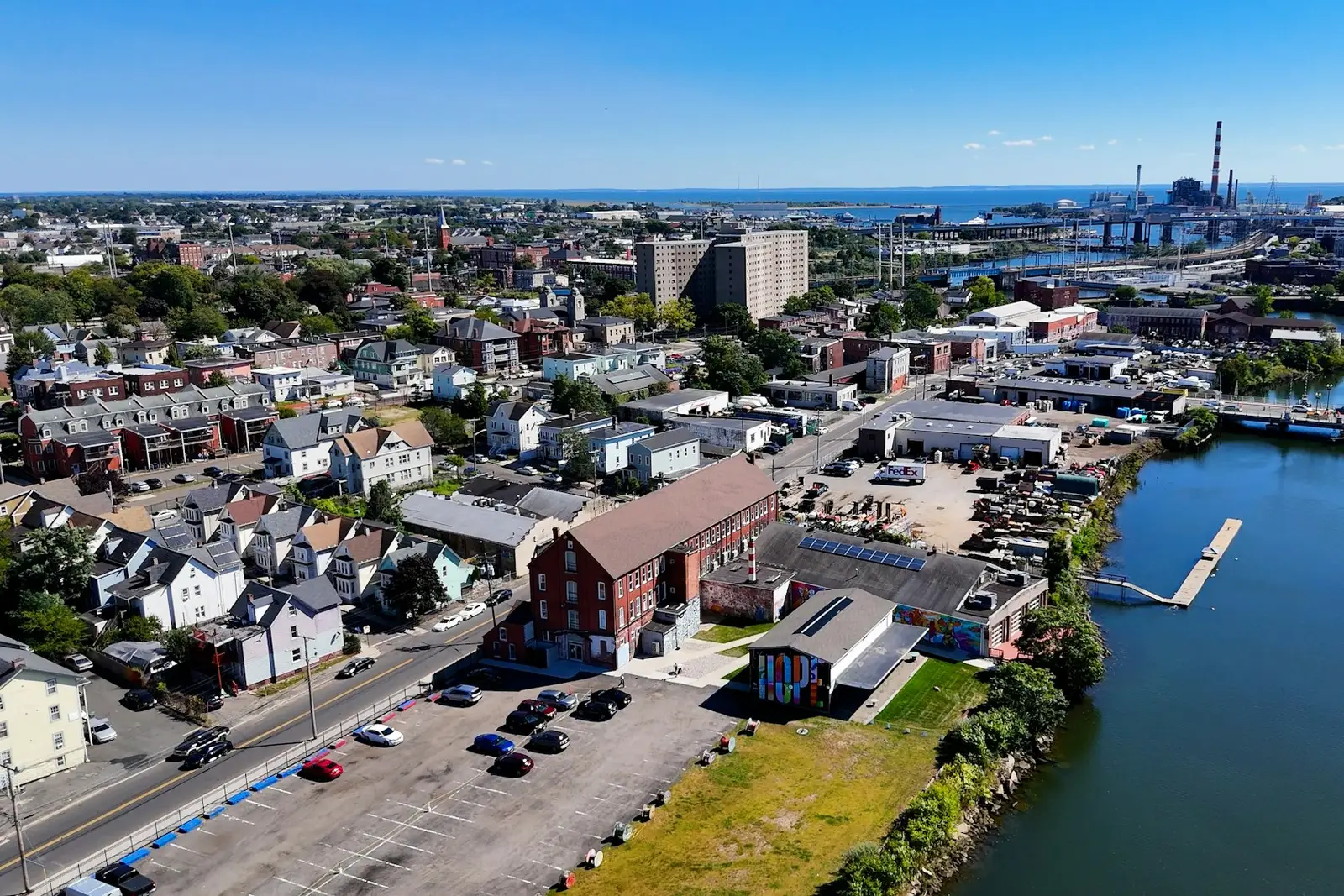
The city wraps around Bridgeport Harbor and Black Rock Harbor, and the South End, the shoreline near Seaside Park and low blocks in Black Rock have flooded during hurricanes and nor'easters. Superstorm Sandy in 2012 pushed salt water into basements across the South End. Inland, intense summer downpours can overwhelm combined sewers and back water up through floor drains in older cellars.
Salt water is especially hard on a gas water heater. If floodwater from the harbor reached the burner, pilot assembly or control valve, the safe call is replacement, and the whole flue path should be checked before anything is relit. Homeowners on flood-prone streets sometimes raise the new heater on a sturdy platform or move to a wall-hung unit that sits above the likely water line.
Winter adds its own strain. Fieldstone cellars in the older wards run cold and damp, and a tank in a drafty corner loses heat steadily. Frozen supply lines in exterior walls occasionally send a burst of debris into the heater once they thaw.
The problems plumbers see most in Bridgeport
- Chimney and venting failures where a new high-efficiency boiler left an old water heater alone in an oversized, unlined flue.
- Three tanks failing in a row in East Side triple-deckers installed by the same landlord in the same year.
- Depleted anodes on soft Aquarion water, followed by rusty hot water and pinhole leaks near the bottom seam.
- Corroded galvanized nipples and dielectric fittings at the top of the tank in pre-war Bridgeport houses.
- Harbor flood damage to burners and controls in the South End and lower Black Rock.
- February recovery complaints in large households when cold inlet water outruns a 40-gallon tank.
Typical water heater prices in Bridgeport
| Job | Typical Bridgeport range | Notes |
|---|---|---|
| Thermocouple, flame sensor or pilot repair | $175–$350 | |
| Gas control valve replacement | $400–$725 | Brand and parts availability matter |
| Anode rod replacement | $175–$375 | Often paired with a flush |
| Electric element or thermostat | $200–$425 | |
| 40–50 gallon gas tank replacement | $1,700–$3,500 | City permit usually included |
| Chimney liner added with a new tank | $800–$2,200 extra | When the flue is unlined or oversized |
| Tankless installation | $3,900–$7,000 | Gas line and venting drive the cost |
Fairfield County labor rates run higher than in most of the country, and Bridgeport tracks that. A tank wrestled down a steep cellar stair in a three-family on Seaview Avenue, or a job that needs a new liner in a shared chimney, will land near the top of these ranges.
Licensing and permits in Bridgeport
Connecticut licenses plumbers through the Department of Consumer Protection, whose occupational licensing division issues the plumbing and piping licenses used in the trade. Contractors who run their own jobs hold an unlimited plumbing contractor license, usually called P-1, while journeypersons work under them. Gas piping connections fall under related state licensing, and you can look up any Connecticut tradesperson's license status on the DCP website.
Replacing a water heater in the city is permitted work. The Bridgeport Building Department issues the plumbing permit; afterward a city inspector reviews where the relief valve drains, the gas connection, the venting and any thermal expansion control the state building code calls for. On a gas job, a reputable shop will also test for proper draft once the new tank is lit. Before you hire, confirm the contractor's DCP credential is active and that the city permit fee appears on the written quote.
Venting into old Bridgeport chimneys
Plenty of East Side and North End houses went up with a single brick chimney meant for a coal furnace, which was converted to oil and then gas, and the water heater was tied in beside it. Over the past two decades plenty of owners replaced old boilers with sealed-combustion units that vent out the side wall. That leaves the water heater as the only appliance using a chimney that was sized for something far larger, and a small, cool exhaust stream in a big masonry flue condenses, drips acidic water back down and can spill exhaust into the cellar.
Signs of trouble include rust flakes in the draft hood, white streaks on the chimney cleanout, a damp spot at the base of the flue or a carbon monoxide alarm that chirps in the cellar. A plumber can drop a stainless liner sized to the heater down the old flue, or the house can move to a power-vented or direct-vented tank that never touches the masonry. Either should be on the table before a new tank goes in.
Multi-family buildings and landlord decisions
A large share of Bridgeport housing is rented, and many owner-occupants live on one floor of a two- or three-family and rent the others. That makes water heaters a business decision. A tank that dies on a Saturday in January means a tenant without hot water and, under Connecticut housing rules, an obligation to restore it promptly.
Owners with several units often stagger replacements so they are not facing three failures in one winter, and some keep records of each tank's install date taped to the jacket. When every unit already has its own gas meter, separate heaters stay the simplest choice. Where units share a single large tank, adding a mixing valve and recirculation, or splitting the load, can end the arguments over who used the hot water first.
Repair or replace in Bridgeport
Bridgeport tanks younger than roughly eight years deserve a repair when a thermocouple, flame sensor, gas valve or relief valve quits. Once the steel itself starts weeping at the base, or rusty water shows up only on the hot side, the tank is done. Soft Aquarion water means a tank with a fresh anode can outlast the national average, so a replaced rod at mid-life genuinely pays off in this city.
When it is time to replace, standard atmospheric gas tanks remain common, but power-vent and heat pump models are gaining ground where chimneys are a problem. Southern Connecticut Gas and United Illuminating have each, at times, offered rebates through the Energize Connecticut programs, so check what is current before choosing a model. Heat pump models struggle in drafty fieldstone cellars that drop into the 40s, so they suit finished or furnace-warmed Bridgeport basements better.
Around Bridgeport
Surrounding towns each run their own building office. Fairfield and Stratford are also largely on Aquarion water, but permits go through their own town halls. Trumbull, Monroe and Easton mix public water with private wells, and well water there can be harder or carry iron. Shelton and Milford sit a little farther out with their own suppliers and inspectors. In any of them, a tank swap still needs a DCP-licensed plumber and a local permit.
Water heater questions from Bridgeport
Who supplies water in Bridgeport?
Aquarion Water Company, which serves the city from the Easton and Hemlocks reservoirs and other upland supplies north of town.
Is Bridgeport's water hard?
No. Aquarion's reservoir water is soft, so scale is rarely the problem. Anode wear and old galvanized pipe cause more trouble.
Will Bridgeport City Hall want a permit for my new tank?
Yes. The Bridgeport Building Department issues the plumbing permit, and the installer should hold an active Connecticut DCP license.
Why is there a puddle at the base of my chimney in the cellar?
Often it is condensation from a water heater left alone in an oversized flue after a boiler upgrade. Lining the flue or venting the new heater through the wall ends the dripping.
My three-family has three heaters. Should I replace them all at once?
Not necessarily. Replace the failed one now and plan the others by age, so a single winter does not bring three emergencies.
Can I keep a heater that sat in harbor floodwater?
Salt water ruins gas controls and burners. Have it inspected, and expect replacement if the water reached the controls.
How long do water heaters last in Bridgeport?
Many gas tanks give 9 to 13 years on soft Aquarion water, toward the long end when someone swaps the rod before soft water consumes it.