Hetch Hetchy water
San Francisco's water comes mostly from the Hetch Hetchy Reservoir in Yosemite National Park, carried across the Central Valley by gravity, with additional supply from local reservoirs in the East Bay and Peninsula watersheds. The San Francisco Public Utilities Commission has also blended a small share of local groundwater into the supply in parts of the city.
Snowmelt off granite is about as soft as municipal water gets. San Francisco water heaters seldom build the thick sediment layers common elsewhere, and tankless units can often go two or three years between descales. The main wear item is the anode rod, which soft water consumes relatively quickly. Once it is gone, the steel tank starts to corrode from inside.
The city's cool, steady climate also keeps incoming water around the mid 50s year-round, so heaters here do not face much seasonal swing.
Garages under the house
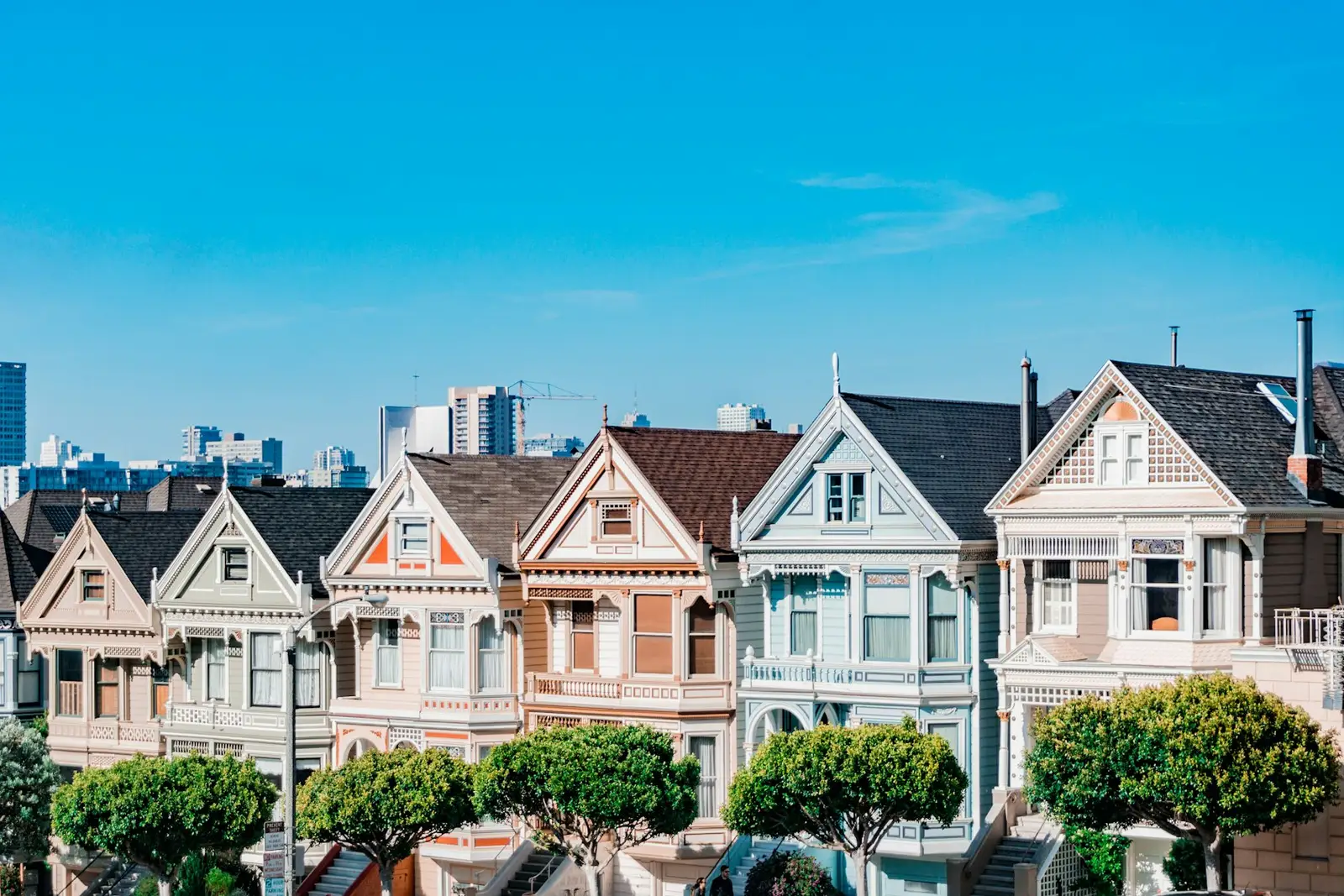
Much of San Francisco's housing is Victorian, Edwardian and 1920s through 1940s row housing in neighborhoods like the Sunset, the Richmond, Noe Valley, the Mission, Bernal Heights and the Excelsior. Many of these homes sit over a ground-floor garage or storage level, and that is where the water heater usually lives, often wedged between the car, the washer and the foundation wall.
Two-unit and three-unit flats commonly have one heater per unit, sometimes side by side in the shared garage, sometimes in closets on each floor. Larger apartment buildings typically have a central boiler system handled by the building's plumber. Condos built in recent decades in SoMa, Mission Bay and Dogpatch often use tankless units or electric heaters in utility closets.
The tight garages make replacements slower than in suburban homes, and the city's narrow streets and parking rules affect how a plumber gets a tank in and out.
Venting and earthquakes
Older San Francisco gas heaters often vent through long runs of metal flue up through the building or into old chimneys. Over decades, connectors rust, joints loosen and flues get altered during remodels. Draft problems and spillage at the draft hood are a common finding during inspections, and they are worth taking seriously in a garage directly below living space.
California requires every water heater to be strapped against earthquakes, and in a city that sits beside the San Andreas fault, inspectors pay close attention. Two straps anchored into studs, flexible gas and water connectors, and a clear path for the relief valve discharge are the basics.
San Francisco and electrification
San Francisco has been moving toward all-electric buildings. The city requires new construction to be all-electric, and the Bay Area's regional air district has adopted rules that end sales of new gas water heaters in the region starting in 2027. Existing gas heaters can be repaired and kept running, but replacements after that date will need to be zero-emission, which in practice means heat pump water heaters.
For many homeowners, the practical question is timing. Replacing an aging gas tank now with another gas tank is still allowed and cheaper up front. Switching to a heat pump unit on your own schedule avoids an emergency changeover later and can take advantage of incentives while they last. The catches in San Francisco are space, since heat pump units are taller and need air around them, and electrical capacity in older panels.
The problems plumbers see most in San Francisco
- Tanks rusting from inside after the anode is spent on soft Hetch Hetchy water.
- Flue and draft problems in older buildings with long or altered vent runs.
- Missing or loose earthquake straps found during sales and inspections.
- Cramped garage installs where access drives the cost of any repair.
- Electrical panel limits blocking a switch to a heat pump unit.
- Tankless error codes in condos, more often venting or flow than scale.
Typical water heater prices in San Francisco
| Job | Typical San Francisco range | Notes |
|---|---|---|
| Thermocouple or pilot repair | $225–$400 | |
| Anode rod replacement | $225–$450 | Key maintenance on soft water |
| Vent connector repair | $250–$700 | |
| Earthquake strap kit installed | $125–$275 | |
| 40–50 gallon gas tank replacement | $2,400–$4,200 | Permit, straps and haul-away |
| Heat pump water heater | $4,000–$7,500 | Before incentives; electrical work extra |
San Francisco labor and permit costs are among the highest in the country. Garage access, parking and building rules push jobs further toward the top of each range.
Permits in San Francisco
Replacing a water heater in San Francisco requires a plumbing permit from the Department of Building Inspection, with an inspection that covers seismic straps, gas or electrical connections, venting and the relief valve. California licenses contractors through the Contractors State License Board; a plumbing contractor should hold the C-36 classification. You can check any license on the board's website.
Ask for the license number and whether the DBI permit is included before agreeing to a replacement.
Repair or replace in San Francisco
Because soft water spares San Francisco tanks from sediment, many heaters here look healthy outside right up until the tank rusts through. That makes age a better guide than noise. A tank under eight years with a recently checked anode is worth repairing for almost any single part. A tank past ten or twelve years, particularly one whose anode was never changed, is a candidate for planned replacement, especially if it sits in a garage directly beneath living space.
With the regional shift away from gas, the replacement decision also involves choosing between another gas tank now and a heat pump unit. Getting both prices, including any electrical work, before the old tank fails gives you room to decide calmly.
Neighborhood notes
Out in the Sunset and Richmond, block after block of 1920s through 1940s homes sit over garages with the heater against the back wall, and fog-damp air keeps metal fittings working against corrosion. In the Mission and Noe Valley, Victorian flats often have a heater per unit with complicated venting. Pacific Heights and Presidio Heights have large homes with long pipe runs, where recirculation systems and larger heaters are common. Newer towers in SoMa and Mission Bay mostly use building systems or compact electric and tankless units.
Water heater questions from San Francisco
Is San Francisco water hard?
No, it is very soft. Hetch Hetchy water comes from Sierra snowmelt. Sediment is rarely a problem, but anode rods wear faster.
Can I still install a gas water heater in San Francisco?
For an existing home, for now. Bay Area air district rules end sales of new gas water heaters starting in 2027, and new construction in the city must be all-electric.
Do I need a permit to replace a water heater in San Francisco?
Yes. The Department of Building Inspection requires a plumbing permit and inspection, including earthquake straps.
Why is my San Francisco water heater rusty inside if the water is soft?
Soft water consumes the anode rod faster. Once it is gone, the tank corrodes. Check the anode around year four or five.
Will a heat pump water heater fit in my garage?
Often yes, if there is height and some air space around it and a 240-volt circuit is available. Some 120-volt models avoid a panel upgrade.