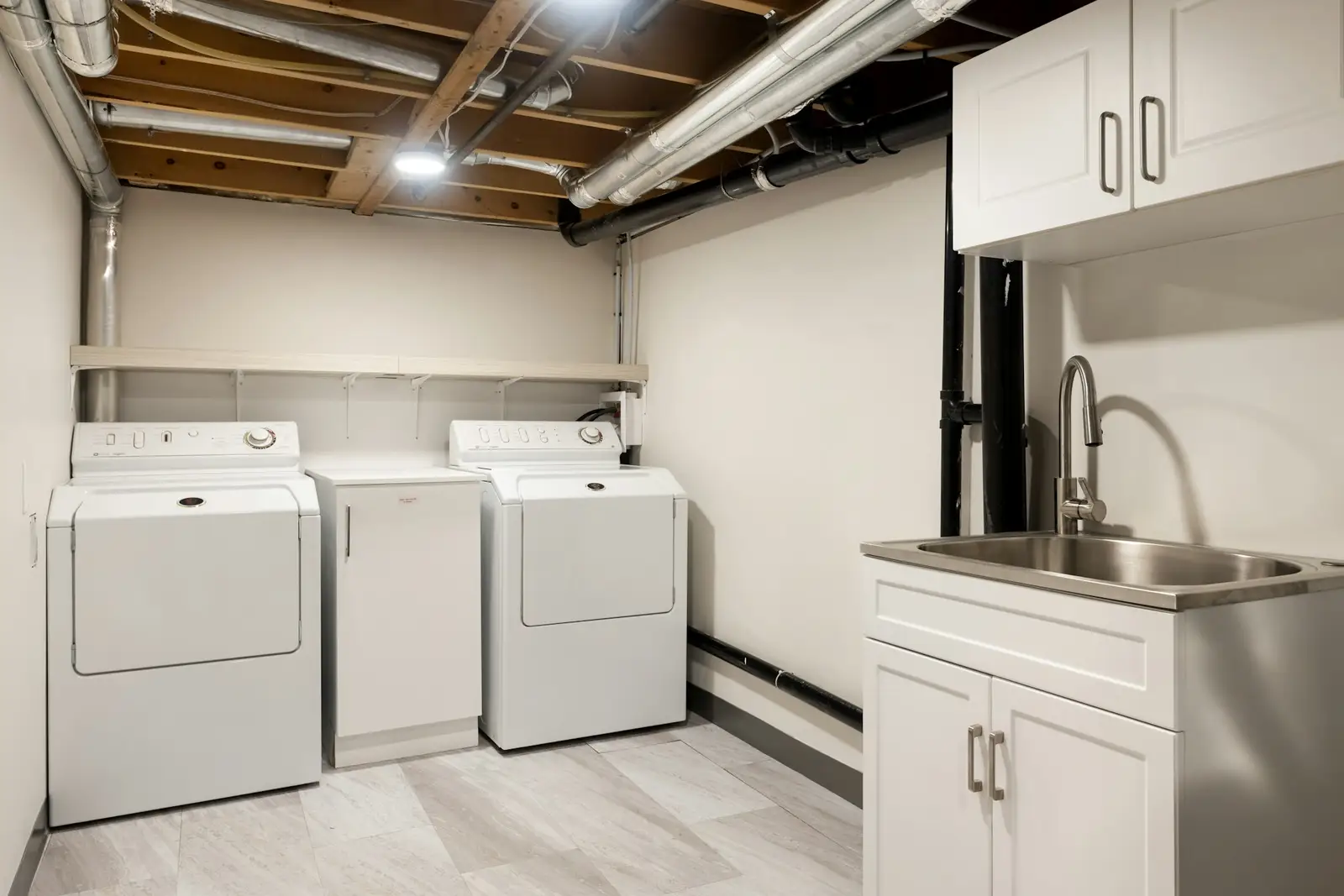
When replacing beats repairing in Peoria
Hard Illinois American Water supply is the main thing that shortens tank life in Peoria. Scale piles up under the burner faster here than in soft-water towns, and a tank that was never drained can be thinning at the bottom by year eight. A well-flushed tank on the same water often lasts into its low teens. Most of the heaters Peoria plumbers replace fall somewhere in that gap.
Peoria-specific reasons to stop repairing and replace:
- A rumble that comes back within weeks of a flush, which means the scale has hardened into a crust no drain will clear.
- Water at the base of a tank in a finished North Peoria basement, where carpet and drywall make a slow leak expensive.
- A tank that copes in August but runs short in January, when the river share of the supply drops toward 40°F.
- Rust and condensation dripping from the draft hood on a West Bluff heater left alone in a big masonry chimney.
- Controls or a burner that sat in storm water during a heavy summer downpour in a low South Side basement.
Peoria tanks younger than eight that lose a single thermocouple or relief valve still merit the fix. Past that, read deciding whether to fix or retire a tank for why a second big repair bill is usually the signal to switch.
Peoria installed price ranges
| Heater installed | Typical Peoria range | What moves it |
|---|---|---|
| 40 gallon atmospheric gas tank | $1,300–$2,200 | Stair access, vent condition |
| 50 gallon atmospheric gas tank | $1,450–$2,600 | The common family replacement |
| 50 gallon electric tank | $1,200–$2,300 | Rental flats and conversions |
| 75 gallon gas tank | $2,500–$4,000 | Large households, multi-unit cellars |
| Power-vent gas tank | $2,400–$4,000 | Replaces an orphaned bluff chimney |
| Gas tankless | $3,000–$5,600 | Gas line upsizing, softener advised |
| Heat pump water heater | $3,100–$5,400 | Condensate drain, dedicated circuit |
| Add-ons: permit, haul-away, expansion tank | $125–$500 | Normally bundled |
Central Illinois labor keeps Peoria pricing below the Chicago area. The two things that push a Peoria quote up most often are the walk down to the heater, which in a Moss Avenue Victorian can mean a narrow, turning cellar stair, and the vent, which on the bluffs is often a chimney that no longer drafts by itself.
Sizing for a seasonal inlet temperature
Because part of Peoria's water comes straight from the Illinois River, the temperature at the heater moves with the weather. A rise of about 45 to 50 degrees in late summer becomes a rise near 80 degrees in a cold January. Size the new heater for winter, and compare models by their first-hour rating on the yellow label.
| Peoria household | First-hour rating to target | Usual pick |
|---|---|---|
| 1–2 people | 50–60 gallons | 40 gallon gas or 50 gallon electric |
| 3–4 people | 65–80 gallons | 50 gallon gas |
| 5+, or two units sharing one heater | 85+ gallons | 75 gallon gas or tankless |
Facing an 80-degree January lift from Illinois River water, a 199,000 BTU class gas tankless unit holds near 4.5 to 5 gallons per minute at full temperature, while the same unit easily tops 7 in August. Two showers at once is a fair winter expectation for a Peoria ranch; a third fixture is a stretch.
Choosing a heater type for Peoria
Both fuels in Peoria come from Ameren Illinois, which keeps every heater type available in most homes. Gas tanks stay the most common choice in the bluff neighborhoods because the gas line and flue are already in the basement, and an atmospheric tank keeps heating when a storm knocks out power.
Tankless units fit newer homes near Dunlap and along Route 150 that already vent the furnace through the wall and have room on the gas meter. On Peoria's hard water they need a softener or scale filter and a yearly descale, and skipping either is the fastest way to ruin a heat exchanger here.
Heat pump water heaters suit the larger finished and unfinished basements of North Peoria and the Charter Oak area, where the room stays in a moderate range and there is space for airflow. Ameren has run efficiency programs that included water heaters at times, so ask what applies before choosing between a heat pump unit and a high-efficiency gas tank.
What a code-compliant Peoria install includes
Peoria's Community Development Department handles the paperwork for houses inside the city, and its inspectors make a final visit after the new tank is lit. The installer must hold an Illinois Department of Public Health plumbing license and work for an IDPH-registered contractor. A complete job includes:
- A draft check on any masonry chimney, with a stainless liner or a power-vent heater if a new furnace has orphaned the flue.
- Gas piping finished right: shutoff within reach, a fresh approved connector, and a drip leg ahead of the Ameren-fed control.
- A full-size T&P relief line ending a short distance above the floor or at a drain.
- An expansion tank on homes where a backflow device or pressure regulator on the Illinois American Water service stops heated water from pushing back to the street.
- A drain pan under heaters sitting over finished basements or in closets.
- A raised stand in basements that have taken storm water, plus the burner elevation required whenever a gas heater goes in a Peoria garage.
- Disposal of the old tank, sediment and all.
The seismic straps required in western states are not part of a standard Peoria installation. Ask for the permit on the written estimate; an unpermitted swap can surface later during a home inspection.
Peoria job length and price factors
Swapping a standard gas tank under a North Peoria ranch generally fills about half a day, and stocked sizes are often in and running the same afternoon. Older homes on the bluffs add time in predictable ways:
- Multi-unit cellars in West Bluff conversions, where two or three tanks share a basement and sometimes a flue.
- Low, damp East Bluff basements where corroded gas fittings or a rotted stand also need replacing.
- Heavily scaled old tanks that will not drain until the grit is broken up.
- Chimney relining on three-story brick homes, which can add a separate visit.
- Upgrades to tankless or heat pump units, which in bluff houses often mean fresh gas pipe, a wall vent or a new circuit.
The river-and-well blend, bluff housing and everyday repairs are covered in our Peoria guide to water heater help in Peoria, and the step-by-step job our crews follow is laid out under replacing a water heater.
First-year care for a new Peoria heater
Drain a bucket from the bottom valve a few months after installation and look at what comes out. On Peoria water, a cup of white grit in that first sample tells you to flush at least twice a year. If you already run a softener, plan an anode inspection at around five years, since softened water consumes the rod faster.
Replacement near Peoria
Peoria Heights, East Peoria, Pekin, Washington and Morton all issue their own permits, and several run separate water systems with their own hardness levels. East Peoria, Washington and Morton have grown with newer homes that often have mechanical rooms and sidewall-vented furnaces, which makes power-vent and tankless replacements simpler there than on Peoria's older bluffs.
Questions people ask
What price range should Peoria owners expect for a new heater?
Standard gas tanks in Peoria usually come in between $1,300 and $2,600 installed, which normally covers the city permit and taking the old tank away. Chimney liners, hard cellar access or a tankless upgrade add to that.
Is a city permit part of a Peoria heater replacement?
Yes, inside city limits. The City of Peoria's Community Development permitting staff issue it and inspect the finished install.
Why size a Peoria heater for winter?
Part of the supply is Illinois River water, which can drop to around 40°F in January. A heater sized only for summer runs out after the holidays.
Is a tankless heater a good replacement in Peoria?
It can be in homes with room on the gas line and a softener or scale filter. Without water treatment, Peoria's hard water scales tankless units fast.
My West Bluff furnace vents out the wall now. What heater should replace my old tank?
Often a power-vent or direct-vent model, or a gas tank with a properly sized chimney liner. The draft should be tested before choosing.
Can my Peoria water heater be replaced today?
Most weekday calls for a common gas or electric size end with a working heater that day. Chimney work or conversions to tankless can take longer.