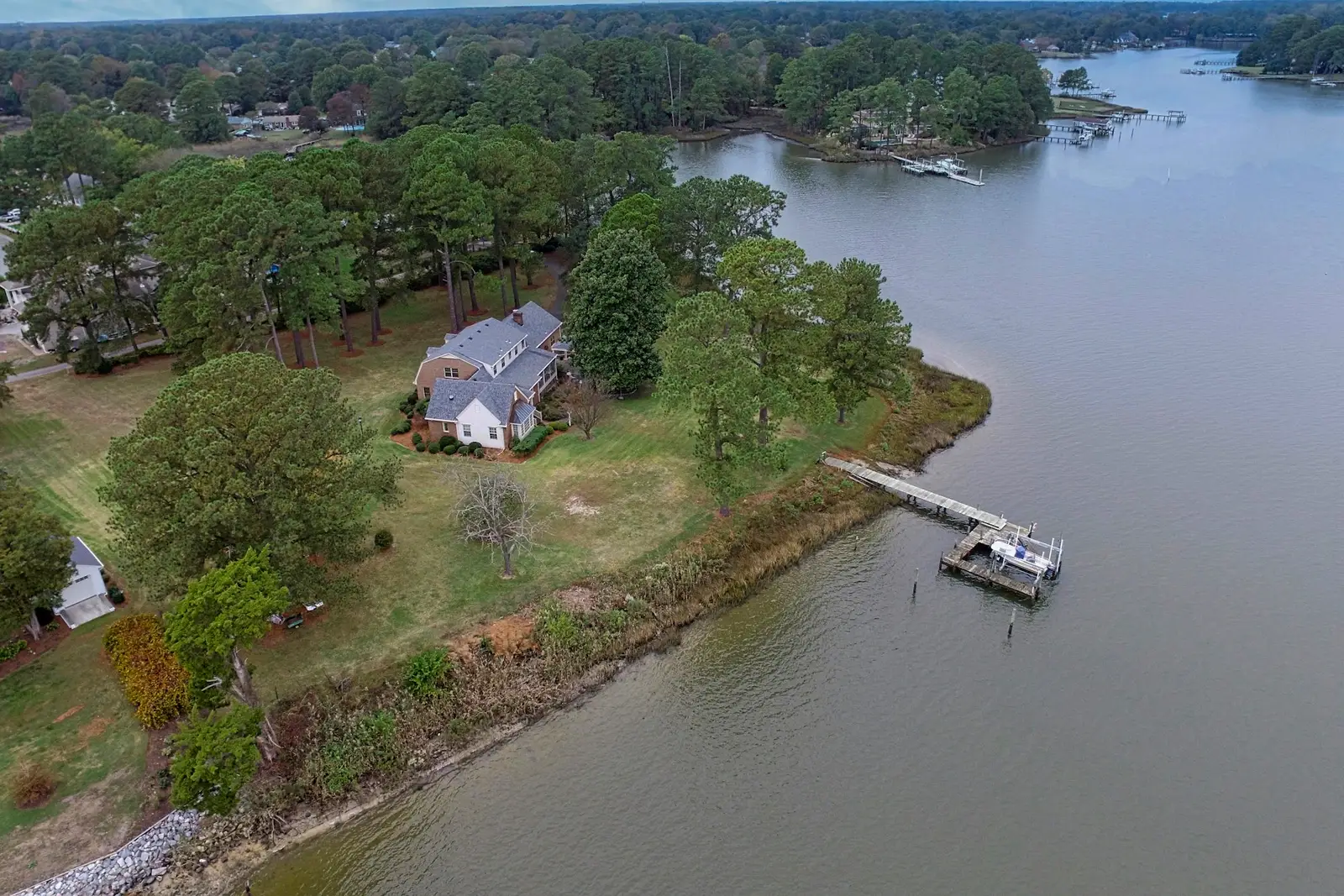
Northwest River water and the Lake Gaston connection
Chesapeake Public Utilities runs one of the more unusual water systems in Hampton Roads. Its Northwest River Water Treatment Plant, in the rural southern part of the city, pulls from the Northwest River and from brackish wells sunk into the deep aquifers under the coastal plain. Because that raw water carries salt and dissolved minerals, the plant relies on reverse osmosis membranes to strip it down before it is blended and sent north toward Great Bridge and Hickory.
The rest of Chesapeake's supply is bought already treated from the City of Norfolk, whose system draws on its own reservoirs in Suffolk and Isle of Wight and on water piped east from Lake Gaston on the Virginia and North Carolina border. Depending on where you live in the city and the time of year, the water at your tap leans more toward one source or the other.
For water heaters, that mix is gentle. Membrane-treated water leaves almost nothing behind when it is heated, so an electric element pulled from a Deep Creek tank after several years often looks close to new. The tradeoff is that very clean, low-mineral water is aggressive toward the sacrificial anode, so the rod can be eaten down to bare wire sooner than homeowners expect.
Where Chesapeake water heaters sit
South Norfolk, Chesapeake's oldest section, has frame houses from the early twentieth century on brick piers, and many still keep the tank in a back hall closet, a converted pantry or under the house in a shallow crawlspace. Portlock, Camelot and Indian River filled in after World War II with brick ranches where the heater shares a utility room with the washer or sits in a carport storage closet.
Most of Chesapeake, though, was built after South Norfolk and Norfolk County merged to form the city in 1963. Greenbrier, Great Bridge, Western Branch and Hickory are dominated by subdivisions from the 1980s onward. Those houses mostly sit on slabs, and the builder put the tank in the garage, and some larger two-story houses and many townhomes put a second heater or the only heater in the attic above a bonus room. In the farm country around Fentress, Pleasant Grove and the edges of the Great Dismal Swamp, older houses on wells and septic systems are scattered among new custom homes.
Attic heaters deserve special attention in a place where summer attic air can top 130 degrees. Heat and humidity bake rubber washers and plastic drain pans, and a pan whose drain line has clogged with insulation dust will overflow into a bedroom ceiling the first time the relief valve weeps.
Swamp ground, storms and humidity
Chesapeake sits only a few feet above sea level across much of its area, with the Southern Branch of the Elizabeth River, the Intracoastal Waterway and the Dismal Swamp shaping its drainage. Hurricanes, tropical storms and slow nor'easters can raise water in ditches and canals until it backs into garages and low yards. Neighborhoods near the Elizabeth River branches and along drainage canals tend to see water first.
A garage tank that stood in floodwater, even for a few hours, should be checked by a plumber before anyone relights the pilot or resets the breaker. Mud and moisture inside a gas control or burner assembly are a real hazard, and wet elements and wiring on an electric tank can trip breakers or short out. When the time comes to replace a heater in a flood-prone Chesapeake garage, setting the new one on a raised platform is cheap insurance.
Even in dry years, Chesapeake's long, wet summers keep crawlspaces damp. Steel gas connectors, dielectric fittings and the bottom of a tank in a vented crawlspace rust faster here than in drier inland cities, so a heater under a South Norfolk house may show corrosion at the fittings well before the tank itself fails.
The problems plumbers see most in Chesapeake
- Overflowing attic pans in Greenbrier and Hickory two-story homes where the drain line clogged or was never run outside.
- Spent anode rods and smelly or discolored hot water on soft, membrane-treated water.
- Garage heaters damaged by storm water after hurricanes and stalled nor'easters.
- Rusted connectors and fittings on crawlspace tanks in South Norfolk and Portlock.
- Burned-out upper elements in all-electric homes where the tank ran dry during a repair or was energized empty.
- Undersized tanks in growing households in Great Bridge and Western Branch that still have the builder's 40-gallon unit.
Typical water heater prices in Chesapeake
| Job | Typical Chesapeake range | Notes |
|---|---|---|
| Thermocouple or pilot assembly | $150–$320 | |
| Electric element and thermostat | $150–$340 | Common in all-electric homes |
| Gas control valve | $375–$600 | |
| Anode replacement with flush | $175–$325 | Worth doing early on soft water |
| 40–50 gallon tank in a garage | $1,450–$3,000 | Permit and haul-away |
| Attic heater replacement | $2,000–$3,800 | New pan and drain line |
| Tankless installation | $3,200–$6,000 | Gas line sizing drives cost |
A straight swap in a Western Branch or Greenbrier garage with easy driveway access lands near the bottom of these ranges. Prices climb for attic work in summer heat, crawlspace tanks under older South Norfolk homes, and rural calls past Fentress or toward the Currituck line, where travel adds time.
Permits and Virginia trade licenses in Chesapeake
Chesapeake issues its own building permits through the city's permits and inspections staff, enforcing the Virginia Uniform Statewide Building Code. Replacing a water heater calls for a plumbing permit, and changes to the gas piping or vent add a gas or mechanical permit. An inspector looks at the relief valve discharge line, the pan and drain in attics, gas connections and vent clearances.
Statewide, Virginia's DPOR Board for Contractors licenses the business, and it also certifies the individual tradesmen who do the work. The company you hire should hold a contractor license that lists plumbing or gas fitting as a specialty, and whoever turns the wrenches should hold a tradesman card, master or journeyman level, in plumbing or gas fitting. Before work starts in Chesapeake, it is reasonable to ask a contractor to show that card and to confirm the city permit fee is in the written price.
Electric homes, gas lines and choosing a new heater
Dominion Energy provides electricity throughout Chesapeake, and Virginia Natural Gas runs mains through much of the developed northern half of the city. A large share of subdivisions built in the 1980s and 1990s went all-electric, so electric tanks are the most common heater plumbers replace here. Gas service is more common in newer Great Bridge and Hickory neighborhoods and in older South Norfolk streets that were piped decades ago.
In a Chesapeake garage, a heat pump water heater makes a lot of sense for an all-electric home. The garage stays warm most of the year, the unit wrings moisture out of humid air as a side benefit, and it cuts electric use sharply compared with a standard tank. Dominion has run water heating incentives at times; ask your installer which ones apply this year. Gas homes with several bathrooms often move to tankless, but long runs from the meter to the garage can require larger gas piping.
If you have a well and septic system in the southern part of the city, your water may be harder and carry iron or sulfur. Those homes behave very differently from city-water houses and may need more frequent flushing, a powered anode, or a water treatment system ahead of the heater.
Caring for a heater on membrane-treated water
Because Northwest River water is so clean, the most useful maintenance in Chesapeake is pulling and inspecting the anode, not draining sediment. On a heater that is a few years old, a plumber can tell in minutes whether the rod still has life. Replacing a worn anode, often paired with a quick flush, costs far less than a tank and can add years to a heater in a Greenbrier garage.
Attic owners should pour a cup of water into the pan every few months and watch it drain outside. If the line is slow or dry at the outlet, clear it before it matters. Garage owners in low streets should keep the area around the base clear so they can spot a weep early, and a battery leak alarm on the slab costs little.
Repair or replace in Chesapeake
Soft water and mild winters mean a dry, well-kept Chesapeake tank can last ten to twelve years or more. A failed element, thermostat, thermocouple or relief valve on a heater under nine years old is almost always worth repairing. Floodwater exposure, rust weeping from the base, or a leak from an attic tank of any age usually tips the decision toward water heater replacement, especially when ceiling damage is the alternative.
Around Chesapeake
Norfolk sells water to Chesapeake and runs its own permit office for older neighborhoods just across the Elizabeth River. Portsmouth draws from its own lakes in Suffolk and serves parts of the Western Branch corridor near its border. Suffolk has a separate utility and its own inspectors, and Virginia Beach buys its water from Norfolk as Chesapeake does. Just south, Moyock in Currituck County, North Carolina, falls under North Carolina licensing and county permits.
Water heater questions from Chesapeake
Why does Chesapeake use reverse osmosis?
The Northwest River plant treats brackish groundwater and river water that carry salt and minerals. Membranes remove them, which also leaves the water soft and easy on heaters.
My hot water smells like sulfur in Great Bridge. Is the heater bad?
In most cases the magnesium rod in the tank is reacting with the low-mineral Northwest River water. A plumber can swap in a different anode type and flush the tank, which often clears the odor.
Will Chesapeake inspect my new water heater?
Yes. The city issues a plumbing permit and inspects the job, with an added gas or mechanical permit when piping or venting changes.
What should I do if storm water reached my garage heater?
Leave it off. Have a plumber inspect the burner, gas control or electrical parts before restarting it, and expect replacement if the controls were submerged.
Would a heat pump unit suit my garage in Chesapeake?
For most all-electric homes, yes. Warm, humid garages suit heat pump units, and they dehumidify the space while saving power.
How do I check a Virginia plumber's license?
Use the DPOR license lookup to confirm both the contractor license and the worker's tradesman card.
Do well homes in southern Chesapeake need different care?
Often. Private wells can carry iron, sulfur or hardness that the city system does not, so those heaters may need more flushing or water treatment.