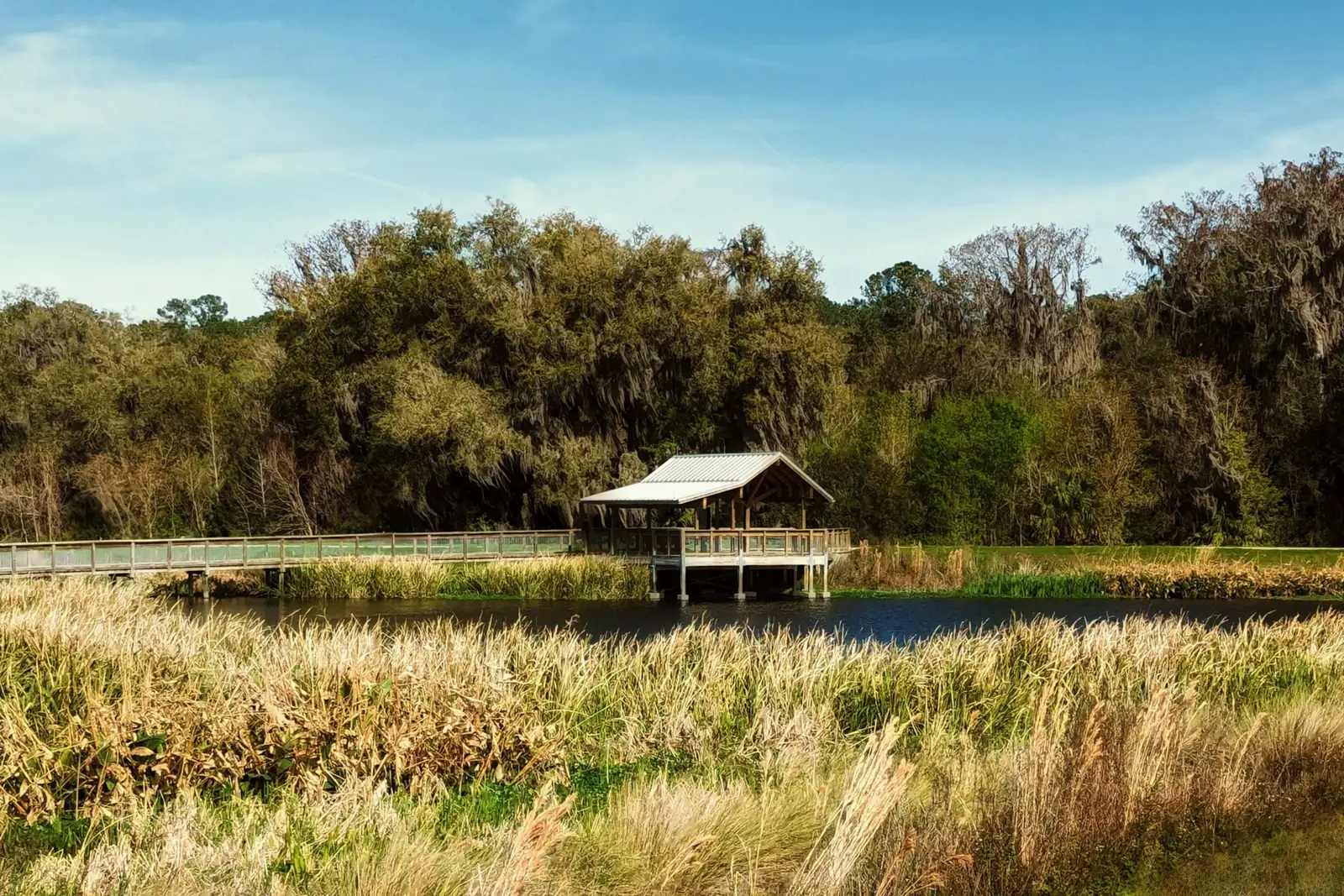
GRU water from the Murphree wellfield
Gainesville Regional Utilities pumps its drinking water from wells in the Floridan aquifer northeast of town, in a wellfield near the Murphree Water Treatment Plant. Raw water there is hard and carries some hydrogen sulfide, so the plant aerates it to strip the sulfur and uses lime softening to drop much of the calcium before disinfection and delivery. What leaves the plant is moderately hard, very consistent and close to the aquifer's natural temperature.
Because the wells sit deep in limestone, the water reaching a home in Duckpond or Springhill arrives in the low 70s for nearly the entire year. That means a Gainesville tank faces far less of a temperature climb than one in Ohio or Michigan, and a tankless unit can deliver strong flow without a monster burner. The calcium that softening leaves behind still settles out as a tan sand in tanks and as scale on the heat exchanger of a tankless heater.
One utility for water, power and gas
GRU is owned by the city and serves water and electricity to most of the urban area, plus natural gas along many established streets. A state law passed in 2023 moved oversight of GRU from the City Commission to an appointed authority board, but customers still get one bill and one phone number for all three services. That matters when a heater acts up during a storm, since a single outage call covers both power and gas questions.
Natural gas is common in older parts of town such as the Duckpond, Pleasant Street and the neighborhoods off NW 16th Avenue, while many apartment complexes and newer subdivisions west of I-75 are all-electric. GRU has run rebates on efficient equipment at times; ask the utility before you settle on a heat pump or a gas tankless unit.
Student rentals and Gainesville housing
Around the University of Florida campus, the blocks near Midtown, the University Heights area and SW 5th Avenue are packed with older houses split into rooms, duplexes and small brick apartment buildings. Heaters in those rentals sit in hall closets, outdoor sheds and laundry nooks, and many are basic electric tanks that serve four or five tenants. Larger complexes along Archer Road and SW 20th Avenue usually have a small electric heater in each unit's closet or over the washer.
The Duckpond and Northeast Gainesville historic districts have frame homes from the early 1900s on piers, with tanks on enclosed back porches. Haile Plantation, Kanapaha, Millhopper and the Tower Road corridor are mostly block-and-stucco or frame homes from the 1970s onward with heaters in garages. Some newer townhome communities put the tank in the attic, which makes a pan and drain line important.
Lightning, freezes and Gainesville weather
North Central Florida sees frequent summer thunderstorms, and lightning strikes on power lines can fry the circuit boards in tankless heaters, heat pump water heaters and power-vent gas tanks. A whole-house surge protector at the electric panel costs far less than a control board. Gainesville also gets a few hard freezes most winters, unlike South Florida, and heaters in unheated sheds or on exterior walls can have their inlet lines split when the temperature drops into the 20s overnight.
Hurricanes usually arrive weakened by the time they reach Alachua County, but Irma in 2017 still brought days of power loss to parts of the city. Electric tanks and tankless gas units with electronic ignition stop working when the lights go out.
The problems plumbers see most in Gainesville
- Burned-out lower elements in rental electric tanks that were never drained.
- Lime sediment from softened Floridan water filling the bottom of tanks.
- Fried control boards after summer lightning on tankless and heat pump units.
- Frozen lines to shed heaters during January cold snaps.
- Tenant move-out failures when a heater left off over the summer will not restart in August.
- Attic tanks without pans in townhomes off Archer and Tower roads.
Typical water heater prices in Gainesville
| Job | Typical Gainesville range | Notes |
|---|---|---|
| Electric element or thermostat | $150–$350 | |
| Gas thermocouple or igniter | $160–$325 | |
| Gas control valve | $350–$575 | |
| Flush and sediment removal | $110–$250 | |
| 40–50 gallon electric tank replacement | $1,200–$2,500 | Permit usually included |
| 40–50 gallon gas tank replacement | $1,400–$2,800 | |
| Tankless installation | $2,900–$5,500 |
Gainesville's labor costs are moderate for Florida. Prices climb near the top of each range for attic installs, rentals that need a heater in a shed rebuilt, or gas work that requires a new line from the GRU meter.
Florida licensing and Gainesville permits
Gainesville plumbers hold a state certification from Florida's Construction Industry Licensing Board, and the DBPR license search shows whether one is active. A swap inside city limits is permitted and inspected by the City of Gainesville's Building Inspections office. Homes in unincorporated Alachua County, including much of Haile and Kanapaha, are permitted by Alachua County Growth Management.
Landlords sometimes hire a handyman for a quick swap between leases. That shortcut can complicate an insurance claim if the tank later fails, so it pays to use a licensed contractor who files the permit.
Advice for Gainesville landlords
The August turnover, when thousands of leases end and begin within a few days, is the busiest week of the year for plumbers here. Heaters that sat off or neglected all summer fail on the first morning of new tenants, and every plumber in town is booked. A quick check in July, including a test of the relief valve, a look for rust at the base and a partial drain, costs much less than an emergency call during move-in weekend.
For houses rented by the room, a single 40 gallon tank rarely keeps up with five people showering before 9 a.m. classes. A 50 or 80 gallon electric tank, two heaters or a gas tankless unit where gas is available ends most complaints. Rentals in older brick buildings sometimes have very tight closets, so measure before ordering a larger tank.
Repair or replace
Electric tanks on GRU water commonly last 10 to 13 years when someone drains the sediment now and then. Elements and thermostats are inexpensive to replace, so a failure in a tank younger than eight or nine is nearly always worth fixing. Leaks from the tank seams or rusty water mean it is time to replace, and the guide to picking a new heater can help.
Heat pump water heaters suit Gainesville garages well, since the air there stays warm for much of the year. In a small rental closet without airflow, a standard electric tank may be the only practical fit.
Around Gainesville
Alachua and High Springs to the northwest run their own city water and permitting, and Newberry and Archer to the west do the same. Hawthorne and Micanopy are small towns with separate utilities, while rural homes across the county rely on private wells that can be harder and more sulfurous than GRU water.
Water heater questions from Gainesville
Who provides water in Gainesville?
Gainesville Regional Utilities, which pumps Floridan aquifer water from the Murphree wellfield and softens it at the Murphree plant.
Is Gainesville tap water hard?
It is moderately hard after GRU's lime softening. Tanks still collect calcium sediment, so drain a bucket from the tank's valve each spring and fall.
Which office permits a heater swap in Haile Plantation?
Most of Haile is unincorporated, so Alachua County Growth Management issues the permit rather than the city.
Why did my tankless heater quit after a thunderstorm?
A power surge from lightning often damages the control board. A surge protector at the panel helps prevent repeat failures.
My student rental runs out of hot water every morning. What helps?
A larger electric tank, a second heater or a gas tankless unit where GRU gas is available usually fixes room-by-room rentals.
Can water heaters freeze in Gainesville?
Units in sheds or on outside walls can. Insulate exposed lines and check them after nights in the 20s.