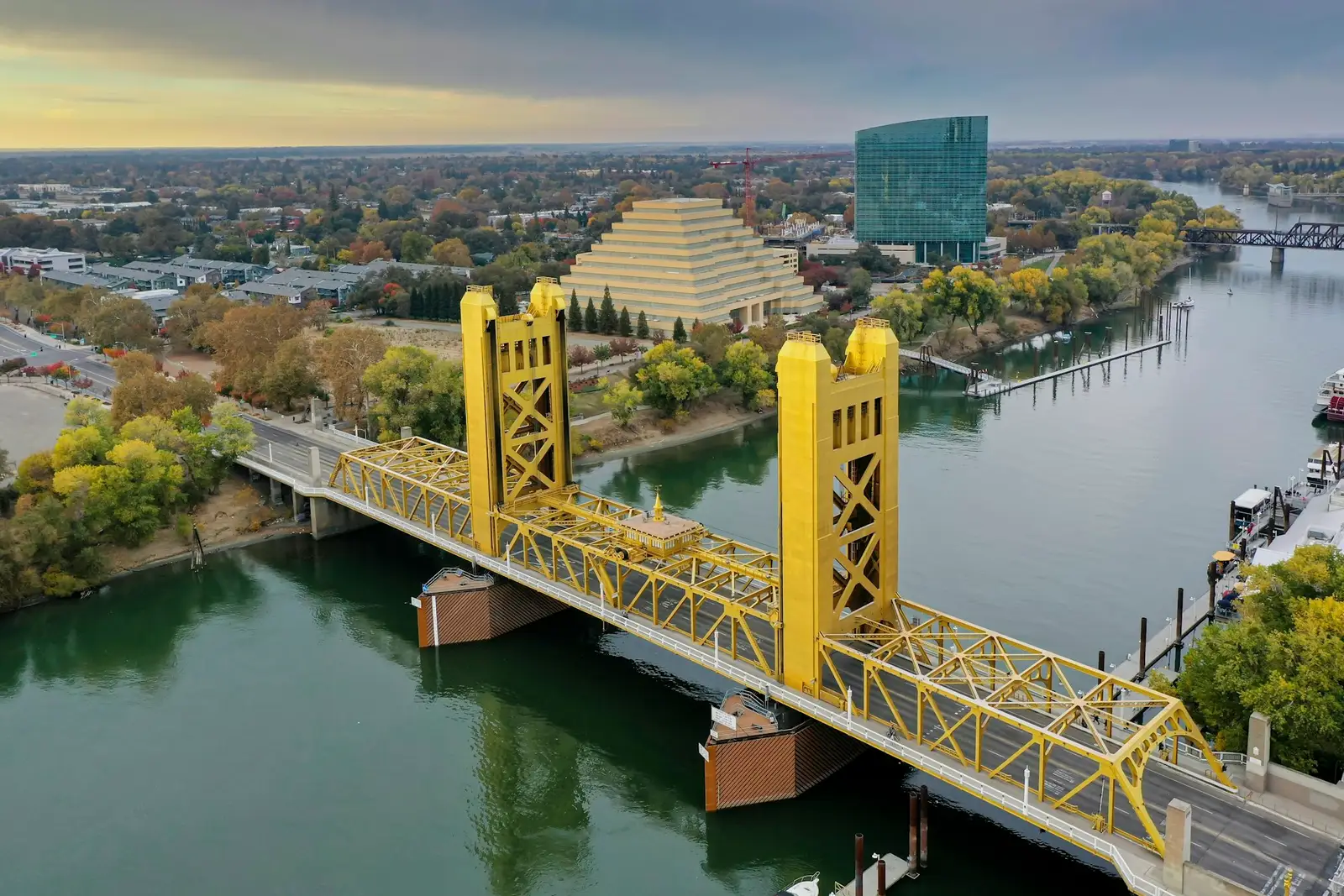
Two rivers and two treatment plants
The City of Sacramento Department of Utilities draws nearly all of its drinking water from the two rivers that meet downtown. The E.A. Fairbairn Water Treatment Plant on the American River, near Sacramento State, treats water that comes down from the Sierra through Folsom Lake. The Sacramento River Water Treatment Plant, just below the confluence near Discovery Park, treats water from the larger river. A small number of city wells supplement that supply, mostly in the northern part of the city.
Because the American River is largely Sierra snowmelt, Sacramento's water is soft, much softer than the imported and well water that most Southern California and Central Valley cities run on. A tank on city water collects only a thin layer of sediment over many years, and a tankless unit can go well beyond a year between descales. Water heater trouble here tends to come from age, corrosion and installation details instead of mineral crust.
Soft water is a little more aggressive toward metal. The magnesium or aluminum anode rod in a tank sacrifices itself to protect the steel, and in soft water it can be eaten away sooner than owners expect. Once the anode is gone, the tank lining is next. A plumber pulling the anode during a service call on a seven- or eight-year-old Sacramento tank will often find a bare steel core wire.
Bungalows, porches and detached garages
Sacramento's older neighborhoods were built before attached garages were common. In Land Park, Curtis Park, East Sacramento's Fab Forties and the grid streets of Midtown, many homes are 1910s to 1940s bungalows, Tudors and Craftsmans where the water heater sits on an enclosed back porch, in a small closet off the kitchen, or out in a detached garage at the end of the driveway. Some East Sac homes have a partial basement where a tank shares the space with an old furnace.
Each of those spots brings its own problems. Porch closets are tight, often with a flue that runs up through the old roof and was sized for an earlier, larger appliance. Detached garages can be a long run from the kitchen and bathrooms, so hot water takes a while to arrive. Midtown's Victorians and fourplexes split into apartments sometimes have several small tanks squeezed into odd corners, each with its own vent.
Newer parts of the city look different. North and South Natomas, the Pocket and Greenhaven along the river, and much of the area south of Florin Road are filled with tract homes from the 1960s onward where the tank sits in an attached garage on a platform. Those are the easiest replacements in town.
Levees, floods and water heaters
Sacramento sits at the meeting of two large rivers and much of the city lies behind levees. Big storms in 1986 and 1997 pushed the river system to its limits, and Natomas spent years under federal limits on new building while its levees were strengthened. Most homeowners will never see floodwater in their garage, but a heater set on the slab of a low-lying garage is the first appliance to be ruined if water does come in.
If a gas water heater has been sitting in floodwater, do not try to relight it. The gas control valve and burner have to be replaced, and in most cases the whole heater is replaced, because silt and water get into parts that cannot be dried or cleaned safely. In flood-prone parts of Natomas and near the creeks in the south area, raising a replacement tank onto a sturdy platform is a cheap precaution.
Winter atmospheric river storms cause smaller problems more often: rain blown into porch closets, water running down old flue pipes, and wind gusts that snuff the pilot on a standing-pilot tank. Those calls cluster in December through February.
The problems plumbers see most in Sacramento
- Depleted anode rods on tanks of seven years or more, leading to rusty hot water and early tank failure on soft city water.
- Rusty or brown hot water from a mix of anode wear and old galvanized pipe in Land Park and East Sac homes.
- Undersized or shared flues on porch and closet installations in pre-war bungalows.
- Slow hot water to the far bathroom where the heater sits in a detached garage.
- Pilot outages during winter storms on standing-pilot tanks in porch closets and drafty garages. See pilot and gas valve repair.
- Leaks at fittings and the tank body on heaters past ten years, often in 1970s Natomas and south area garages. See leaking water heaters.
Typical water heater prices in Sacramento
| Job | Typical Sacramento range | Notes |
|---|---|---|
| Thermocouple or pilot repair | $160–$325 | Porch closets take more time |
| Anode rod replacement | $150–$325 | Worth checking on soft river water |
| Gas control valve | $400–$625 | Low-NOx models use specific parts |
| Flue or vent connector repair | $200–$700 | Common in older bungalows |
| 40–50 gallon gas tank replacement | $1,700–$3,300 | City permit, new straps, old tank hauled |
| Heat pump water heater installed | $3,200–$6,000 | Electrical work moves the number |
| Tankless installation | $3,500–$6,200 | Gas line upsizing is the main variable |
Sacramento rates generally fall between the Bay Area and the Central Valley. Tight porch closets in Curtis Park, flue repairs through old roofs and detached garages with long gas runs push a quote higher, while an open tract-home garage in Natomas keeps it down. Ask whether the price includes the city permit and the code items an inspector will want.
City permits and California licensing
Inside Sacramento city limits, a water heater swap needs a permit from the Community Development Department's Building Division, with an inspection of the straps, gas connection, venting, relief valve line and expansion tank. Homes in unincorporated Arden-Arcade, Carmichael and Fair Oaks are permitted by Sacramento County instead, even though they share Sacramento mailing addresses.
Any contractor doing the work should hold an active C-36 plumbing license issued by the state's Contractors State License Board (CSLB), which you can verify online by name or number. California code calls for two seismic straps anchored into studs at the upper and lower thirds of the tank, and Title 24, the state energy code, governs the efficiency of what can be installed. For a Sacramento homeowner, the inspection is cheap insurance that an old flue or a missing strap has been dealt with.
SMUD, PG&E and the heat pump question
Sacramento homes buy electricity from SMUD, the publicly owned Sacramento Municipal Utility District, and natural gas from PG&E. That split matters for water heating. SMUD has pushed electrification for years and has at times put incentive money behind heat pump units, which has made the switch from gas more common here than in many California cities.
A heat pump unit fits well in an attached garage, where Sacramento's hot summers give it plenty of warm air. It is a harder fit on a cramped back porch or in a basement corner with little air volume. Older Land Park and East Sac homes may need a panel upgrade before a 240-volt circuit can be added, so get the electrical picture before comparing prices with a gas tank.
Keeping a Sacramento water heater healthy
On soft American River water, the sacrificial anode deserves the most attention. Having a plumber pull and inspect it during a routine visit somewhere between the sixth and eighth year can add years to the tank. A light flush once every couple of years is plenty here, mainly to clear rust flakes and the occasional sand that comes through old service lines.
If your heater is in a detached garage, insulating the hot water line where it runs outside or through a crawlspace cuts the wait and the waste. A small recirculation pump is another option for long runs. When a tank does reach the end, the details on replacing a water heater explain what a full code-compliant swap includes.
Around Sacramento
West Sacramento, across the river in Yolo County, treats its own Sacramento River water and has its own building department. Elk Grove gets water from the Sacramento County Water Agency or the Elk Grove Water District, both leaning partly on groundwater that is harder than city river water. Roseville and Folsom both draw from Folsom Lake and run their own permit counters, and Roseville sells its own electricity through Roseville Electric. Rancho Cordova and Citrus Heights are incorporated cities with their own building divisions, while Carmichael and Fair Oaks fall under the county.
Water heater questions from Sacramento
Is Sacramento water hard?
No. City water comes mainly from the American and Sacramento rivers and is soft, usually a few grains per gallon. Scale is a minor issue compared with corrosion.
Brown hot water in an East Sac house: what causes it?
Usually a worn-out anode rod, old galvanized pipe, or both. If the cold water runs clear and only the hot is brown, the tank is the likely source and should be checked soon.
Which Sacramento office handles water heater permits?
For addresses within the city, it is the Sacramento Community Development Department's Building Division. Arden-Arcade, Carmichael and Fair Oaks use Sacramento County's building office.
Does SMUD help pay for heat pump water heaters?
SMUD has offered heat pump water heater incentives at times. Program details change, so check SMUD's current offers before choosing a replacement.
My garage flooded. Can I relight the water heater?
No. A gas heater that has been underwater needs its controls replaced at a minimum, and usually the whole unit. Shut off the gas and call a plumber.
Why does it take so long to get hot water in my Land Park bungalow?
Heaters in detached garages or rear porches can be a long pipe run from the bathroom. Insulating the line or adding a recirculation pump shortens the wait.
How do I confirm a Sacramento plumber is licensed?
Use the CSLB online license check and make sure the Sacramento company shows a current C-36 classification that is not expired or suspended.