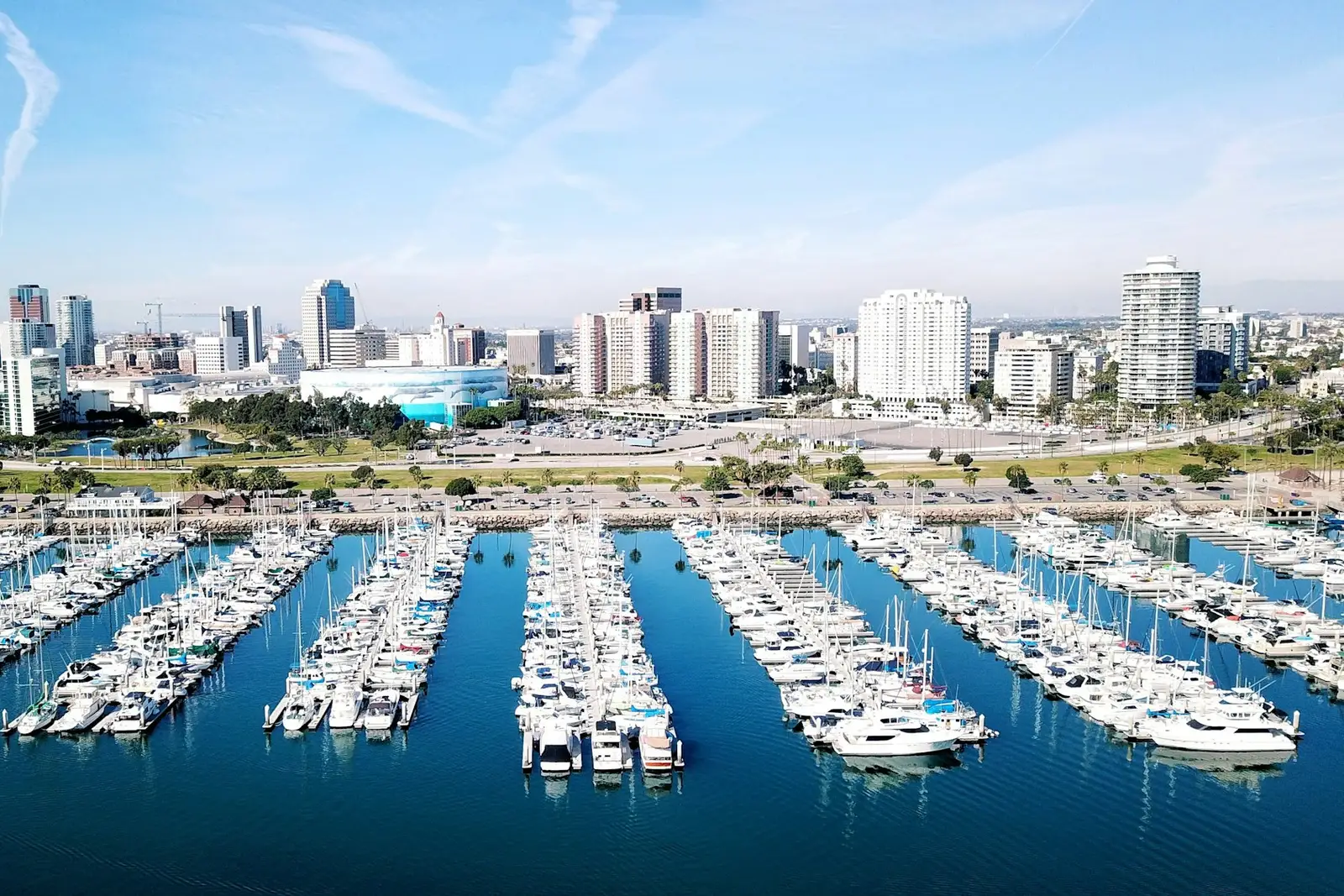
Long Beach's water and its own gas company
Long Beach Utilities, the city department formed when the water department and the gas and oil department merged, supplies water to nearly all of Long Beach. Much of that water is pumped from the Central Basin aquifer and treated at the city's groundwater treatment plant in the north part of town. The rest is imported water bought through the Metropolitan Water District, a mix of Colorado River and Northern California supplies. Recycled water handles a lot of landscape and industrial use, freeing up more of the potable supply.
The same city department also runs the local natural gas system, which is unusual in California. Most of the state buys gas from SoCalGas or PG&E, but a Long Beach homeowner with a gas leak, a no-gas situation or a meter question calls Long Beach Utilities. Electricity comes from Southern California Edison. When a plumber needs the gas shut off at the meter or restored after work, it is the city gas crew that responds.
The water is hard enough to leave a visible ring of scale around faucet aerators and inside tank bottoms. A Long Beach tank that goes five or six years without a flush often has a thick bed of loose mineral chips inside, and tankless heaters need regular descaling to keep their heat exchangers clear.
Craftsmans, Spanish revivals and apartment buildings
Long Beach boomed in the 1920s, and its older neighborhoods still show it. In Bixby Knolls, California Heights and Belmont Heights, streets are lined with Craftsman bungalows and Spanish revival homes where the water heater sits in a detached garage off the alley, in a closet on the back service porch, or in a narrow exterior cabinet against the side wall. Bluff Park homes near the ocean follow the same pattern with larger lots.
East of Lakewood Boulevard, Los Altos and the Plaza area were built out after the war with ranch homes and attached garages, which make for straightforward installs. Wrigley and the Westside mix older cottages with duplexes and small courtyard buildings where each unit may have its own small tank.
Much of Long Beach, though, lives in apartments. Alamitos Beach, the East Village, Belmont Shore and the blocks around Broadway and Ocean are dense with older walk-ups and courtyard complexes. Some have one gas tank per unit in a hall or kitchen closet, others share a large commercial heater or boiler in a basement or rooftop mechanical room. When the shared heater fails, a whole building is without hot water, which is why those calls are urgent.
Salt air, fog and corrosion
Neighborhoods within a mile or two of the beach, including Belmont Shore, Naples, the Peninsula, Alamitos Beach and Bluff Park, breathe salty marine air most days. That moisture settles on everything outside and in garages that are left open. Exterior water heater cabinets near the water rust from the bottom up, and the steel jacket, gas connector, vent cap and strap bolts all corrode faster than they would a few miles inland.
Corrosion shows up in a few predictable places. Gas flex connectors and unions get crusty and can start to weep. Draft hoods and vent pipes rust through, letting exhaust escape where it should not. The burner and pilot assembly in an exterior closet collects rust flakes that disrupt the flame. Plumbers working near the ocean often recommend stainless or coated connectors, sealing gaps in exterior cabinets and checking the vent and flue more often than an inland homeowner would.
Morning marine layer and winter storms also bring moisture into exterior closets. Rain blowing through louvered doors can douse a pilot, and a rusted-out cabinet floor lets water pool under the tank, which hides a slow leak until it is serious.
The problems plumbers see most in Long Beach
- Rusted vent pipes, draft hoods and caps on heaters in coastal neighborhoods such as Belmont Shore and Naples.
- Corroded gas connectors and fittings in exterior cabinets exposed to sea air.
- Loose mineral scale rattling in tanks fed by the hard local blend. See flushing a noisy heater.
- Pilot and thermocouple trouble in back-porch closets and exterior cabinets on older Craftsman homes. See pilot and gas valve repair.
- Shared building heaters going down in Alamitos Beach and East Village apartment complexes, leaving every unit cold.
- Scale-related shutdowns on tankless units that have gone too long without descaling. See tankless repair.
Typical water heater prices in Long Beach
| Job | Typical Long Beach range | Notes |
|---|---|---|
| Thermocouple or pilot assembly | $170–$340 | Exterior cabinets add time |
| Tank flush and scale removal | $125–$290 | Hard water makes this a regular need |
| Gas control valve | $390–$640 | South Coast low-NOx parts |
| Vent or draft hood replacement | $175–$550 | Rust near the coast is the usual cause |
| Seismic straps and new connectors | $100–$260 | Corrosion-resistant connectors near the beach |
| 40–50 gallon gas tank replacement | $1,750–$3,450 | Development Services permit and code upgrades |
| Tankless descale | $175–$350 | Annually on Long Beach water |
Long Beach prices track the rest of the Los Angeles area. Parking in Belmont Shore and the downtown core, third-floor walk-ups with narrow stairways and rusted exterior cabinets that must be rebuilt can each add to a bill. Commercial heaters serving whole apartment buildings are priced separately and depend heavily on the equipment.
Permits from Long Beach Development Services
Long Beach is its own city with its own building department, so water heater permits come from the City of Long Beach Development Services, through its Building and Safety bureau, not from Los Angeles or the county. An inspector checks the straps, gas shutoff, venting, combustion air, relief valve discharge and expansion tank. For a rental owner, keeping the permit and final inspection on file simplifies things when tenants change or a building is sold.
The plumbing contractor should carry an active C-36 license from the California Contractors State License Board, which takes moments to verify online. Two straps fastened into studs at the top and bottom thirds of the tank are required by California code, and Title 24 sets energy efficiency rules for new equipment. The South Coast air district's limits on NOx also apply, so replacement gas tanks here are low-emission models.
Choosing a replacement near the coast
When a tank in a coastal Long Beach cabinet fails, it is worth asking whether to keep it outside at all. Rebuilding the cabinet with a solid floor, a tight door and fresh vent piping helps any new heater last longer. In older Craftsman homes, moving the heater from a rusted side cabinet into the garage is sometimes possible and avoids repeated salt damage.
Tankless units handle Long Beach's mild climate easily but need a gas line large enough for their burner and regular descaling on this water. Heat pump water heaters fit well in attached garages, where the mild year-round temperatures suit them, and state and local programs have offered incentives for them at times. For apartments with tight closets, a direct replacement with the same size gas tank is often the only practical choice. The page on replacing a water heater covers what a full replacement should include.
Around Long Beach
Signal Hill sits entirely inside Long Beach but is a separate city with its own water system and building permits. Lakewood to the north runs its own water utility and has a large stock of post-war tract homes with garage heaters. Seal Beach and Los Alamitos across the county line in Orange County each have their own building departments and get SoCalGas rather than Long Beach gas. Carson and Paramount handle permits separately as well, and their water comes from different providers than Long Beach Utilities.
Water heater questions from Long Beach
Who do I call for a gas leak or gas shutoff in Long Beach?
Long Beach Utilities, the city department that runs the local gas system. SoCalGas does not serve most of Long Beach. If you smell gas, leave the house first and then call.
Why does my water heater near the beach keep rusting?
Salt-laden marine air corrodes the jacket, vent, gas connector and burner area, especially in exterior cabinets. Sealing the cabinet and using corrosion-resistant fittings slows it down.
Is Long Beach water hard?
Moderately hard to hard. It blends treated Central Basin groundwater with imported MWD water, and the mix leaves noticeable scale in tanks and tankless units.
Where do I get a water heater permit in Long Beach?
From the City of Long Beach Development Services department. Long Beach is not covered by Los Angeles city or county permits.
Our apartment building has no hot water. What should the owner do?
Many Long Beach complexes share one large heater or boiler, so a single failure affects every unit. The owner or manager should call a plumber who services commercial water heaters.
How often should a tankless heater be descaled in Long Beach?
About once a year on Long Beach's hard water, and sooner if the unit throws scale or flow error codes.
Can I move my water heater out of the side-yard cabinet?
Often, if there is room in a garage or utility area and a way to vent it. It requires a permit and adds gas and water line work, but it can end recurring salt-air damage.