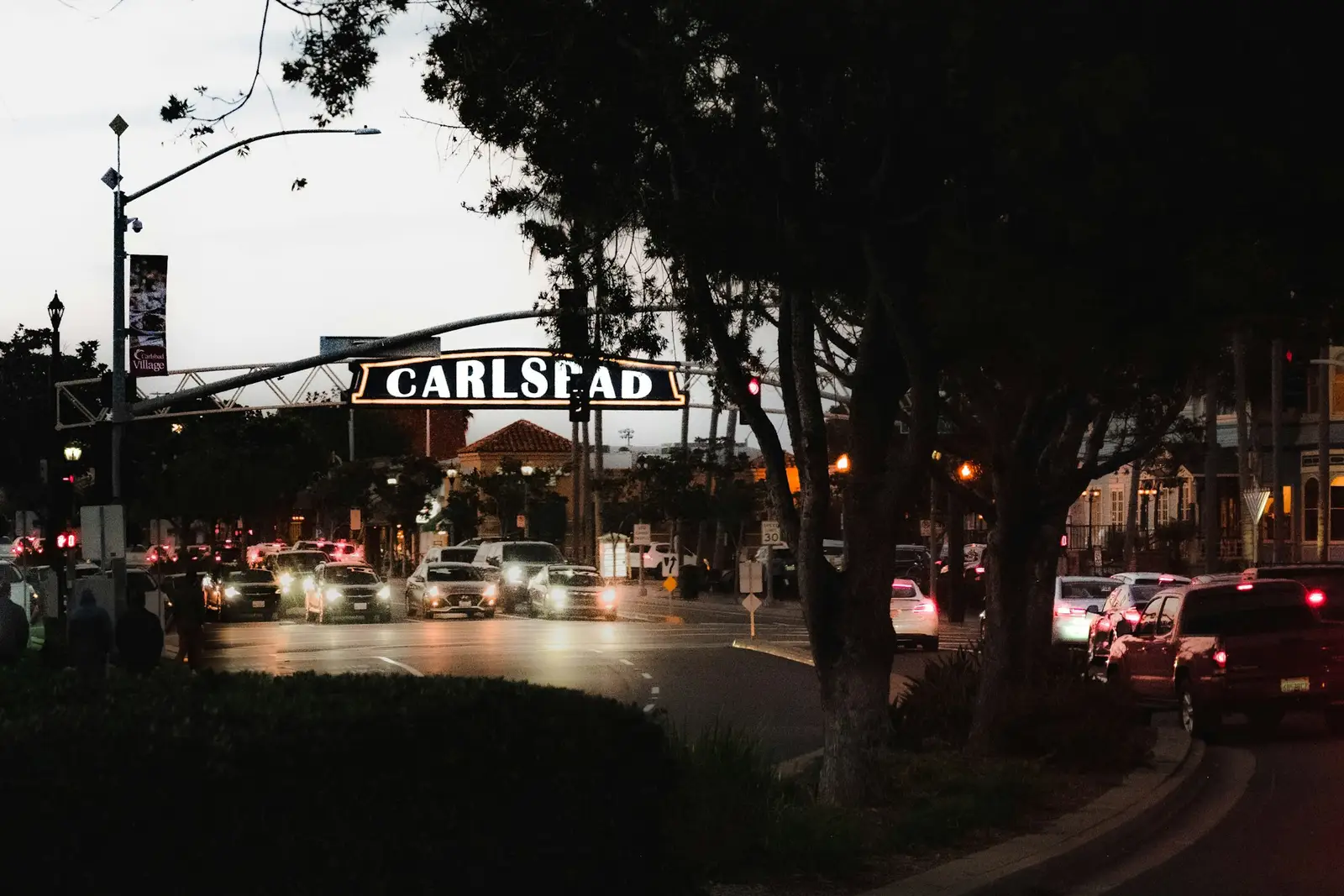
Seawater, the Colorado River and Carlsbad's taps
Most Carlsbad homes get water from the Carlsbad Municipal Water District, a subsidiary district run by the city. CMWD does not treat river water itself. Its finished supply is purchased wholesale from the county Water Authority, which pulls together imports from the Metropolitan Water District, a long-term transfer of Colorado River water from the Imperial Valley, and the output of the Claude "Bud" Lewis Carlsbad Desalination Plant on the south shore of Agua Hedionda Lagoon.
That plant, which opened in 2015, pushes filtered seawater through reverse osmosis membranes and then adds minerals back so the product water is stable in pipes. On its own, it is fairly soft. The challenge for water heaters is that desal water is blended into the regional system with imported supply, and Colorado River water is among the harder sources in Southern California. Depending on the month and which pipeline feeds your area, Carlsbad tap water can land anywhere from moderately hard to hard.
Neighborhoods in the southeastern corner of the city, around parts of La Costa, get their water from the Olivenhain Municipal Water District or the Vallecitos Water District, which draw on the same regional supply through their own treatment and storage. Either way, tanks here build a steady layer of calcium scale, and tankless heat exchangers usually need a yearly descale.
Carlsbad housing and where the heater lives
The Village and the Barrio near the train station have the oldest homes in Carlsbad, small cottages and bungalows from the 1920s through the 1950s alongside newer infill condos. Heaters in those older houses often sit in an exterior closet facing a side yard or in a detached garage, where salty marine air gets at the jacket, the gas connector and the burner door.
La Costa developed from the 1960s onward around its golf resort, with many 1970s and 1980s homes keeping a gas tank in the garage. Aviara, Calavera Hills, Rancho Carrillo, Bressi Ranch and La Costa Oaks came later, mostly in the 1990s and 2000s, and those two-story homes often have 50- or 75-gallon tanks or tankless units mounted outside on a garage wall. Condo complexes near the Carlsbad Premium Outlets and along El Camino Real sometimes put smaller heaters in hallway closets or on patio utility enclosures.
Larger custom homes in Aviara and on the bluffs above the beach frequently run recirculation loops so hot water arrives quickly at distant bathrooms. That convenience keeps the heater cycling, which shortens life on hard water if nobody services it.
Marine air, mild winters and brush fire country
Being near the Pacific keeps Carlsbad's temperatures mild, with incoming water rarely colder than the high 50s. That helps tank recovery. The trade-off is moisture and salt: homes west of Interstate 5 see rust on vent caps, gas flex lines and the bottom rims of tanks far sooner than homes a few miles inland. Exterior tankless units with metal cabinets and screws pick up corrosion along the coast too.
Santa Ana winds a few times a year bring hot, dry air from the east and raise fire risk in the canyons. The Poinsettia Fire in May 2014 burned homes in Carlsbad during one of those wind events, and SDG&E has shut off power to some North County areas during later fire weather. A conventional pilot-lit tank needs no outlet and carries on through an outage; tankless and heat pump models sit idle until SDG&E restores service.
Faults offshore and the Rose Canyon fault zone to the south keep Southern California's earthquake rules in force here. Every water heater needs to be strapped to the wall framing, and inspectors in Carlsbad look closely at the strap positions.
The problems plumbers see most in Carlsbad
- Corroded flex connectors and vent caps on coastal homes near the Village and Terramar.
- Scale-clogged tankless units that have not been descaled since installation.
- Rumbling tanks where hard water has formed a crust over the burner.
- Recirculation pump failures in Aviara and La Costa homes with long piping runs.
- Rusted burner chambers in exterior closet installs facing the ocean breeze.
- Dripping T&P valves in homes whose thermal expansion tank went flat years ago.
Typical Carlsbad water heater prices
| Job | Typical Carlsbad range | Notes |
|---|---|---|
| Igniter, thermocouple or pilot repair | $195–$360 | |
| Gas control valve | $475–$775 | |
| Tank flush and descaling | $160–$300 | Recommended yearly on this water |
| Tankless descale and filter clean | $200–$375 | |
| Recirculation pump replacement | $375–$750 | Varies with pump and controls |
| 40–50 gallon gas tank replacement | $2,000–$4,000 | Permit, straps and removal |
| Tankless installation | $4,600–$8,000 | Gas line upsizing adds cost |
Carlsbad prices run in line with the rest of coastal San Diego County. Corroded coastal fittings, custom homes with recirculation and second-floor utility rooms usually land a Carlsbad bill in the upper part of these figures.
Permits, inspections and the CSLB
Carlsbad's Building Division, which works out of the city's Faraday Center offices off Palomar Airport Road, issues permits for water heater replacements. An inspector will verify the earthquake straps, gas shutoff and sediment trap, vent material and clearances, relief valve discharge, and the combustion air for closet installs. Homeowners in an HOA should also check whether exterior tankless units need association approval.
Statewide, installing a water heater for pay is C-36 plumbing contractor work, a classification the CSLB licenses. A quick search on the CSLB site will show whether the contractor's number is current and whether they carry the required bond and workers' compensation coverage. Unlicensed handymen are limited to small jobs under $500, which a full heater replacement easily exceeds.
California's Title 24 energy code governs efficiency and insulation on new installs, and the state's earthquake bracing rules apply in addition. In older Village and La Costa homes, a replacement often brings the install up to date with a new vent connector, properly placed straps and insulated hot water piping where the code calls for it.
SDG&E, Clean Energy Alliance and electric options
SDG&E delivers natural gas and electricity to Carlsbad. The city is a founding member of Clean Energy Alliance, a community choice program that buys electricity on behalf of enrolled households, though SDG&E still maintains the lines and sends the bill.
Heat pump water heaters work well in Carlsbad's mild climate, since garage air rarely gets very cold. They do need space, a 240-volt circuit and a drain for condensate, and many owners pair them with rooftop solar. Incentives from SDG&E, the state or federal tax credits have been offered at times, so ask your installer what is currently available.
Keeping a heater healthy near the coast
Hard water and salt air call for slightly different habits. Drain and flush annually so the calcium sludge at the bottom of the tank never gets a chance to harden, and check the anode rod more often than you would in a soft-water city, since hard water and constant cycling on a recirculation loop wear it down. Outdoors, rinse salt film off exterior closet doors and tankless cabinets now and then, and look for rust bubbles on the gas connector.
If you have a tankless unit, a scale filter on the cold inlet and an annual vinegar descale through the service valves will keep the heat exchanger clear. Owners in La Costa Oaks and Bressi Ranch who skip this often see error codes for overheating within a few years.
Around Carlsbad
Oceanside to the north treats much of its own water and runs its own building department. Vista gets water from the Vista Irrigation District and issues permits at its civic center. San Marcos is largely served by the Vallecitos Water District with permits through the city. Encinitas to the south splits between the San Dieguito Water District and Olivenhain Municipal Water District, and handles permits at its own city hall.
Water heater questions from Carlsbad
Does the Carlsbad desalination plant supply my house?
Its water goes into the regional San Diego County Water Authority system, which delivers it to the Carlsbad Municipal Water District along with imported river water. Your tap gets a blend.
Why is Carlsbad water hard if it comes from the ocean?
Desalinated water is soft, but it is mixed with imported Colorado River water, which carries a lot of calcium and magnesium. The blend still leaves noticeable scale.
Does Carlsbad want a permit for a heater swap?
Yes. Carlsbad's Building Division handles it, and its inspector checks bracing, the gas hookup, the flue and the discharge pipe before signing off.
My exterior closet heater looks rusty. Is that from the ocean?
Very likely. Homes west of I-5 get salt-laden air that corrodes vent caps, gas connectors and tank jackets. A plumber can tell whether it is cosmetic or a sign of a coming leak.
How often should I descale my tankless unit in La Costa?
About once a year on Carlsbad's water, more often if the unit also feeds a recirculation loop.
Who provides gas and electricity in Carlsbad?
SDG&E provides gas and delivers electricity. Clean Energy Alliance supplies electricity generation for enrolled customers.
Do I need HOA approval for a tankless heater?
Many Carlsbad HOAs have rules about exterior equipment and vent placement. Check before the installer cuts into a wall.